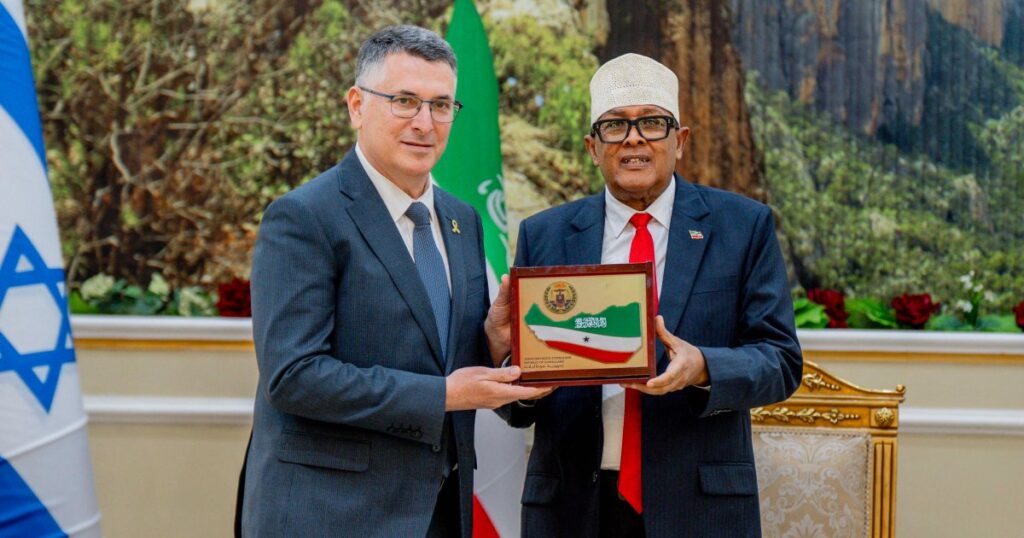
The recent push for the recognition of Somaliland has drawn significant attention to Israel’s growing influence in the Horn of Africa. This development marks a strategic maneuver by Israel to solidify its presence and expand its network of allies in a geopolitically critical region.
Somaliland, a self-declared independent region from Somalia, has long sought international recognition to boost its economic and political stability. Israel’s engagement with Somaliland is seen as a step to establish a foothold near the Red Sea, offering both strategic military and economic advantages due to the area’s proximity to vital maritime routes.
Critics, however, view Israel’s involvement with skepticism. Many believe that these moves are part of a broader agenda under Prime Minister Benjamin Netanyahu’s leadership, which seeks to expand Israel’s influence across conflict-ridden regions. The Horn of Africa, with its complex interplay of ethnic, religious, and political conflicts, presents both opportunities and risks for Israeli foreign policy.
Supporters argue that Israel’s outreach to Somaliland could foster economic development, security cooperation, and diplomatic ties that benefit the region. Israel’s advanced technology and security expertise might aid in combating piracy and terrorism, issues that have long plagued the Horn of Africa.
Nonetheless, the recognition of Somaliland remains contentious on the international stage. Most countries and international organizations continue to recognize Somalia’s territorial integrity, viewing Somaliland’s push for independence with caution. Israel’s support may challenge this status quo, potentially reshaping alliances and geopolitical dynamics in East Africa.
The Horn of Africa is rich in resources and strategic importance, bordered by nations such as Ethiopia, Somalia, Djibouti, and Eritrea. It serves as a gateway to the Arabian Peninsula and offers critical access to the Suez Canal through the Red Sea. This geographical significance underscores why global powers, including Israel, are keenly interested in the region.
Israel’s renewed interest in the Horn of Africa reflects a broader trend in Middle Eastern and African diplomacy, where countries seek to diversify alliances and strengthen economic and security partnerships beyond traditional spheres.
In summary, Israel’s pursuit of Somaliland’s recognition represents not just a bilateral diplomatic move but a broader strategy to enhance its geopolitical stance in Africa. While bringing potential benefits, it also raises concerns about the implications for regional stability and international relations in the Horn of Africa.