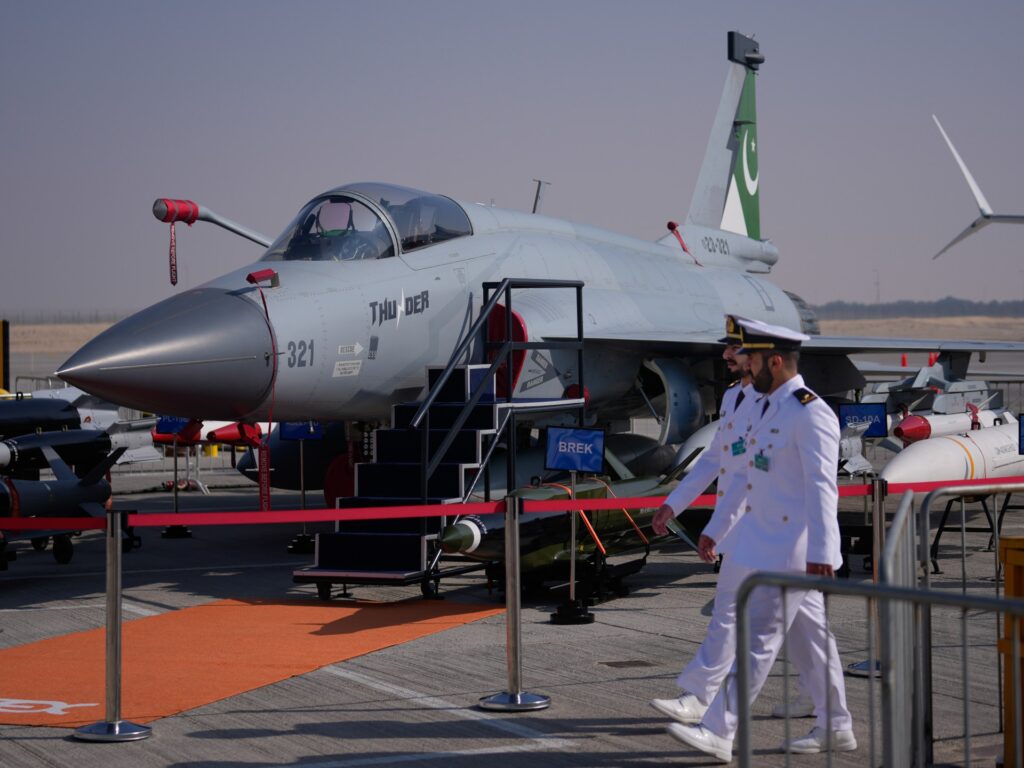
Pakistan’s strategic decision to export its indigenously developed JF-17 fighter jets, particularly to Bangladesh and other nations, marks a significant milestone in its defence diplomacy. This move is partly driven by rising tensions and recent clashes with India, prompting Islamabad to showcase and expand the reach of its defence technology.
The JF-17 Thunder, developed jointly by Pakistan and China, is a lightweight, single-engine, multirole combat aircraft designed to enhance air defence capabilities. Its affordability, modern avionics, and reliable performance make it an attractive option for countries seeking cost-effective yet capable fighter jets.
By selling the JF-17 to Bangladesh and other interested buyers, Pakistan aims to achieve multiple objectives. Firstly, it strengthens bilateral defence ties with friendly countries, fostering regional security cooperation and mutual trust. Bangladesh’s acquisition of the JF-17 not only boosts its air force capabilities but also cements its strategic partnership with Pakistan.
Secondly, exporting the JF-17 generates vital revenue for Pakistan’s defence industry, encouraging further technological development and self-reliance. Defence exports contribute to the country’s economy and enhance its stature as a technology producer on the global stage.
Moreover, the timing of these exports coincides with heightened military tensions between Pakistan and India. Pakistan’s demonstration of advanced indigenous military hardware through its defence diplomacy signals deterrence and readiness. It also serves as a soft power tool to counterbalance India’s international defence outreach.
The JF-17 has attracted interest not only from South Asian neighbors but also from countries in Africa, Southeast Asia, and Latin America. Its adaptability to various combat scenarios and cost-effectiveness appeal to nations modernizing their air forces on constrained budgets.
Pakistan’s defence diplomacy leverages these exports as a platform for joint exercises, training, and technology exchange, fostering long-term strategic partnerships. By expanding its circle of influence in the aviation sector, Pakistan hopes to project stability and reliability among allied nations.
Critics, however, point out that regional rivalries could intensify with the proliferation of such advanced weaponry, potentially triggering an arms race. Despite this, proponents argue that the JF-17 sales promote peace through strength, deterrence, and cooperative security frameworks.
In summary, Pakistan’s sale of JF-17 fighter jets is a multifaceted strategy encompassing military diplomacy, economic benefits, and geopolitical signaling. As regional dynamics evolve, Islamabad’s defence outreach via the JF-17 is shaping new alliances and underscoring its position as a key player in regional security architecture.