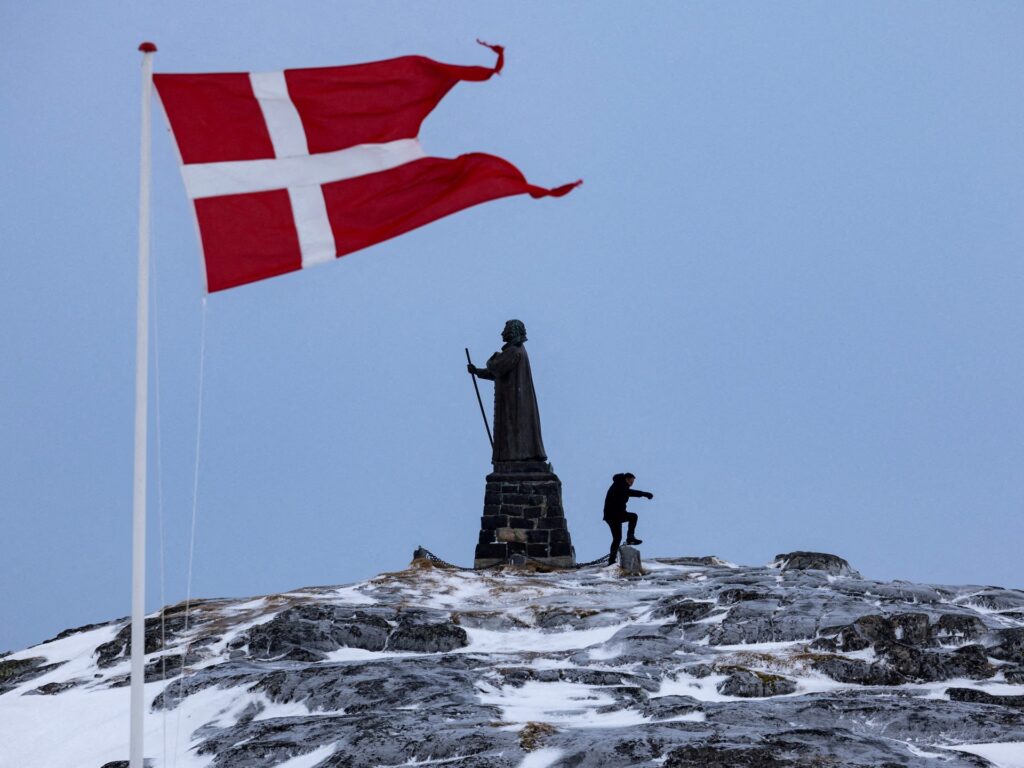
In recent developments surrounding Greenland, the world’s largest island, significant tensions have emerged due to escalated interest from the United States government. Aaja Chemnitz, a prominent Greenlandic lawmaker, has firmly stated that “Greenland is not for sale,” emphasizing the need to protect the island’s sovereignty amid increasing pressures from US officials.
The situation gained international attention following remarks and overtures from high-ranking American officials, including then-President Donald Trump, who publicly suggested the possibility of the United States purchasing Greenland. These proposals have stirred controversy, stirring concerns about political sovereignty and the controlling interests of foreign powers in Greenland.
Aaja Chemnitz expressed deep concern over the situation, stressing the importance of seeking viable and respectful solutions. “It’s very important to find solutions that respect Greenland’s autonomy and the rights of its people,” Chemnitz said, underscoring the need for dialogues that prioritize Greenland’s interests above geopolitical ambitions.
Greenland, an autonomous territory within the Kingdom of Denmark, is strategically located between the Arctic and Atlantic Oceans. Its vast natural resources, including rare minerals and potential oil reserves, make it an attractive location for global powers seeking influence in the Arctic region.
The US interest in Greenland reflects broader geopolitical shifts as the Arctic becomes increasingly accessible due to climate change, enabling new shipping routes and resource exploitation. For the US, control or influence over Greenland could reinforce military and economic positions in the region.
Denmark, responsible for Greenland’s foreign affairs and defense, has also responded cautiously to the US overtures, reaffirming their commitment to Greenland’s autonomy and the existing political structure. Danish officials highlighted that any discussions about Greenland require the consent of Greenland’s people and government.
Opposition to the US proposals is robust within Greenlandic society, where concerns over cultural preservation, environmental protection, and self-determination are paramount. Many Greenlanders view the suggestions of sale as colonial in nature, igniting nationalistic sentiments and calls for greater independence.
This evolving situation continues to capture international attention, illustrating the complexities at the intersection of local autonomy and global strategic interests. As Chemnitz advocates for respect and solution-oriented dialogue, the world watches closely to see how the balance between national sovereignty and international diplomacy will unfold regarding Greenland’s future.