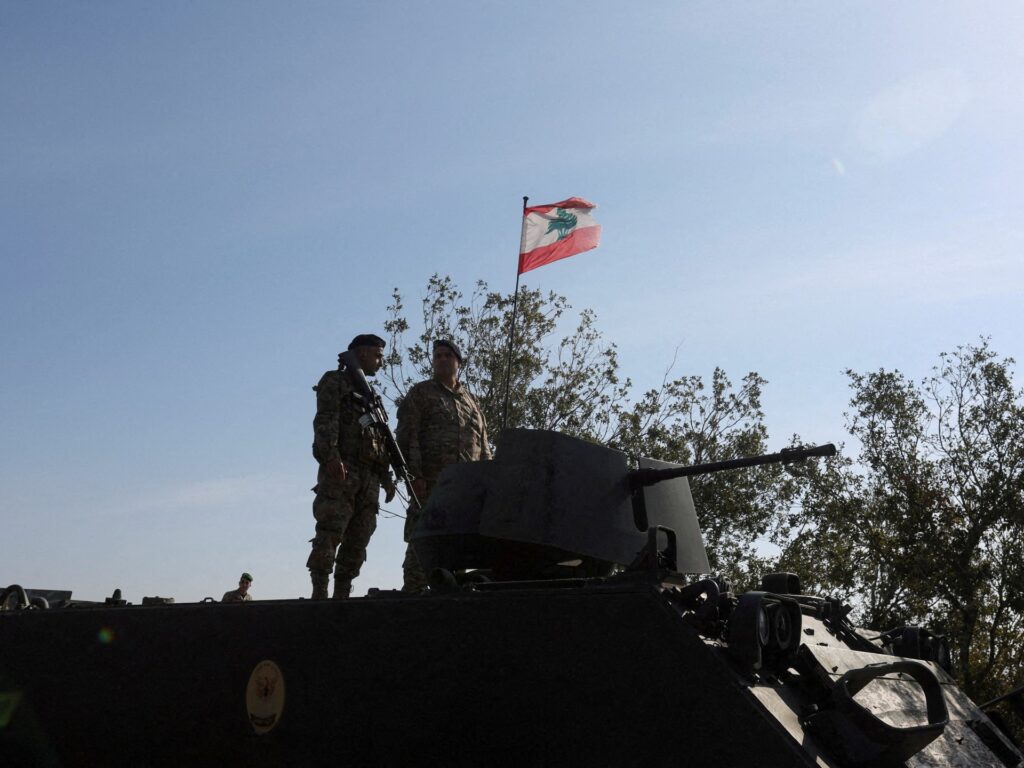
The Lebanese Army has officially announced the completion of the first phase in its operation to disarm non-state armed groups in the southern regions of Lebanon. In a public statement, the military highlighted that it has successfully established a state monopoly on arms in an effective and tangible manner within these areas. This marks a significant milestone in Lebanon’s ongoing efforts to consolidate national security and assert governmental control over all weapons within its borders.
The statement notably refrains from mentioning Hezbollah, the prominent political and military group in Lebanon, often recognized as a major armed faction outside the conventional Lebanese Armed Forces framework. This omission underscores the complex and sensitive nature of disarmament in Lebanon, where Hezbollah is both a political actor and a powerful militia.
Historically, Lebanon has struggled with the challenge of disarming various militias and non-state actors, many of which have wielded substantial influence and military capabilities. The south, in particular, has been a focal point because of its proximity to Israel and its history as a hotspot for armed conflict.
Achieving a state monopoly on arms is crucial for Lebanon’s stability. By effectively limiting possession of weapons to the official military and law enforcement agencies, the government hopes to reduce internal conflicts and prevent any non-state entities from engaging in violence or undermining state authority.
The army’s success in this first phase likely involved coordinated operations with local communities and possibly international support or observation, considering the strategic importance of the south and the historical tensions with Israel. This operation also sends a message to other regions and groups in Lebanon about the government’s commitment to disarm locally based militias.
While the army’s announcement is a positive development, the broader process of disarmament in Lebanon remains complicated. Groups like Hezbollah maintain significant armaments, which complicates the full realization of a state monopoly on weapons. The Lebanese government continues to navigate a delicate political landscape where security concerns intersect with sectarian and political loyalties.
As Lebanon moves forward, further phases of disarmament are anticipated, aiming to extend control over all areas and ensure lasting peace and security. The completion of phase one is a step towards national unity and the strengthening of state institutions.
Observers will closely watch how the Lebanese government addresses the remaining challenges, particularly concerning Hezbollah and other armed entities. Success in this endeavor could lead to enhanced stability in Lebanon and the broader Middle East region.
In summary, the Lebanese Army’s proclamation of completing phase one in disarming non-state groups in the south marks a notable progress. It symbolizes a reaffirmation of the state’s sovereignty and its determination to curb unauthorized arms possession, heralding hope for a more peaceful and stable Lebanon.