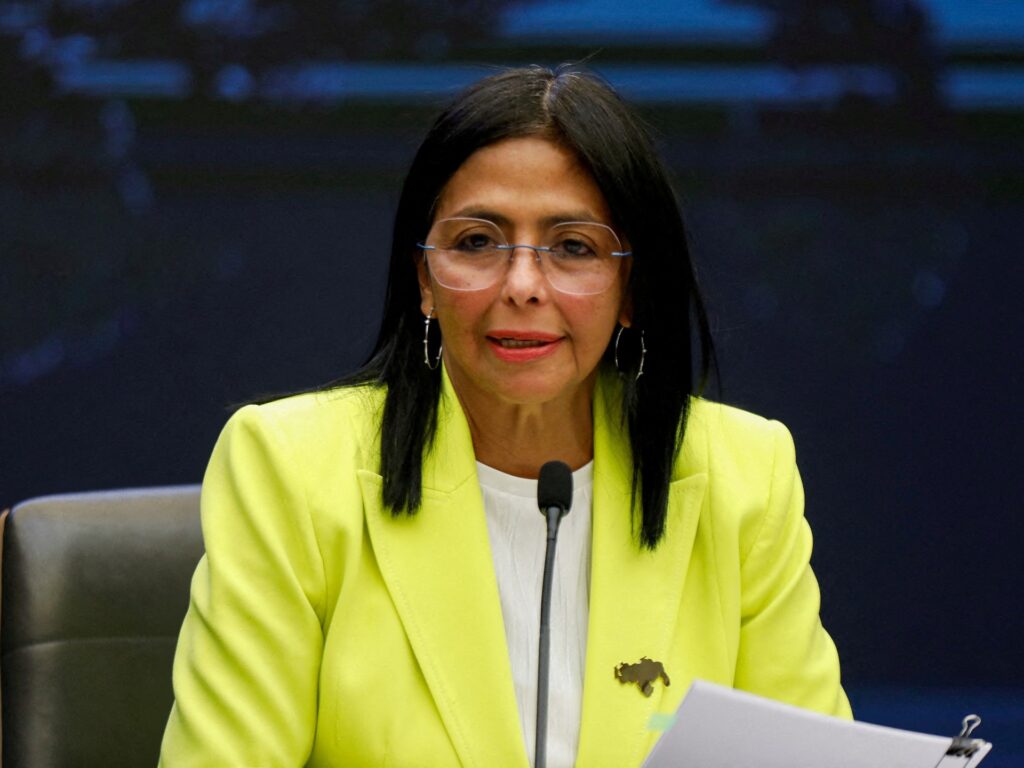
In a notable shift in tone, Venezuela’s interim leader has expressed readiness to adopt a more cooperative stance towards the United States. Acting President Delcy Rodriguez emphasized the importance of cultivating a ‘balanced and respectful’ relationship with Washington in the context of the nation’s ongoing political transition.
Historically, relations between Venezuela and the United States have been strained, marked by mutual distrust and criticism. The rhetoric from Venezuelan leadership often involved strong denunciations of US policies and interventions. However, Rodriguez’s recent statements signal a potential thaw in this diplomatic coldness.
Rodriguez, serving as acting president during a critical period of governance change, underlined the imperative of stabilizing international relationships, especially with influential global players like the US. She pointed out that collaboration could pave the way for functional diplomacy that benefits both nations and the Venezuelan populace.
The call for a ‘balanced and respectful’ engagement underscores a strategic approach aimed at reducing tensions and fostering mutual understanding. This approach might open avenues for dialogue on various contentious issues, ranging from economic sanctions to humanitarian aid.
Analysts view this shift as a pragmatic move amid ongoing internal challenges in Venezuela, including economic difficulties and political uncertainty. Improved US-Venezuela relations could potentially alleviate some of these pressures by attracting foreign investment and easing restrictions.
The United States has maintained a cautious stance regarding Venezuela’s interim government, often linking progress to tangible democratic reforms and respect for human rights. The expressed willingness to engage respectfully may provide the US with a framework to reconsider its approach.
Observers are now closely watching how these diplomatic overtures unfold. Will they translate into concrete policy changes, or are they primarily aimed at improving the interim leader’s domestic and international image? Only time will tell.
This development also places emphasis on the broader geopolitical dynamics in Latin America, where relations with the US are pivotal for economic and security partnerships. Venezuela’s pivot towards engagement suggests a nuanced understanding of these realities.
In conclusion, Acting President Delcy Rodriguez’s toned-down criticism and call for cooperation with the United States marks a significant moment in Venezuelan diplomacy. It reflects a potential turning point that could influence the country’s political trajectory and its role on the international stage during this transitional phase.