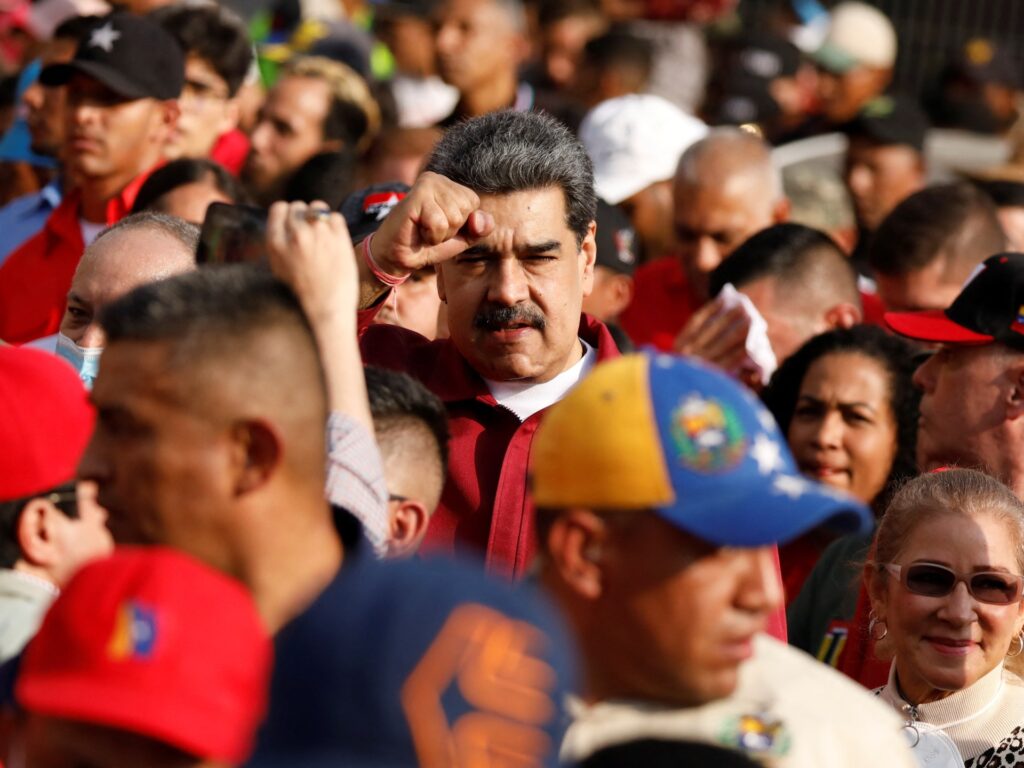
The United States has formally charged Venezuelan President Nicolas Maduro, along with five others, with several crimes linked to illicit activities. Among the most serious allegations is ‘narco-terrorism,’ a charge that highlights the US government’s accusation of Maduro’s involvement in drug trafficking operations combined with the use of violence and intimidation typically associated with terrorism.
These charges represent a significant escalation in the US-Venezuela tensions, with the US accusing Maduro’s regime of facilitating and participating in drug trafficking networks that not only bring narcotics into the United States but also contribute to violence and political destabilization. Narco-terrorism implies that the accused have used or supported terrorism as a method to control trafficking routes, intimidate rivals, and maintain power.
Alongside narco-terrorism, Maduro and the others face charges that may include conspiracy to traffic drugs, money laundering, and other offenses related to the corruption and criminal enterprises allegedly run under their leadership. These accusations come as part of a broader effort by the US to hold foreign leaders accountable for activities that directly threaten US national security and citizens.
The indictment underscores the US’s commitment to combatting international drug trafficking and terrorism, particularly focusing on the nexus between political power and criminal enterprises in Latin America. It also has diplomatic implications, potentially leading to increased sanctions, diplomatic isolation, and efforts to pressure the Maduro government politically.
Overall, the charges of narco-terrorism and associated crimes against Nicolas Maduro signify a strong message from the US government regarding its stance on the Venezuelan leader’s conduct and its consequences for regional and international security.