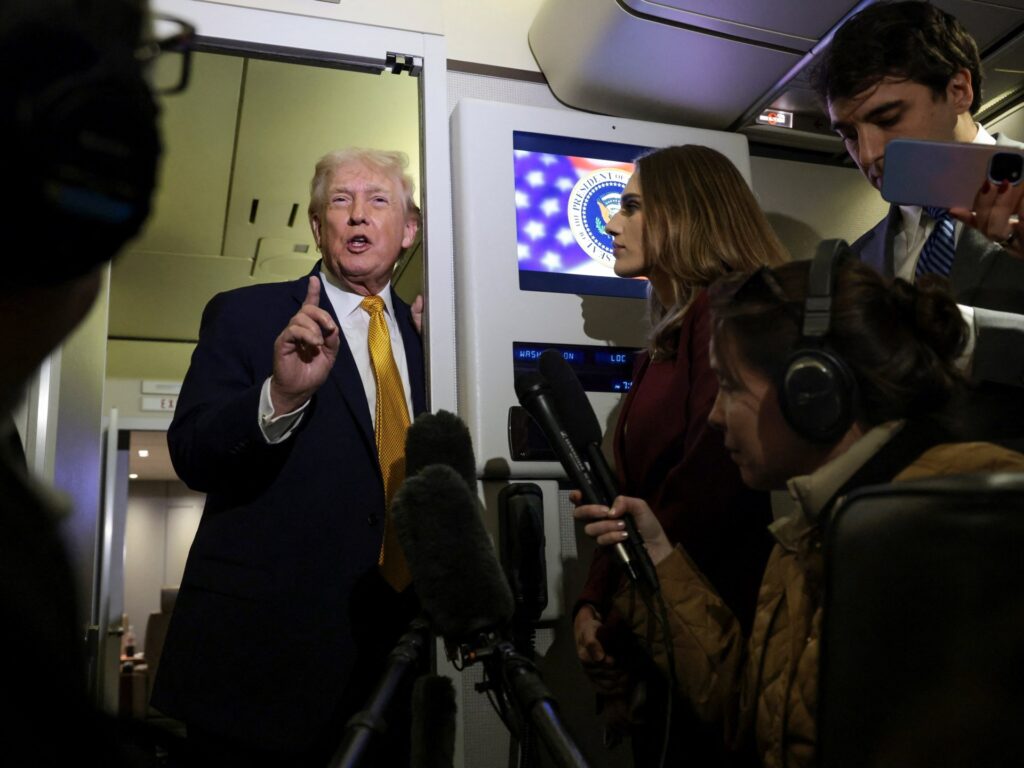
In a series of provocative remarks, former US President Donald Trump has threatened Colombian President Gustavo Petro while commenting on the political situation in Cuba. Trump suggested that a military operation in Colombia “sounds good” to him, signaling heightened tensions between the United States and Colombia’s new government. This statement reflects Trump’s hardline stance on Latin American politics, contrasting with diplomatic approaches.
Trump’s warning to President Petro comes amid concerns over Colombia’s shift towards leftist policies under Petro’s leadership. The US has traditionally maintained strong ties with Colombia, particularly in security and anti-narcotics efforts. Trump’s suggestion of military intervention marks a stark departure from previous administrations’ strategies and has sparked controversy.
In addition to his comments about Colombia, Trump declared that Cuba “looks ready to fall,” implying potential political instability or change in the communist-governed island nation. This statement may indicate expectations of a possible shift in Cuba’s political landscape, though details and timing remain unclear.
Furthermore, Trump addressed Mexico, urging the country “to get their act together.” This brief pronouncement likely refers to ongoing concerns regarding border security and immigration policies that have been contentious topics in US-Mexico relations.
The remarks come at a time when Latin America is experiencing significant political shifts, with leftist governments gaining ground in countries like Colombia and challenges facing long-standing regimes in places such as Cuba. Trump’s statements may be intended to assert US influence and signal resistance to changes he perceives as unfavorable.
Political analysts suggest that while Trump’s comments are mostly rhetorical, they could exacerbate tensions and complicate diplomatic efforts. The prospect of a military operation in Colombia is particularly alarming to many observers who fear escalated conflict and regional destabilization.
President Gustavo Petro, Colombia’s first leftist president in decades, has pursued policies focusing on social reform, environmental concerns, and peace negotiations with armed groups. His administration’s efforts have been met with both support and criticism domestically and internationally.
Cuba’s political situation remains complex, with ongoing economic challenges and pressure for reforms. Trump’s declaration that the island “looks ready to fall” resonates with previous US administrations’ hopes for regime change but contrasts with current diplomatic attempts to engage with Cuba.
Mexico, dealing with migration pressures and bilateral cooperation issues, has also felt the impact of Trump’s critical stance. His call for Mexico to improve its actions suggests continuing expectations for better results on border control and security measures.
These developments illustrate the volatile nature of US-Latin America relations under Trump’s influence, where aggressive rhetoric and potential threats of military action coexist with long-standing diplomatic ties.
As the international community watches these unfolding events, the balance between diplomacy and confrontation remains delicate. The implications of Trump’s statements could influence political dynamics and security policies across the region.
In conclusion, Donald Trump’s threats to Colombia’s Petro, comments on Cuba’s stability, and warnings to Mexico highlight ongoing challenges in US relations with Latin America. The call for military intervention in Colombia, the suggestion of Cuba’s imminent change, and demands placed on Mexico underscore a tense period marked by political shifts and uncertainty.
Observers will continue to monitor the situation closely to assess the impact of these remarks on regional peace, government relations, and the broader geopolitical landscape influencing the Americas.