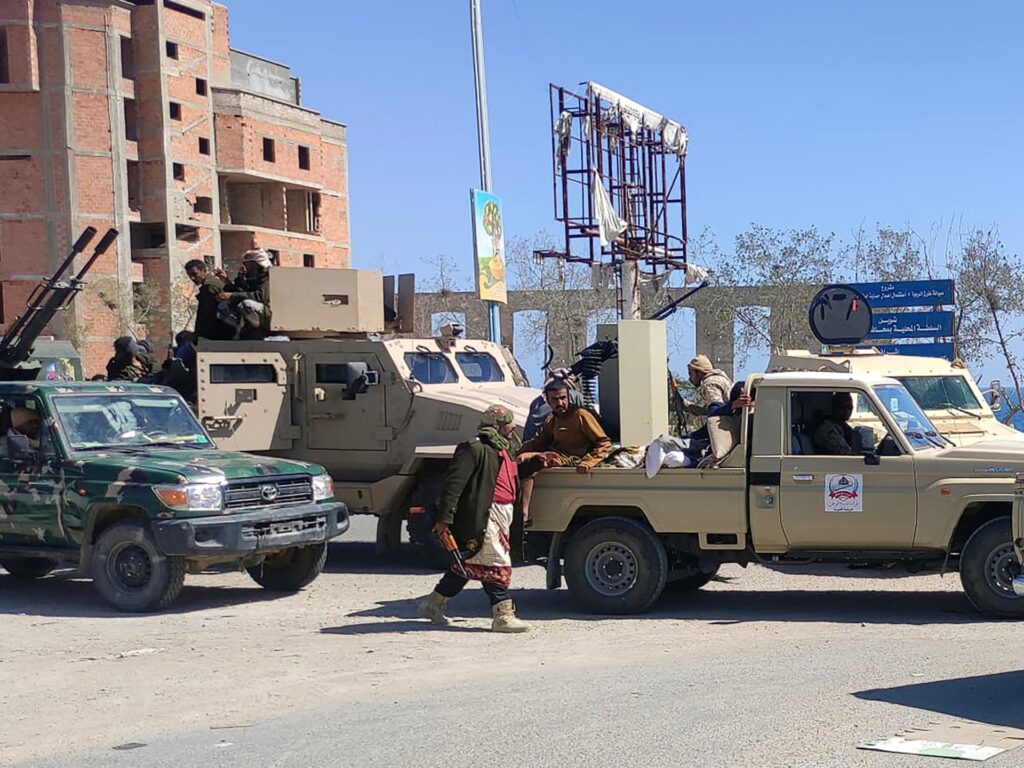
ADEN, Yemen – Government forces, heavily supported by the Saudi-led coalition, have achieved significant military successes in southern Yemen, retaking control of multiple strategic cities. The victories mark a crucial development in the protracted conflict, bolstering the position of the internationally recognized government and its allies.
The head of Yemen’s Presidential Leadership Council (PLC), Rashad al-Alimi, lauded the performance of the Homeland Shield forces, describing their recent operations as a “record success.” These gains are seen as a substantial step forward in stabilizing the volatile southern regions and pushing back against opposing factions that have challenged the government’s authority.
The offensive focused on dislodging various extremist and separatist groups that had established strongholds across several key urban centers and strategic routes in the southern governorates. While specific city names were not immediately released, local reports suggest that vital logistical hubs and population centers have been secured, allowing for improved humanitarian access and the re-establishment of state institutions.
The Homeland Shield forces, an integral part of the government’s military apparatus, have demonstrated enhanced operational capabilities and coordination with their Saudi backers. Their recent string of victories is a testament to the ongoing restructuring and training efforts aimed at creating a more cohesive and effective fighting force capable of maintaining territorial integrity and security.
Rashad al-Alimi’s statement from the Presidential Leadership Council underscores the political weight behind these military achievements. The PLC, formed last year under Saudi auspices, represents a broad coalition of anti-Houthi factions and aims to guide Yemen towards a more unified and stable future. These military wins provide the council with much-needed legitimacy and leverage on both the domestic and international stages.
The broader conflict in Yemen, which has raged for nearly a decade, involves a complex interplay of regional and international actors. The Saudi-led coalition intervened in 2015 to support the government against the Houthi movement, which controls much of the north. However, the southern front has seen its own battles, often involving local militias and extremist elements vying for power and control.
These recent territorial gains could significantly alter the dynamics of the conflict in the south, potentially paving the way for greater stability and a more focused effort against the Houthi insurgency. Observers suggest that a more secure southern Yemen could provide a stronger base for future peace negotiations, even as humanitarian concerns remain paramount across the country.
The successful operations by the Saudi-backed forces are expected to have a positive impact on the security situation in the recaptured areas, allowing residents to return to some semblance of normalcy. The focus will now shift to consolidating these gains, rebuilding infrastructure, and ensuring the long-term stability of the liberated cities under government control.