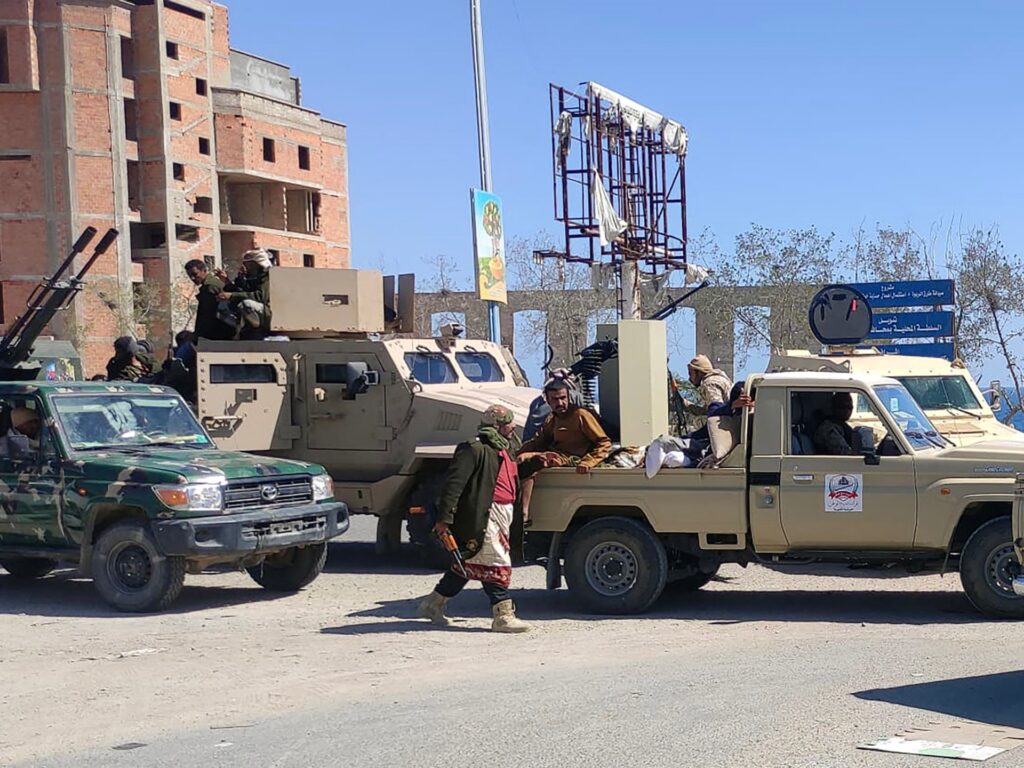
In a significant development for the Yemeni conflict, Saudi-backed government forces have successfully retaken multiple key cities across southern Yemen. The offensive marks a crucial shift in the ongoing struggle, bolstering the position of the internationally recognized government.
Rashad al-Alimi, the esteemed head of the Presidential Leadership Council, issued a statement commending the rapid progress of the Homeland Shield forces. Al-Alimi lauded their achievements, describing them as a “record success” – a testament to the strategic planning and effective execution displayed by the government troops.
The reclaiming of these southern urban centers is expected to have far-reaching implications for the political and humanitarian landscape of Yemen. Analysts suggest this could be a pivotal moment, potentially paving the way for further advances against opposing factions and strengthening the government’s control over vital regions.
Details emerging from the front lines indicate that the Homeland Shield forces employed well-coordinated tactics, which contributed to their swift victories. While specific operational details remain guarded, the speed at which these territories were secured has surprised many observers.
The recaptured cities are crucial logistical hubs and population centers, whose return to government control will undoubtedly improve the delivery of humanitarian aid and the restoration of essential services to their residents. For too long, these areas have suffered under the strain of conflict, with their populations enduring immense hardship.
The international community will be closely watching the aftermath of these events, assessing their impact on peace efforts and the overall stability of the region. The successes of the Saudi-backed forces could either solidify their bargaining position in future negotiations or intensify the existing hostilities.
Al-Alimi’s declaration of “record success” reflects a renewed sense of confidence within the Presidential Leadership Council. This sentiment is likely to resonate among government loyalists and could serve to galvanize further support for their cause, both domestically and internationally.
The immediate priorities following these gains will likely include consolidating control, establishing security, and initiating rehabilitation efforts in the newly liberated areas. The challenge now lies in transforming military victories into lasting stability and improving the lives of ordinary Yemenis.
The road ahead for Yemen remains fraught with challenges, but these recent developments offer a glimmer of hope for a potential turning point in a conflict that has ravaged the nation for years. The focus will now shift to how these gains will influence the broader trajectory towards a comprehensive and lasting peace in Yemen.