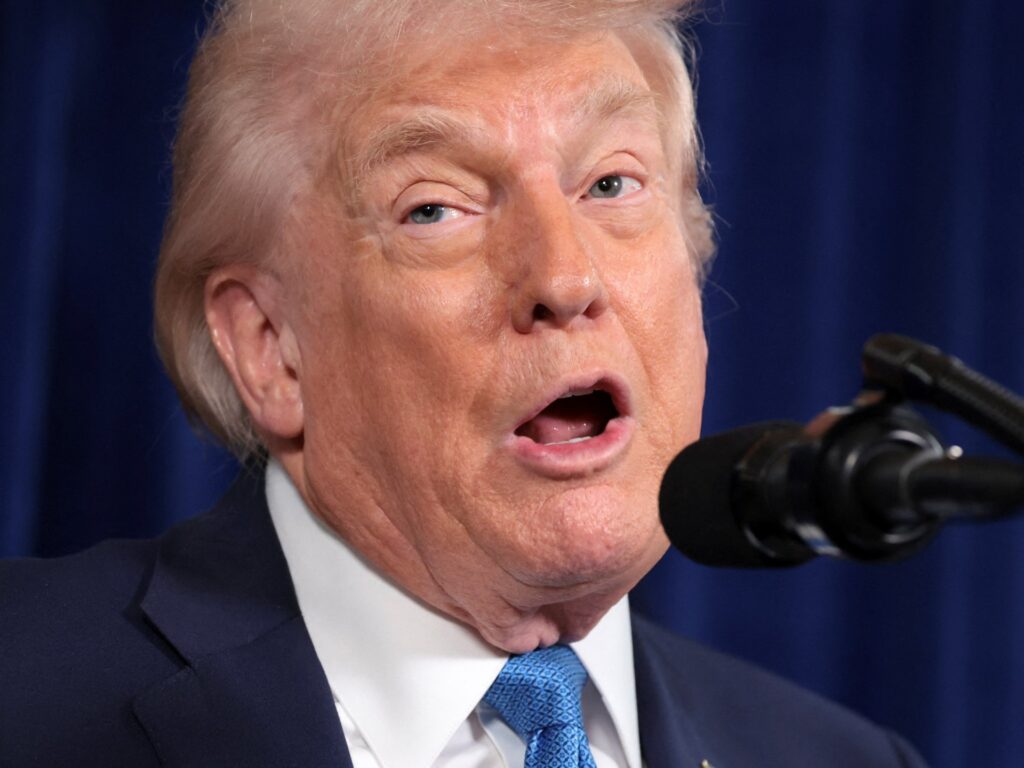
In a stunning and unconfirmed declaration, then-US President Donald Trump asserted that the United States had “captured” Venezuelan President Nicolás Maduro in the “dead of night.” This dramatic pronouncement, made without immediate corroborating evidence or further details from official US channels, sent shockwaves across the globe, immediately raising questions about the veracity of the claim and the potential implications for an already volatile region. The statement marked a significant escalation in the ongoing diplomatic and political standoff between Washington and Caracas, a relationship characterized by deep animosity and a consistent US push for regime change.
President Trump further declared that the United States intended to “run” Venezuela until a “safe and judicious” transition of power could be firmly established. This assertion solidified the perception of a highly interventionist stance by the Trump administration, openly signaling a readiness to directly influence the governance and political future of the oil-rich South American nation. Such rhetoric underscored a long-held US policy of not recognizing Maduro’s legitimacy, instead backing opposition leader Juan Guaidó as the interim president since early 2019, following what the US and many allies deemed fraudulent elections.
The claim of Maduro’s capture, especially under the cloak of darkness, immediately sparked intense speculation and drew a mixture of disbelief and cautious anticipation. While US officials often employ strong language regarding Venezuela, a direct claim of capturing a sitting head of state represents an unprecedented level of asserted action. The lack of specifics surrounding the alleged event left many observers questioning the nature of the “capture,” whether it implied physical apprehension, a strategic neutralization, or perhaps a more figurative political maneuver designed to destabilize the Maduro regime further.
For years, the United States had applied immense pressure on Maduro’s government through a comprehensive sanctions regime targeting Venezuela’s oil industry, government officials, and financial transactions. These measures were aimed at crippling the economy and fostering internal dissent, hoping to force Maduro from power. The US Department of Justice had also previously indicted Maduro and several top officials on narco-terrorism charges, placing a $15 million bounty on his head, further intensifying the pressure and signaling a clear intent to remove him.
Trump’s statement about running Venezuela until a “safe and judicious” transition suggested a profound, albeit undefined, level of US involvement in Venezuela’s internal affairs. Critics immediately voiced concerns about potential infringements on national sovereignty and the dangers of unilateral action without international consensus. Such declarations often evoke historical memories of US interventions in Latin America, which have frequently led to long-term instability and anti-American sentiment within the region. The definition of “safe and judicious” itself remained open to interpretation, likely implying a transition that aligns with US strategic interests and democratic values.
The international community, already deeply divided on the Venezuelan crisis, braced for potential ramifications. While some US allies might welcome a decisive move against Maduro, others, particularly countries advocating for non-intervention and diplomatic solutions, would likely condemn any overt military or covert action. The United Nations and regional bodies like the Organization of American States (OAS) have repeatedly called for peaceful resolutions and humanitarian aid, making a unilateral “capture” and administration of a sovereign nation a highly contentious proposition.
In Caracas, the reaction to such a claim would undoubtedly be one of fierce defiance and condemnation. Maduro’s government, consistently portraying itself as a bulwark against US imperialism, would likely leverage the statement to rally its supporters and further entrench its narrative of external aggression. The lack of any visual evidence or official confirmation from Venezuelan sources regarding Maduro’s apprehension only added to the confusion and allowed the government to dismiss the claims as baseless propaganda.
The pronouncement also served to heighten the already dire humanitarian crisis in Venezuela, potentially exacerbating political instability and creating further uncertainty for millions of citizens grappling with hyperinflation, shortages, and a crumbling infrastructure. The prospect of foreign administration, even if temporary, could lead to unforeseen consequences, ranging from increased internal strife to a further mass exodus of refugees seeking stability elsewhere.
Ultimately, President Trump’s declaration represented a significant verbal escalation in the US strategy towards Venezuela, laying bare an explicit intent to dictate the nation’s political future. While the immediate truth of Maduro’s alleged “capture” remained shrouded in mystery, the willingness of the US President to make such a public claim underscored the high stakes involved and the unwavering commitment of the Trump administration to achieving a change of leadership in Caracas, regardless of the profound geopolitical and ethical implications. The world watched, waiting for either confirmation or clarification, as the fate of Venezuela hung precariously in the balance.