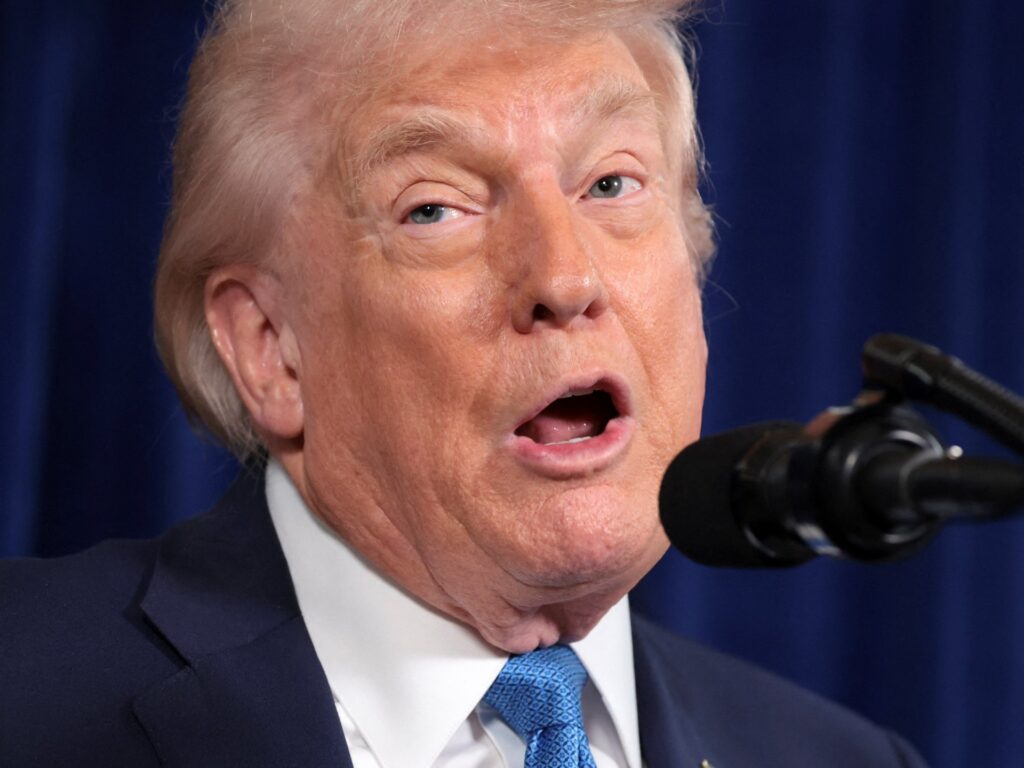
In a startling declaration that has sent ripples across international diplomacy, former President Donald Trump stated that the United States would “run” Venezuela following Nicolas Maduro’s recent consolidation of power. This bold assertion, made in the context of Venezuela’s ongoing political turmoil and economic collapse, signals a potentially dramatic shift in the U.S. approach to the beleaguered South American nation.
Trump’s comments suggest a robust interventionist stance, aiming to stabilize the country under direct U.S. oversight. He articulated a vision where the U.S. would manage Venezuela’s affairs “until such time as we can do a safe, proper and judicious transition.” This statement immediately raises questions about the scope, legality, and practicalities of such an undertaking, especially given the complexities of Venezuelan internal politics and strong international reactions to any perceived external interference.
The former President’s remarks come at a time when Venezuela continues to grapple with a severe humanitarian crisis, marked by hyperinflation, widespread food and medicine shortages, and a massive exodus of its citizens. Nicolas Maduro’s government, widely criticized for authoritarian practices and human rights abuses, has faced international condemnation, with many nations, including the U.S., not recognizing the legitimacy of his latest re-election.
Trump’s proposal of the U.S. “running” the country implies a temporary administrative role, aiming to establish conditions for a democratic transfer of power. However, the exact mechanism for achieving this remains undefined. Such a move would undoubtedly face significant hurdles, including resistance from the Maduro regime, potential opposition from regional allies, and the logistical challenges of governing a sovereign nation.
Historically, direct foreign administration of sovereign states has been fraught with complexities and often met with strong nationalistic backlash. The notion of a “safe, proper and judicious transition” underscores the perceived need for stability and order, but achieving this without exacerbating existing tensions or violating international law would be a formidable task.
Analysts are already dissecting the implications of Trump’s words, pondering whether this represents a concrete policy suggestion or a rhetorical flourish. The international community will be closely watching for further clarification or action, as any direct U.S. involvement in Venezuela’s governance would represent a monumental shift in regional dynamics and global foreign policy.
The future of Venezuela, already precarious, now seems to hang in an even more uncertain balance, with the possibility of a U.S.-led interim administration adding another layer of complexity to its path towards resolution. The declaration by Trump has reignited debates about sovereignty, intervention, and the role of global powers in addressing crises in other nations.