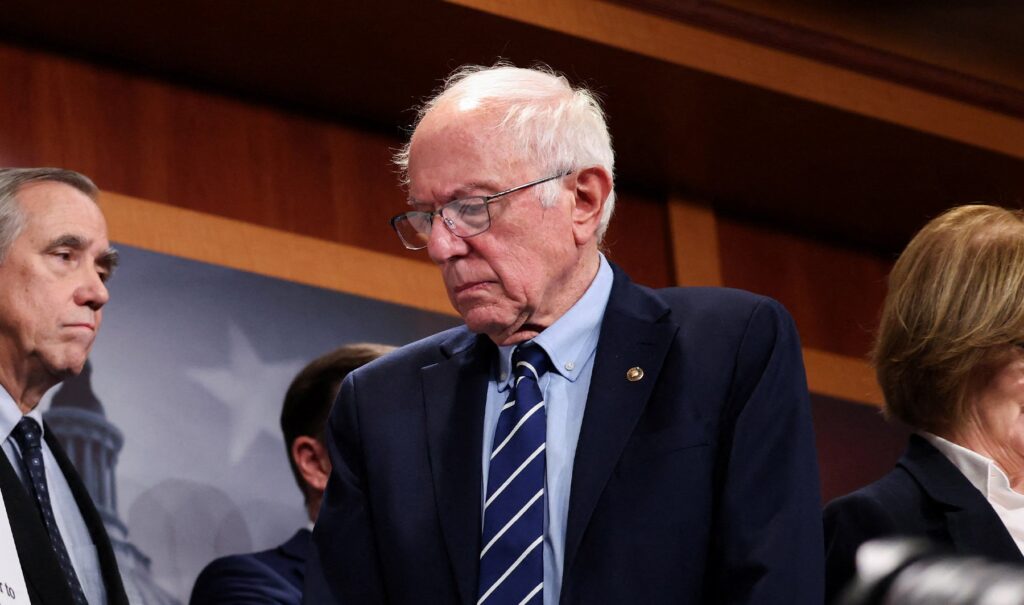
Bernie Sanders has launched a scathing condemnation of President Trump’s recent actions regarding Venezuela, accusing the administration of bypassing Congress and dangerously escalating tensions that could lead the United States into war. The Vermont Senator and prominent Democratic figure voiced his deep concerns over what he perceives as a unilateral approach to foreign policy, sidestepping the constitutional role of the legislative branch in matters of military engagement.
Sanders’ criticism comes amidst growing geopolitical friction surrounding Venezuela, a nation grappling with severe political and economic crises. While the Trump administration has been vocal in its opposition to the Maduro government, imposing sanctions and supporting opposition figures, Sanders argues that any move towards military intervention without explicit congressional approval represents a grave dereliction of democratic process and a perilous path forward.
“President Trump’s efforts to bypass Congress to take our country into war in Venezuela is an outrage,” Sanders stated, underscoring his long-standing position against unauthorized military actions. His remarks resonate with a broader concern among some lawmakers and constitutional scholars who emphasize the importance of congressional oversight in matters of war and peace, a power explicitly granted to Congress by the U.S. Constitution.
The U.S. Constitution empowers Congress to declare war, a check designed to prevent a president from unilaterally committing the nation to armed conflict. Critics of Trump’s foreign policy argue that his administration has frequently tested these boundaries, employing executive actions and deploying military assets without seeking formal declarations or authorizations from Congress, raising serious questions about the separation of powers.
Sanders, known for his progressive stance on foreign policy, has consistently advocated for diplomatic solutions and international cooperation over military intervention. His latest comments highlight a fundamental disagreement with the current administration’s confrontational approach to Venezuela, warning of potentially catastrophic consequences should the situation escalate into armed conflict.
The senator’s remarks also draw attention to the potential humanitarian fallout and regional instability that a military engagement could unleash. A full-scale conflict in Venezuela could exacerbate the existing humanitarian crisis, trigger a massive refugee exodus, and destabilize an already volatile South American region, consequences that Sanders and others have repeatedly cautioned against.
His condemnation serves as a stark reminder of the ongoing debate within U.S. politics regarding the scope of presidential power in foreign affairs and the necessity of congressional involvement. As tensions continue to simmer in Venezuela, Sanders’ voice adds significant weight to calls for a cautious and constitutionally sound approach, prioritizing diplomacy and democratic accountability over unilateral military action.