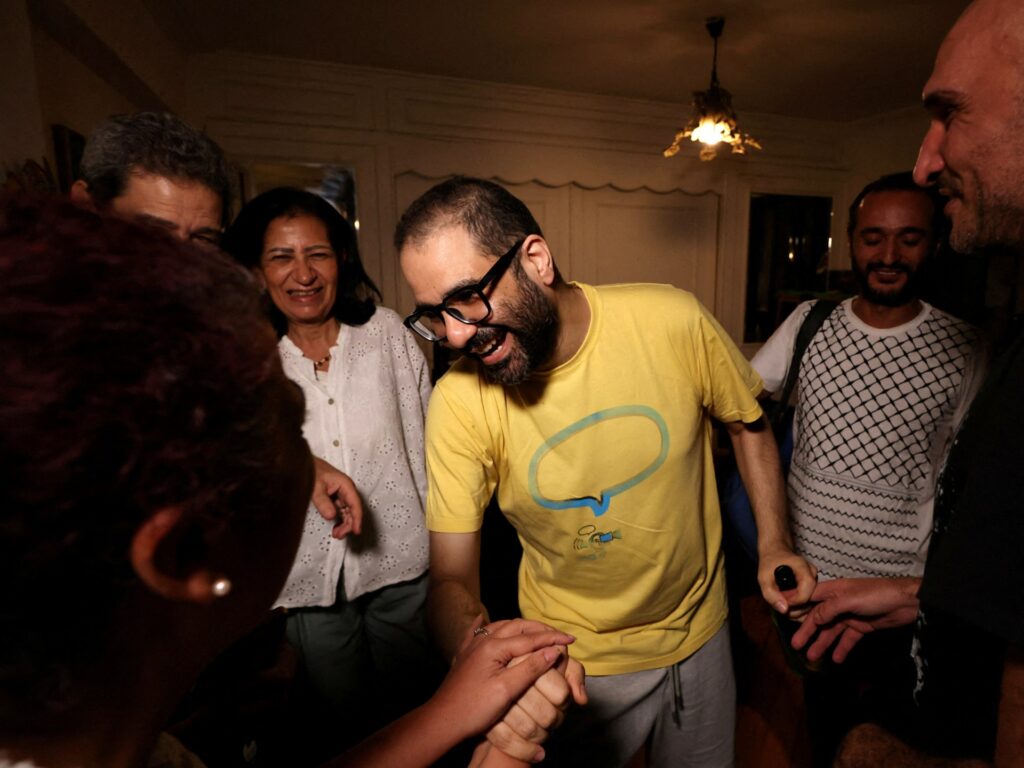
In a controversial move, UK Members of Parliament have unearthed decade-old tweets made by Egyptian writer and human rights activist Alaa Abd El-Fattah. This action comes as they demand the revocation of his British citizenship. Abd El-Fattah, a prominent figure known for his steadfast commitment to activism and democracy in Egypt, has faced repeated imprisonments there due to his outspoken views.
The tweets in question, which date back ten years, have sparked a fierce debate in the UK about freedom of expression, the relevancy of past social media activity to current citizenship, and the broader political stance toward activists abroad.
Alaa Abd El-Fattah has responded to the controversy by issuing an unequivocal apology regarding the content of those old tweets. He expressed regret and clarified that his views have evolved over time. His apology aims to address concerns raised by MPs and the public alike, acknowledging the impacts of his past words while underscoring his ongoing commitment to human rights.
The case has drawn significant attention not only in political circles but also among human rights organizations and the global activist community. Critics of the MPs’ stance argue that digging up decade-old posts to strip someone of citizenship sets a dangerous precedent that may threaten freedom of speech and the principles of justice.
Supporters of Abd El-Fattah emphasize his long history of fighting for justice and democracy in Egypt, highlighting his multiple imprisonments as evidence of his principled activism. They caution against using old social media content as a tool for political retribution.
Legal experts have weighed in on the matter, pointing out the complexities involved in citizenship laws and the challenge of balancing national security concerns with individual rights in a digital age. They suggest that while governments have the authority to revoke citizenship in certain circumstances, such actions should be taken with extreme caution and full consideration of the broader implications.
The UK government has not yet made a final decision regarding the MPs’ demands, but the controversy underscores the evolving challenges democracies face in the era of social media and global activism.
This incident highlights a growing trend where historical digital footprints are scrutinized, leading to questions about accountability, redemption, and the permanence of online expressions. It serves as a critical case study on how societies navigate the tension between historical actions and present-day identities.
Alaa Abd El-Fattah remains a symbolic figure for many advocating for human dignity, political reform, and the rights of those imprisoned unjustly worldwide. His situation in the UK reflects broader concerns about how states manage dissent and the rights of dual nationals engaged in activism.
The debate sparked by this development will likely continue as governments, activists, and citizens grapple with questions of justice, memory, and the power of words in the digital era.