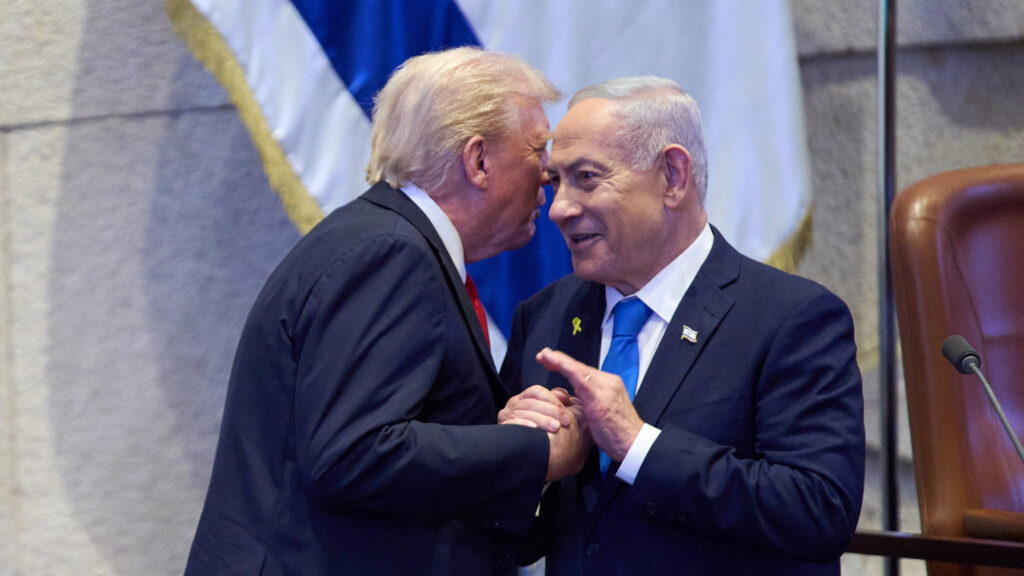
Israeli Prime Minister Benjamin Netanyahu has been actively engaging in discussions with U.S. Presidents amidst a period of significant regional unrest following the Gaza war. These high-level meetings have become a crucial platform for addressing the escalating tensions in the Middle East, particularly given the volatile situation in Gaza and its broader implications.
The Gaza conflict has been a focal point in Netanyahu’s diplomatic talks, with a primary emphasis on finding avenues for de-escalation and increased security cooperation. The situation’s complexity demands coordinated efforts between Israel and the United States to prevent further deterioration of peace and stability in the region.
Netanyahu’s continued dialogue with the current U.S. President is set against a backdrop of increased regional activity, including shifts in alliances and emerging security challenges. These developments necessitate urgent discussions to align strategic interests and explore diplomatic solutions.
Throughout past meetings, Netanyahu has underscored the critical need for robust support from the U.S. in counterterrorism measures and safeguarding Israeli citizens. In response, the U.S. administration has reiterated its commitment to Israel’s security while advocating for renewed efforts toward a long-term resolution of the Israeli-Palestinian conflict.
The upcoming meeting is anticipated to address several key topics: managing the aftermath of the Gaza war, mitigating further escalation in neighboring areas, and reinforcing diplomatic channels between the two nations. Both leaders are expected to evaluate ongoing humanitarian concerns and discuss strategies for providing aid to affected populations.
This engagement reflects a broader strategic partnership that goes beyond immediate conflict management. It includes discussions on economic cooperation, intelligence sharing, and coordinated responses to regional threats posed by various non-state actors and state adversaries.
Analysts suggest that Netanyahu’s meetings with U.S. Presidents are instrumental in shaping the trajectory of Middle East peace efforts, serving as a pivotal point for influencing U.S. foreign policy decisions related to the region.
Moreover, these meetings highlight the challenges Israel faces in maintaining regional stability while navigating complex international relations, particularly with the United States as a key ally.
As Netanyahu prepares to meet the U.S. President again, expectations are high for constructive dialogues that could pave the way for renewed diplomatic initiatives. The ongoing conflict situations demand sustained engagement and innovative approaches to achieve durable peace.
In conclusion, Netanyahu’s meetings with U.S. Presidents exemplify critical diplomatic efforts aimed at addressing immediate security issues and fostering long-term regional stability. The outcomes of these discussions will likely have significant implications for the future of Israeli-U.S. relations and the broader Middle East geopolitical landscape.