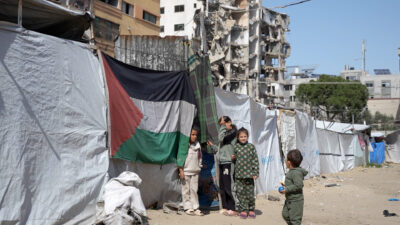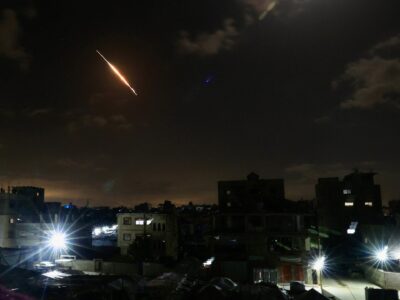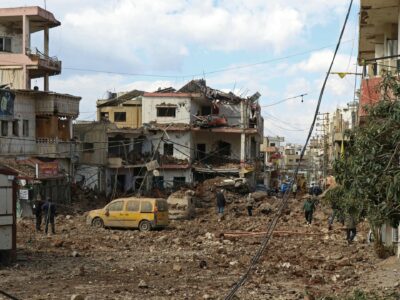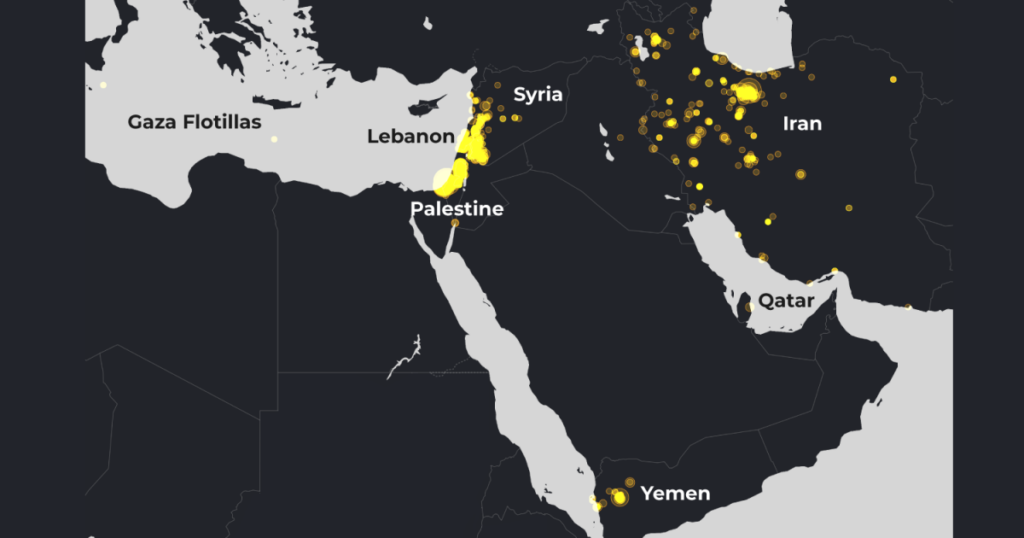
In 2025, Israel has engaged in a series of military operations across several countries in the Middle East, reflecting a complex and volatile geopolitical landscape. An animated map tracing these actions reveals the breadth of Israel’s engagements, highlighting attacks in Palestine, Lebanon, Iran, Syria, Qatar, and Yemen, as well as in surrounding maritime waters.
The ongoing conflict with Palestine remains central to Israel’s security strategy, with numerous operations aimed at militant groups impacting civilians and combatants alike. In Lebanon, Israel’s military focus is primarily on Hezbollah positions, which have been targeted repeatedly amid fears of escalated regional hostilities.
Operations in Iran mark a significant expansion of Israel’s target scope. These attacks, often carried out in covert or drone-led missions, appear aimed at preventing Iran’s nuclear advancements and disrupting military infrastructure.
Syria’s conflict-ridden landscape has also seen Israeli interventions, particularly targeting Iranian-backed militias and weapon transfers. These actions underline the proxy dimensions of the Syrian civil war, with Israel seeking to curtail hostile presences near its borders.
Less expected are strikes in Qatar and Yemen, signaling Israel’s concerns over emerging threats from groups in these nations and their strategic maritime positions. The maritime attacks, primarily in international waters, focus on deterring smuggling and arms shipments perceived as threats to Israeli security.
This animated map of 2025 operations provides a moving visual summary of Israel’s multifaceted military campaign spread across multiple fronts. It underscores the ongoing instability in the region and the challenges of achieving lasting peace amid rising tensions.
The wide geographical spread of attacks reflects Israel’s strategic imperative to neutralize threats before they can materialize into direct confrontations. However, these operations have drawn international attention and varying degrees of criticism, particularly regarding civilian casualties and the broader implications for regional stability.
As the year progresses, the dynamic situation calls for close monitoring, with the animated map serving as a crucial tool for understanding the scope and impact of Israel’s actions in the Middle East in 2025.