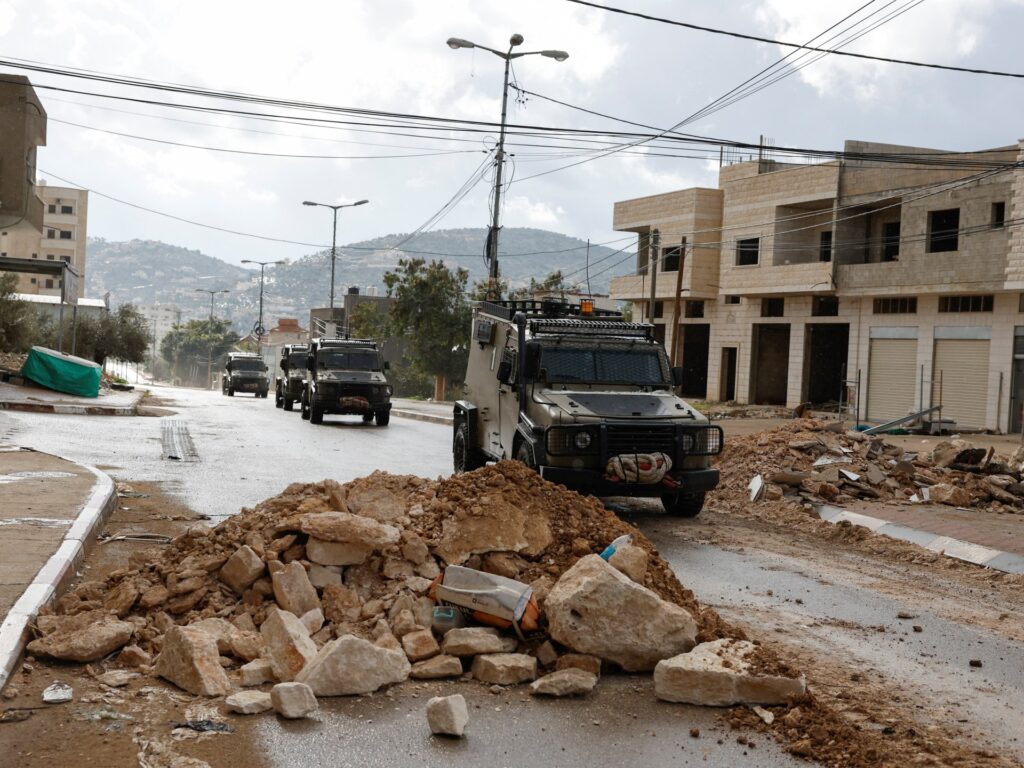
Israeli forces have carried out a significant operation in the West Bank town of Qabatiya, involving the takeover of residential homes and the enforcement of a stringent lockdown. This move comes in direct response to an order from the Israeli Defence Minister, who instructed the military to “act forcefully” against the Palestinian town.
Qabatiya, a town located in the northern part of the West Bank, has witnessed heightened tensions following the incursion by Israeli troops. The military operation led to the occupation of several homes, disrupting the lives of many Palestinian families and adding to the already dire circumstances in the region.
The order from the Israeli Defence Minister reflects a broader strategy aimed at asserting control and quelling resistance within contested areas of the West Bank. Such directives emphasize the use of strong military measures to suppress activities deemed threatening to Israeli security interests.
The lockdown imposed on Qabatiya restricts the movement of residents, effectively isolating the town. This restriction has implications not only on daily life but also on access to essential services such as education, healthcare, and employment, further exacerbating the humanitarian situation.
Human rights organizations and international observers have raised concerns over the impact of these actions on the civilian population. The forced occupation of homes and the lockdown measures are viewed as violations of international law and as strategies that contribute to the destabilization of peace efforts in the region.
Palestinian leaders have condemned the Israeli military’s actions, calling for an end to the occupation and the restoration of freedom for the residents of Qabatiya. They emphasize the need for dialogue and peaceful resolution rather than aggressive military interventions.
The Israeli Defence Minister’s order follows a series of similar measures in other West Bank towns, reflecting a consistent policy approach by the Israeli government towards areas considered hotspots for unrest. Military officials justify these actions as necessary for maintaining security and preventing attacks.
Residents of Qabatiya express fear and uncertainty as their community faces an uncertain future under occupation and lockdown. The psychological impact of military presence in civilian areas contributes to heightened tensions and potential escalation of conflict.
The international community continues to monitor the situation closely, with calls for restraint and respect for human rights amid the ongoing Israeli-Palestinian conflict. The developments in Qabatiya are a reminder of the complex and volatile nature of the situation in the West Bank.
In summary, Israeli forces have taken control of homes and imposed a lockdown on Qabatiya following a directive from the Defence Minister to act forcefully. This move intensifies the challenges faced by Palestinians in the West Bank and raises significant questions about the future of peace and stability in the region.