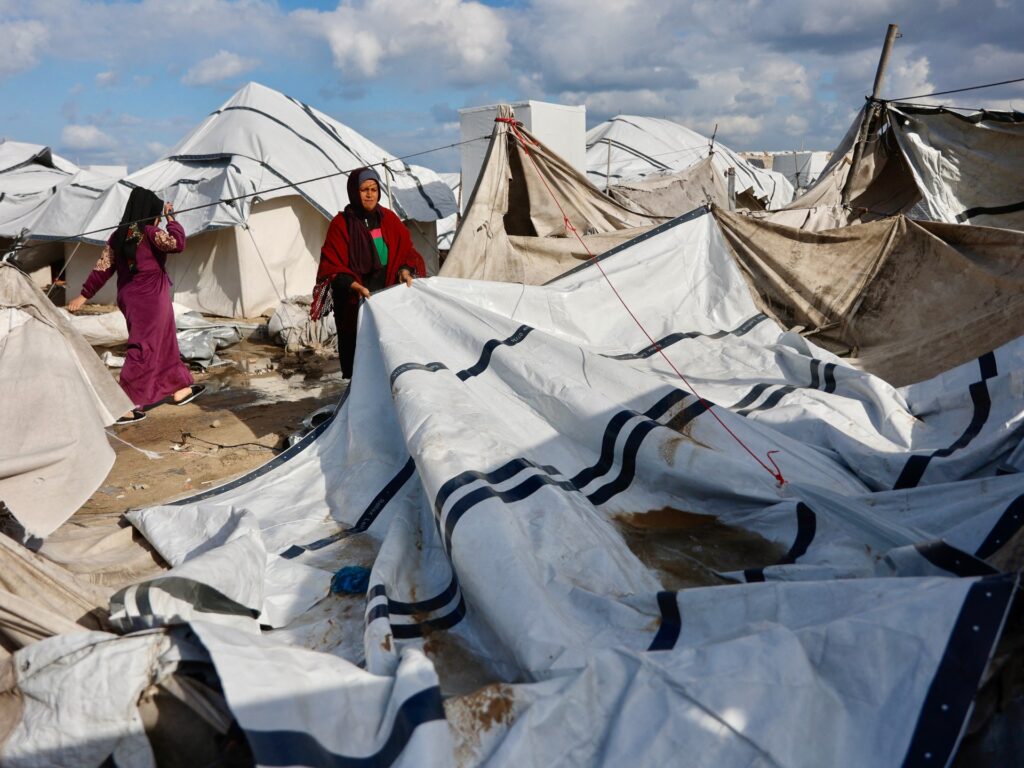
A severe storm has struck the Gaza Strip, resulting in the tragic death of a Palestinian woman and causing widespread destruction and hardship across the region. The storm, characterized by strong winds and heavy rain, has led to the collapse of numerous tents, leaving thousands of people homeless and exacerbating the dire humanitarian situation in Gaza.
The Palestinian territories have been grappling with immense challenges due to ongoing conflicts and blockades. The recent storm has only compounded the misery, as makeshift shelters and inadequate infrastructure fail to withstand the harsh weather conditions. According to local reports, the flooding and structural damage have significantly disrupted daily life, with many families losing their homes and belongings.
Tragically, one woman lost her life due to the storm, underscoring the severe impact of this natural disaster on the vulnerable population in Gaza. Medical and emergency services are already stretched thin, facing difficulties in responding effectively due to limited resources and access constraints.
Further complicating the situation are stringent Israeli restrictions on aid entering Gaza. These curbs have limited the delivery of humanitarian assistance, including essential supplies such as food, medicine, and emergency shelter materials. Aid agencies report that the inability to transport sufficient aid into Gaza is critically hampering relief operations and leaving many residents to face the aftermath of the storm without adequate support.
Humanitarian organizations have called on all parties to facilitate immediate access for aid shipments to address urgent needs. They emphasize that overcoming bureaucratic and security barricades is essential to prevent further loss of life and alleviate suffering.
The storm has sparked concern among international observers, who warn that without adequate intervention, the already precarious living conditions in Gaza could deteriorate further. The combination of extreme weather, ongoing conflict, and restricted aid access paints a grim picture for the civilian population.
Efforts are underway by some local groups and international agencies to provide temporary shelters and basic necessities to those displaced. However, the scale of destruction and the blockade’s impact present formidable challenges to a comprehensive response.
This latest natural calamity in Gaza highlights the vulnerability of populations in conflict zones to environmental hazards, especially when compounded by political and military restrictions. It underscores the urgent need for coordinated international humanitarian action and a reconsideration of policies that impede aid delivery.
As Gaza continues to recover from the storm’s devastation, the focus remains on saving lives, rebuilding homes, and restoring access to vital services. The situation calls for empathy, swift logistical support, and a commitment to easing the suffering of a population trapped in a cycle of hardship.
In summary, the storm’s deadly impact in Gaza, combined with Israeli curbs on aid, has intensified an already severe humanitarian crisis. Immediate, unhindered aid access and long-term strategies are critical to addressing the needs of those affected and preventing further tragedies in this vulnerable region.