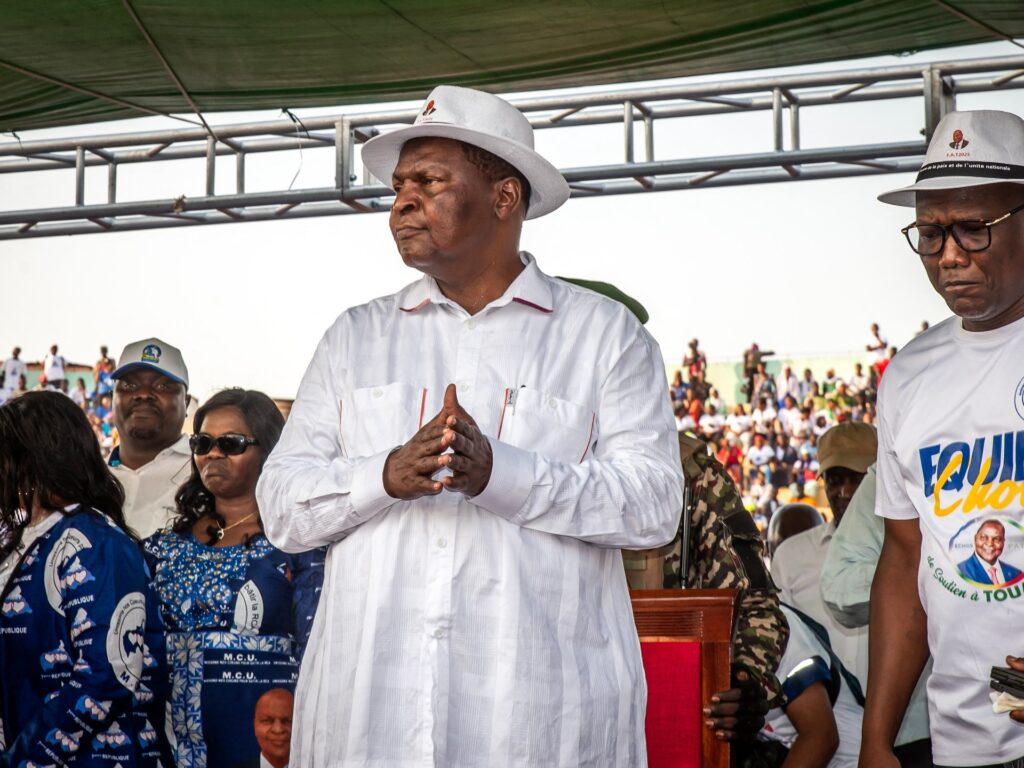
The Central African Republic (CAR) is currently holding presidential elections, with incumbent President Faustin-Archange Touadera seeking a third term in office. Having first been elected in 2016, Touadera has become a significant political figure in the country, navigating complex challenges including security issues and political instability.
According to projections, President Touadera is leading in the first round of voting, suggesting strong support among the electorate. His presidency has been marked by efforts to stabilize CAR and improve governance, though the nation continues to face significant hurdles.
The elections are critical for the future political landscape of the Central African Republic, as the country seeks continuity and progress amid ongoing challenges. Observers are closely watching whether Touadera’s bid for re-election will be confirmed in subsequent rounds or if opposition candidates will force a runoff.
The political climate in CAR is deeply influenced by the efforts to bring peace and security to a nation long affected by conflict. President Touadera’s administration has emphasized these priorities, and his potential third term would likely continue pursuing these goals.
As the vote count progresses, national and international stakeholders await the final results with interest, hoping for a peaceful and transparent electoral process. The outcome will have implications not only for CAR’s internal stability but also for regional dynamics within Central Africa.
In conclusion, the Central African Republic’s presidential election is a pivotal moment, with Faustin-Archange Touadera positioned as the frontrunner. The nation’s future direction largely hinges on the election’s outcome, reflecting citizens’ aspirations for sustained peace and governance reform.