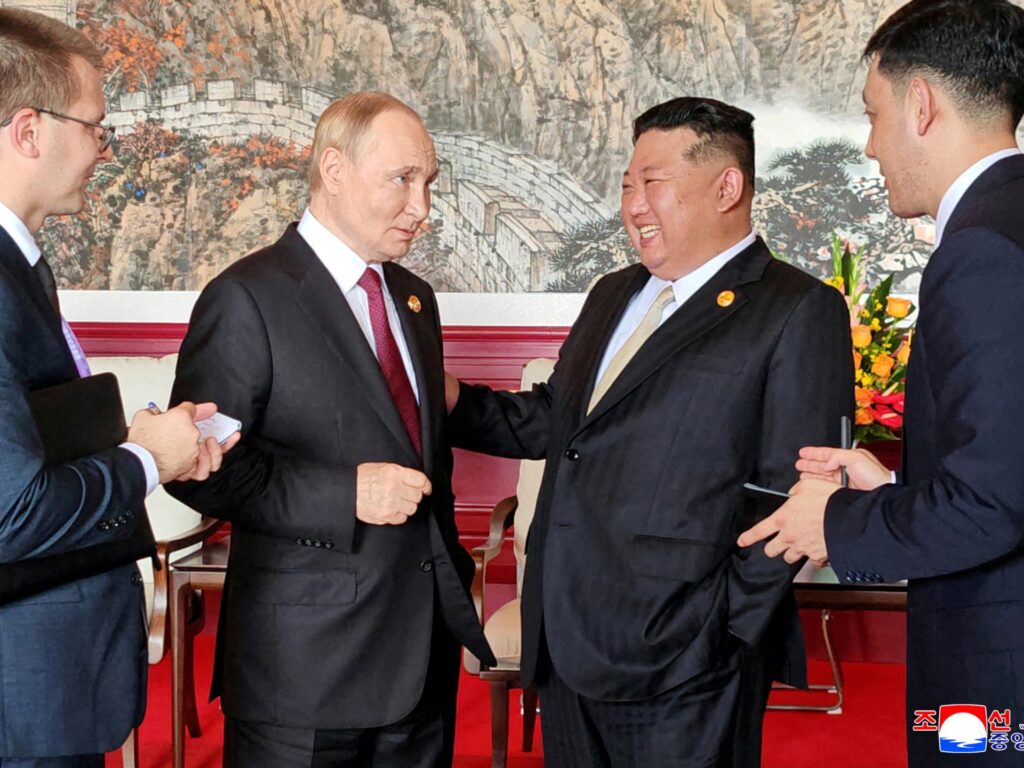
In a striking display of solidarity, North Korean leader Kim Jong-un and Russian President Vladimir Putin have exchanged New Year greetings that underscore their nations’ “precious” shared history of war and bloodshed. Kim Jong-un’s message to Putin explicitly referenced the deep bond forged through the sacrifices made during times of conflict, reflecting a nuanced alliance characterized by mutual recognition of their countries’ turbulent pasts.
The correspondence comes at a time when geopolitical tensions remain high, with both nations facing various international challenges. Kim’s letter highlights a narrative that binds the two countries beyond mere diplomatic ties, invoking the heavy cost of war as a unifying factor. This emphasis on shared history serves not only as a reminder of past struggles but also as a signal of ongoing cooperation amid global political uncertainties.
Historically, North Korea and Russia have maintained a complex relationship influenced by their experiences during World War II and the Korean War. Russia, as the successor state to the Soviet Union, played a significant role in supporting North Korea during the Korean War, providing military aid and political backing. This legacy continues to influence the countries’ interactions and has now been ceremoniously acknowledged in the New Year greetings.
In his note, Kim emphasized the importance of the “blood” shared between their nations, a metaphorical reference to the sacrifices and bonds created in wartime. This rhetoric evokes a sense of camaraderie and shared destiny, strengthening the image of an allied front against external pressures. Putin’s response echoed these sentiments, expressing appreciation for the enduring relationship and mutual support.
The messaging also serves domestic purposes, bolstering national pride and emphasizing resilience in the face of adversity. For North Korea, highlighting its historical ties with Russia may serve to reassure its population of support from a significant global power. For Russia, the acknowledgment from Kim underscores its role as a key player in East Asian geopolitics and its continued influence over regional affairs.
While the letters are symbolic gestures, they manifest the ongoing strategic partnership between Pyongyang and Moscow. Both leaders appear intent on demonstrating unity and shared purpose, particularly as they navigate complex international landscapes involving economic sanctions, military confrontations, and diplomatic negotiations.
Experts analyzing the communications suggest that the emphasis on shared wartime experiences is a deliberate move to reinforce a narrative of loyalty and mutual defense, projecting strength to their domestic audiences as well as to global observers. The symbolism of “blood” and “war” resonates deeply in both countries, forming a cultural and historical foundation that underpins their alliance.
This renewed emphasis on historical connections may also signal coordinated responses to current geopolitical pressures, including challenges posed by Western nations and evolving security dynamics in East Asia and beyond. The leaders’ public acknowledgment of their “precious” shared experiences is a reminder of their intertwined pasts and a testament to their continuing collaboration.
In conclusion, the New Year greetings exchanged between Kim Jong-un and Vladimir Putin highlight more than just festive wishes; they reaffirm a bond carved out in the crucible of war and sustained through decades of geopolitical challenges. This shared narrative not only cements their alliance but also sends a clear message of solidarity to the international community in an era of shifting global power balances.