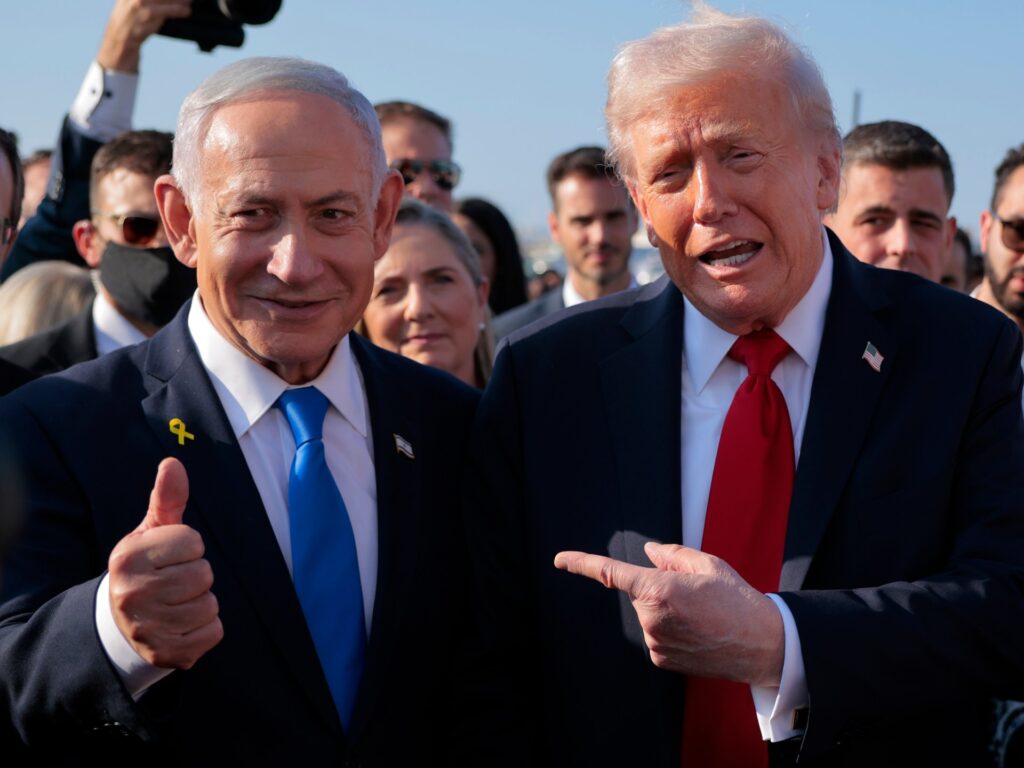
Israeli Prime Minister Benjamin Netanyahu is intensifying calls for more aggressive military strikes against Iran, creating tensions within U.S. political circles, particularly with President Donald Trump’s administration. Netanyahu’s push aligns with hawkish elements and pro-Israel donor groups in the United States who advocate for stronger American involvement in countering Iran’s influence in the Middle East.
However, this approach conflicts with the priorities of President Trump’s political base, which largely opposes deeper U.S. intervention in Iran. The president himself has shown caution towards foreign military entanglements, reflecting isolationist tendencies within his core supporters who prefer focusing on domestic issues rather than escalating conflicts abroad.
Netanyahu’s strategy aims to curb Iran’s nuclear ambitions and regional expansion, arguing that firm military action is essential for Israel’s security. His appeals for heightened U.S. involvement have found support among influential lobbying groups and hawkish policymakers who warn of the strategic threat posed by Tehran’s activities.
Conversely, sections of the American public and Trump loyalists remain wary of entering another Middle Eastern conflict, citing the prolonged wars in Iraq and Afghanistan as warnings. They emphasize diplomatic pressure over military engagement and call for prioritizing America’s internal challenges.
The divergence between Netanyahu’s aggressive stance and Trump’s cautious approach underscores a broader debate within U.S. foreign policy on how to handle Iran. Pro-Israel supporters continue to push for more decisive action, while many within Trump’s political coalition advocate for restraint, creating a complex dynamic that could affect future U.S.-Israel relations and Middle East policy.
As tensions in the region escalate, the disagreement also highlights the influence of various interest groups within the U.S., from wealthy donors with a vested interest in Israel’s security to grassroots grassroots factions skeptical of foreign interventions. The outcome of this internal conflict will likely shape the U.S. administration’s response to Iran moving forward and potentially redefine American involvement in Middle Eastern geopolitics.
In summary, the clash between Netanyahu’s calls for more strikes on Iran and Trump’s reluctance to deepen U.S. engagement reflects the contrasting priorities of their respective political bases and allies. It presents a critical challenge for U.S. policymakers balancing international security concerns with domestic political realities.