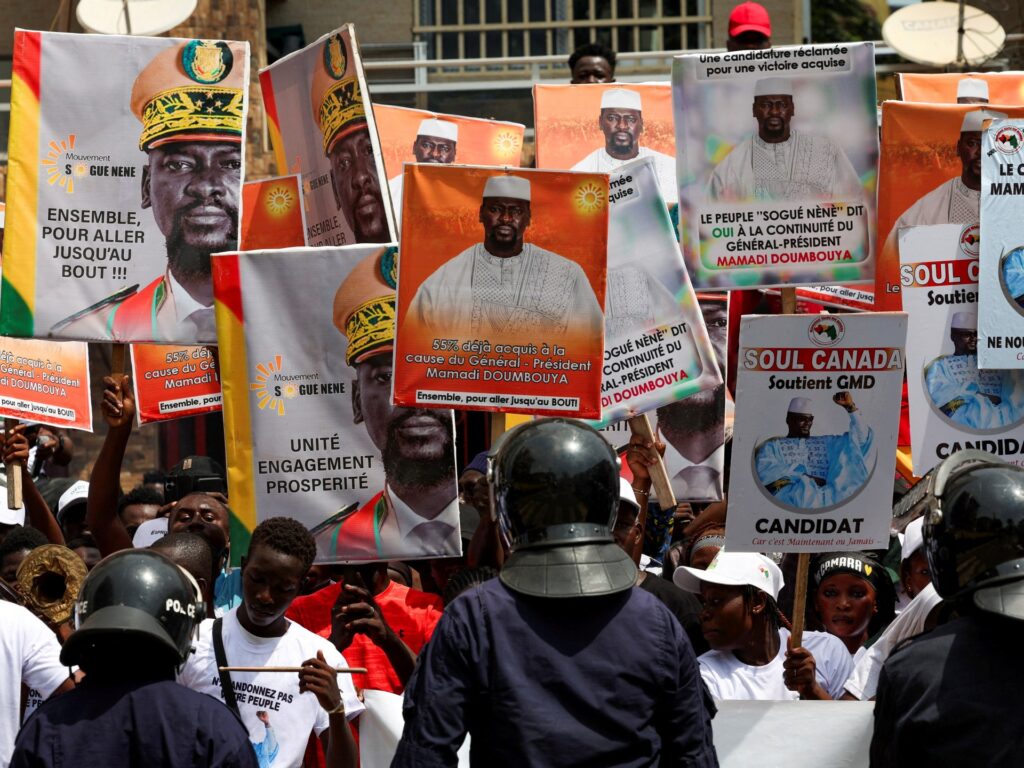
Guinea is preparing for a critical election that could determine the nation’s political future amidst a backdrop of significant turmoil. The military ruler, Mamady Doumbouya, who seized power in a coup, is poised to solidify his grip on the country’s leadership. His path to legitimacy, however, has been marked by controversy, as several notable opposition figures have been barred from contesting.
In the wake of the military takeover, Doumbouya has promised a transition to civilian rule, with elections touted as a step toward restoring democratic governance. Nonetheless, the decision to exclude key opposition candidates has raised concerns about the fairness and inclusivity of the electoral process. Observers fear that these moves could undermine the credibility of the elections and entrench military dominance rather than encourage genuine political competition.
Opposition contenders, some of whom represent significant factions within Guinea, have voiced frustration over their exclusion, alleging that the electoral commission and the current regime are manipulating the process to maintain the status quo. This development has ignited protests and heightened tensions across the country.
The stakes in this election are profound. Guinea is a resource-rich country, particularly noted for its bauxite reserves, making political stability crucial not only for its citizens but also for international investors and regional neighbors. The outcome of the election will influence Guinea’s economic trajectory, governance standards, and regional relations.
International actors have expressed varying degrees of concern and interest. Some have called for transparent, inclusive, and fair elections to ensure a peaceful transition of power. Others remain cautious, monitoring the situation closely to assess the legitimacy of the forthcoming government.
Beyond internal politics, Guinea’s election has broader implications for West Africa, a region often challenged by coups and political instability. Successful, credible elections in Guinea could serve as a beacon for democratic resilience, while a flawed process might embolden similar undemocratic moves elsewhere.
As the election date approaches, the spotlight is on Mamady Doumbouya and his administration, with the world watching to see whether Guinea can navigate its complex political landscape and set a course toward genuine democratic governance. The role of the international community, domestic civil society, and opposition forces will be critical in shaping the country’s path forward.
In summary, Guinea’s upcoming elections are more than a mere political event—they represent a pivotal juncture for the nation’s democratic aspirations, political stability, and socio-economic development. The exclusion of key opposition leaders and the predominance of the military ruler in the race underscore the challenges ahead. Whether Guinea can overcome these obstacles to hold free and fair elections remains uncertain but essential for the country’s future.