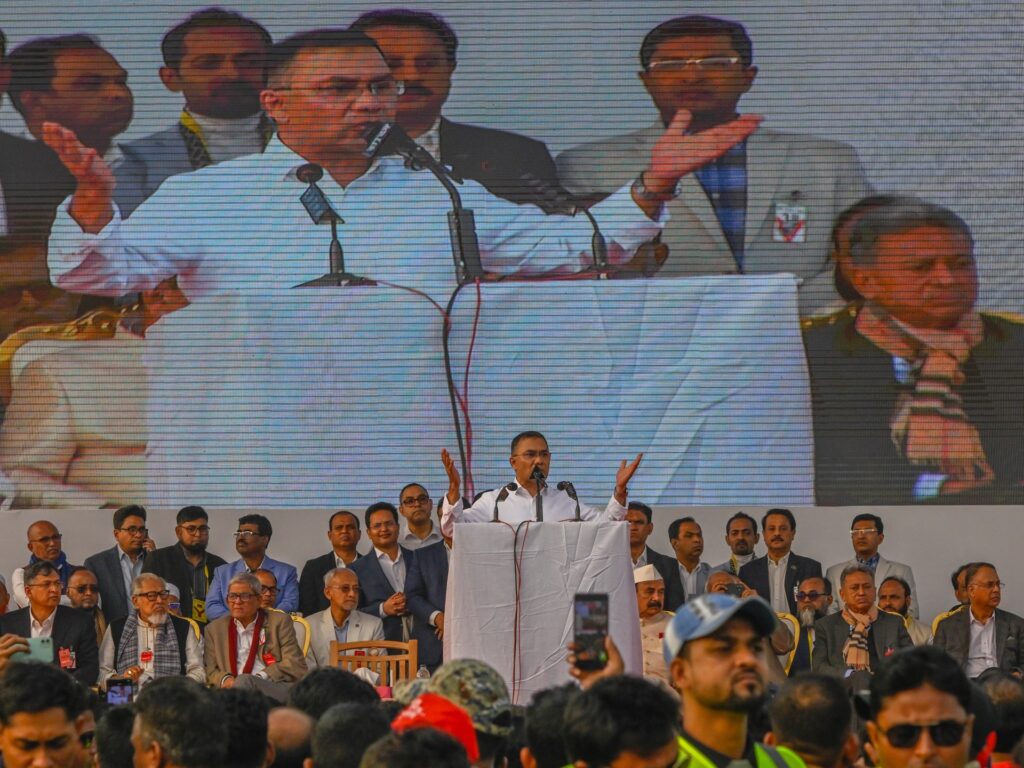
The political landscape in Bangladesh is witnessing a significant turn as BNP leader Tarique Rahman prepares for his return to the country. Experts believe his comeback could play a crucial role in bolstering the Bangladesh Nationalist Party (BNP) and bringing a much-needed sense of stability to the nation’s electoral process, which has been marred by chaos and violence.
Tarique Rahman, a prominent figure in Bangladeshi politics and the son of former Prime Minister Khaleda Zia, holds considerable influence within the BNP. His return is seen as a strategic move that could reinvigorate the party base ahead of critical elections. Many political analysts suggest that Rahman’s leadership might unify the party factions and provide a clear direction, which has been somewhat lacking in recent years.
The BNP, one of the two major political parties in Bangladesh, has faced severe challenges, including legal battles and crackdowns on its leaders and activists. Tarique Rahman himself has been living in exile due to convictions related to corruption charges, which he and his supporters claim are politically motivated. His potential return could therefore also signal a shift in political dynamics and a challenge to the ruling party.
From a broader perspective, Tarique Rahman’s reengagement in domestic politics could stabilize Bangladesh’s often turbulent political climate. The country has experienced frequent election-related violence, voter intimidation, and allegations of electoral fraud. A stronger, more cohesive opposition led by Rahman might promote more balanced governance and encourage credible elections.
Political experts argue that Tarique Rahman’s return might also encourage dialogue and negotiation between the BNP and the ruling Awami League, potentially leading to a reduction in political violence. This could create an environment conducive to addressing other pressing issues such as economic development, human rights, and governance reforms.
However, the return of a controversial figure like Rahman is not without risks. It could also intensify political confrontations, especially if the ruling party perceives his comeback as a threat to its dominance. The government’s response and the subsequent political maneuvers will be critical in determining Bangladesh’s path forward.
In conclusion, Tarique Rahman’s return to Bangladesh is more than just a personal or party matter—it is a significant event that could reshape the country’s political future. As the BNP strengthens its position, the upcoming elections could see increased competition, which might ultimately benefit the democratic process in Bangladesh by encouraging accountability and political engagement across the spectrum.