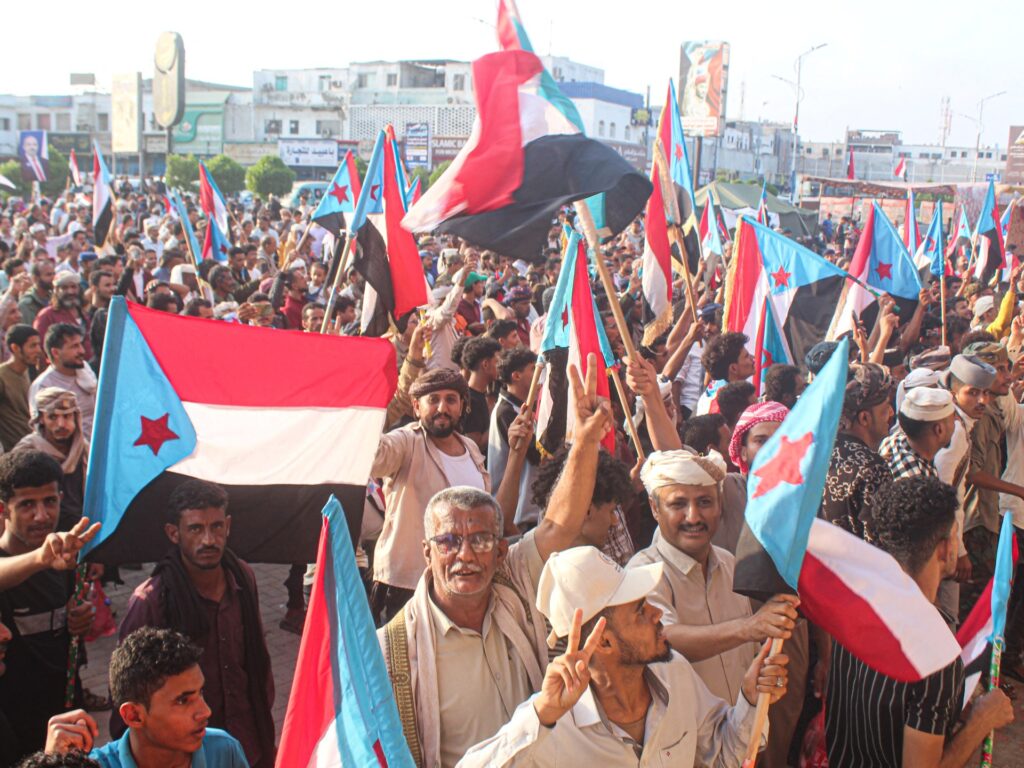
Saudi Arabia has issued a stern demand for Yemeni separatist forces to vacate the oil-rich governorates they recently seized, labeling their actions as an “unjustified escalation.” This move marks a pivotal moment in the already fragile alliance within Yemen’s coalition opposing the Houthi rebels.
The separatist forces, affiliated with the Southern Transitional Council (STC), took control of key provinces in southern Yemen, areas vital for the country’s oil production and economic stability. Riyadh, which backs the internationally recognized government in Yemen, views the takeover as a dangerous challenge to regional stability and the anti-Houthi front.
Since the start of the Yemeni conflict, Saudi Arabia has played a central role in supporting the government forces against the Houthi insurgency. The coalition, comprising government troops and allied groups including the STC, has aimed to restore governmental control and counter Iranian-backed Houthi advances.
However, recent events have exposed deep fissures within this alliance. The STC’s seizure of governorates such as Shabwah and Abyan, regions rich in oil and resources, threatens to undermine the unity necessary to confront the Houthis effectively.
Riyadh’s condemnation highlights the broader geopolitical stakes. The Saudis are concerned that continued internal divisions will weaken the opposition’s efforts, enabling the Houthis to consolidate power further. Moreover, the instability risks disrupting vital oil supplies that impact the global energy market.
The Southern Transitional Council, advocating for southern Yemen’s autonomy or independence, argues that their actions are driven by a desire to protect local interests and foster regional development. However, their takeover complicates the already tense security landscape and humanitarian situation in Yemen.
Diplomatic efforts are now intensifying, with Saudi officials engaging both sides to defuse tensions and encourage dialogue. Riyadh emphasizes the importance of maintaining a united front against the Houthis to achieve lasting peace and stability.
Local communities in the seized governorates face uncertainty amid the power struggle. The conflict exacerbates humanitarian challenges, with disruptions to essential services and displacement compounding Yemen’s ongoing crisis.
International observers warn that failures to resolve the rift could prolong the conflict, increasing suffering and instability in Yemen and the broader Arabian Peninsula.
In summary, Saudi Arabia’s demand for separatist forces to retreat from key governorates signifies a critical juncture in Yemen’s complex conflict. The outcome of this internal dispute will significantly influence the region’s geopolitical dynamics, energy security, and prospects for peace.