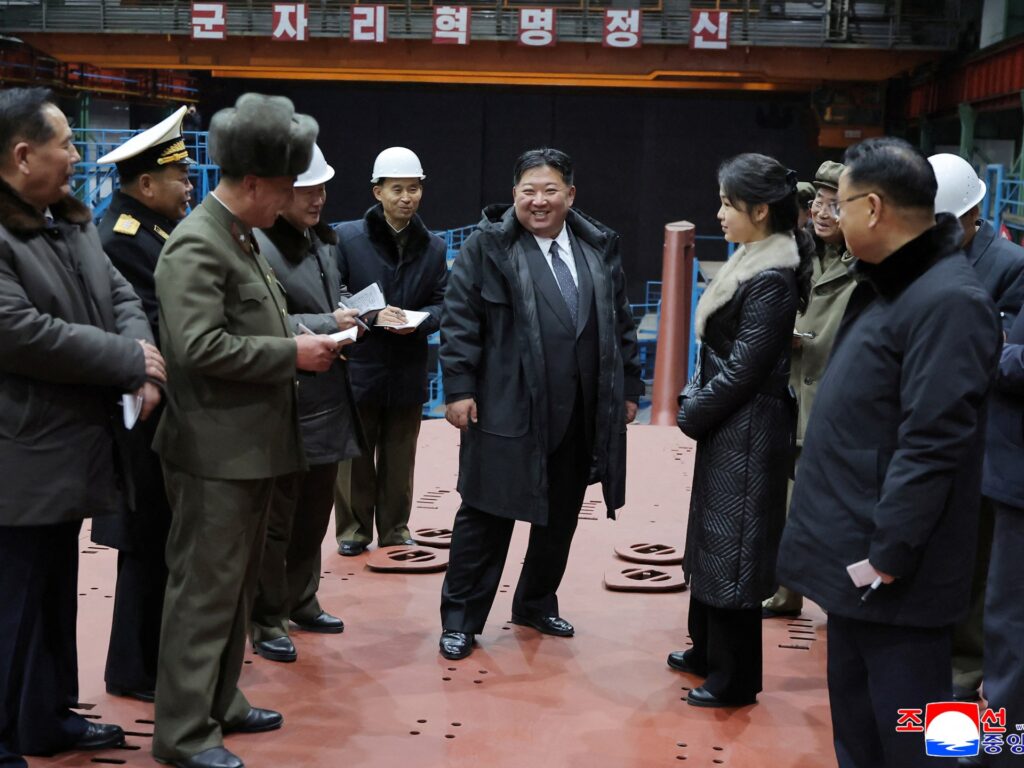
In a sharp rebuke to the United States and South Korea, North Korean leader Kim Jong Un condemned the recent nuclear submarine agreement between the two allies, describing it as an ‘offensive act.’ Kim made these remarks during an inspection of a North Korean nuclear submarine facility on Wednesday, underscoring the heightened tensions on the Korean Peninsula.
The deal, which involves the deployment of advanced US nuclear-powered submarines in South Korean waters, is seen by Pyongyang as a direct threat to its security. It marks a significant step in the US-Seoul military alliance aimed at countering North Korea’s growing nuclear capabilities.
Kim’s condemnation reflects North Korea’s longstanding hostility towards the US-South Korea military partnership. He emphasized that such actions only serve to escalate regional tensions and provoke a hostile response from Pyongyang.
During his visit to the submarine facility, Kim touted North Korea’s own advancements in nuclear submarine technology, signaling a commitment to strengthening the country’s naval deterrence capabilities. Analysts interpret this as a strategic message to both Washington and Seoul that North Korea is capable of matching military developments and maintaining its defense posture.
The US and South Korea have maintained that their military cooperation and the submarine deal are defensive measures designed to ensure stability in the region. However, North Korea perceives these moves as provocations that justify its continued weapons programs.
Kim’s harsh remarks come amid ongoing diplomatic challenges, with efforts to restart stalled denuclearization talks facing numerous obstacles. Pyongyang has repeatedly called for the lifting of sanctions and an end to US military exercises on the peninsula, viewing them as impediments to peace.
The international community remains concerned about the potential for escalating conflict on the Korean Peninsula. Experts warn that the nuclear submarine deal could further destabilize the region, prompting calls for dialogue and restraint from all parties involved.
As North Korea continues to advance its nuclear and missile programs, the US and South Korea are likely to deepen their military collaboration to counter potential threats. This dynamic underscores the complex security environment in East Asia, where divergent strategic interests pose challenges to achieving lasting peace.
In summary, Kim Jong Un’s condemnation of the US-Seoul nuclear submarine deal highlights the fragile nature of security in the Korean Peninsula. With tensions mounting, the need for diplomatic engagement and cautious policy measures has never been more pressing to prevent further escalation.