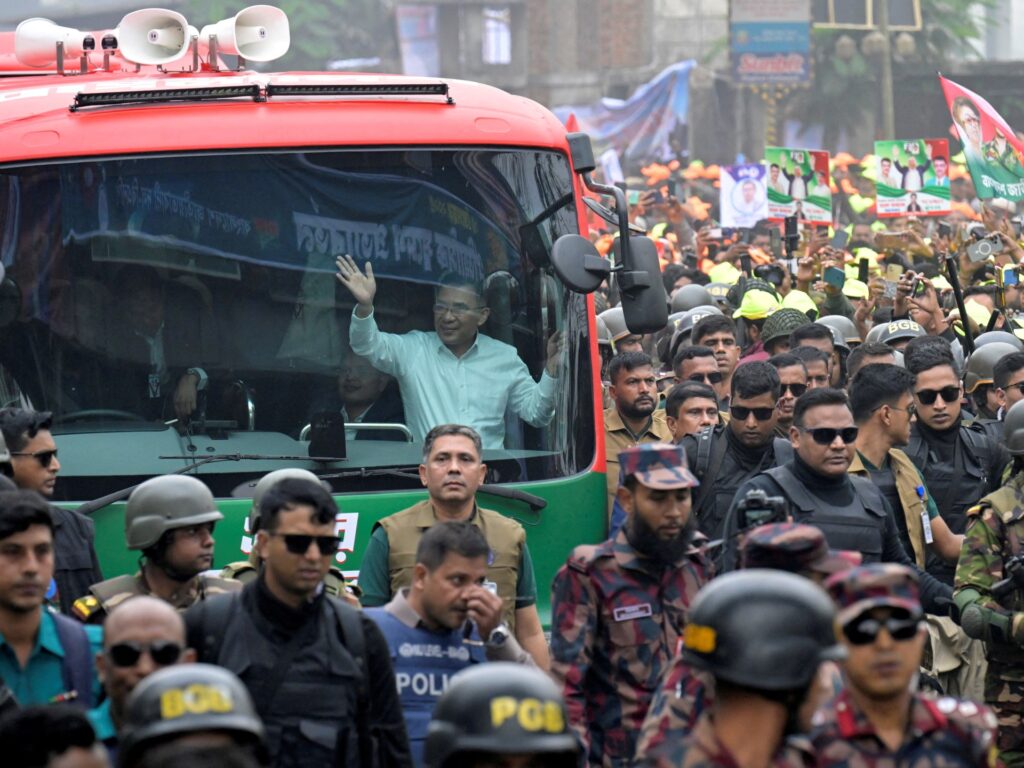
After 17 years in exile, Tarique Rahman, often described as the ‘prince’ of Bangladesh politics, has returned to Dhaka, sparking significant political excitement and speculation. Tarique Rahman is a prominent leader of the Bangladesh Nationalist Party (BNP), the country’s main opposition party. His return marks a crucial moment for the BNP and the broader political landscape of Bangladesh.
Tarique Rahman is the eldest son of former Prime Minister Khaleda Zia, a towering figure in Bangladeshi politics. His political journey has been closely linked with the fortunes of the BNP, which has been struggling to regain power amid challenges from the ruling Awami League.
During his exile, Tarique Rahman remained a central figure in BNP politics, although operating from abroad. His return to Bangladesh is seen by many supporters as a sign of renewed hope for the party, which has faced internal divisions and declining popularity in recent years.
Critics, however, point to controversies surrounding Rahman, including allegations of corruption and legal cases that have kept him out of the country for nearly two decades. Despite these challenges, his political acumen and deep ties within the party make him a formidable figure.
The timing of Tarique’s comeback is notable, coinciding with growing public dissatisfaction with the current government on issues such as economic challenges, governance, and democratic freedoms. Many BNP supporters believe that Tarique’s leadership could unify the party and rejuvenate its campaign for the next general elections.
Tarique Rahman is often credited with modernizing the BNP’s political strategies and outreach programs, appealing to younger voters and expanding the party’s base. His international experience and connections could also play a significant role in shaping Bangladesh’s foreign relations if he rises to power.
However, the road ahead will not be easy. The political environment in Bangladesh remains highly polarized, with the ruling Awami League maintaining a strong hold on power. Tarique will need to navigate complex political dynamics, legal hurdles, and intense competition to position himself as a viable candidate for prime minister.
Analysts suggest that Tarique’s return could either lead to a revitalized BNP that challenges the status quo or deepen the political divide if the government responds with repression or legal moves against him.
Public opinion is divided, with some seeing Tarique as a beacon of change and others wary of renewed political instability. The next few months will be critical in shaping how Tarique Rahman and the BNP perform politically.
In summary, Tarique Rahman’s return to Dhaka represents a significant turning point for Bangladesh’s political scene. His potential bid for the prime ministership is closely watched both domestically and internationally, as Bangladesh prepares for upcoming elections. Whether he can transform the BNP into a winning political force remains to be seen, but his influence is undeniable.
This dynamic development underscores the enduring nature of political legacies in Bangladesh and the ongoing contest between major parties for leadership of the nation. Tarique Rahman’s reemergence adds a new chapter to Bangladesh’s complex political narrative, with consequences that could shape the country’s future direction and governance.