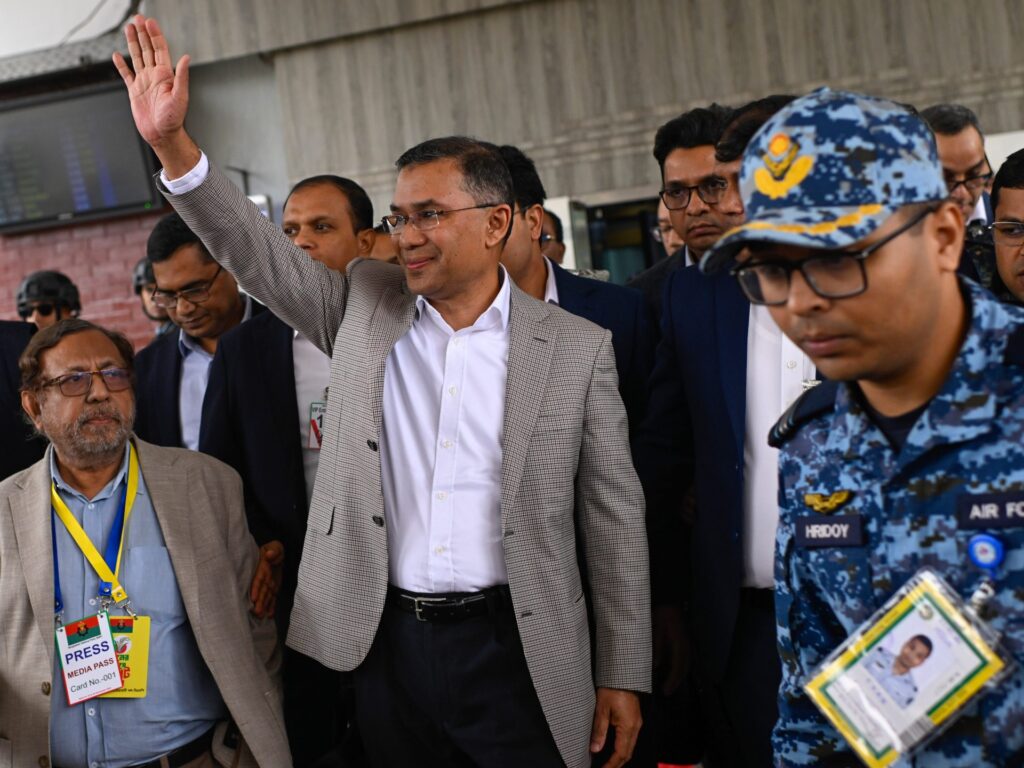
Tarique Rahman, the acting chairman of the Bangladesh Nationalist Party (BNP) and a prominent political figure, has returned to Bangladesh after spending 17 years in exile. His return has stirred significant attention and speculation as he is regarded as a leading prime ministerial candidate.
Rahman’s time in exile has been marked by his continued involvement and influence within the BNP, a major opposition party in Bangladesh. During his absence, he has remained a pivotal figure in the party, contributing to its strategic direction and political activities from abroad.
His comeback is seen by many as a critical moment in Bangladesh’s political landscape, where the BNP is positioning itself as a formidable contender against the ruling Awami League. The BNP has long been one of the two dominant political parties in the country, with Rahman playing a central role in its leadership.
Tarique Rahman’s return could energize the BNP’s base, bringing renewed momentum ahead of upcoming elections. His experience and leadership are seen as assets that could shape the party’s strategies and policies moving forward.
Critics and supporters alike are closely watching how Rahman’s reintegration into Bangladesh’s political scene will unfold. His past tenure and political views have been subjects of both reverence and controversy, reflecting the complex dynamics of the country’s governance and opposition politics.
The BNP’s resurgence under Tarique Rahman may influence key national issues, including economic policies, governance reforms, and diplomatic relations. Observers suggest that his presence could impact voter sentiment and political negotiations in significant ways.
As Tarique Rahman re-establishes his foothold in Bangladesh, both domestic and international political analysts are keenly monitoring the developments. The political future of Bangladesh may be heading towards a period of heightened competition and possible realignment, with Rahman as a central figure.
His return symbolizes not just a personal political journey but also a potential turning point for the BNP, which is navigating a challenging political environment. Rahman’s leadership will be critical in determining the party’s direction and its role in shaping Bangladesh’s democratic process in the years to come.