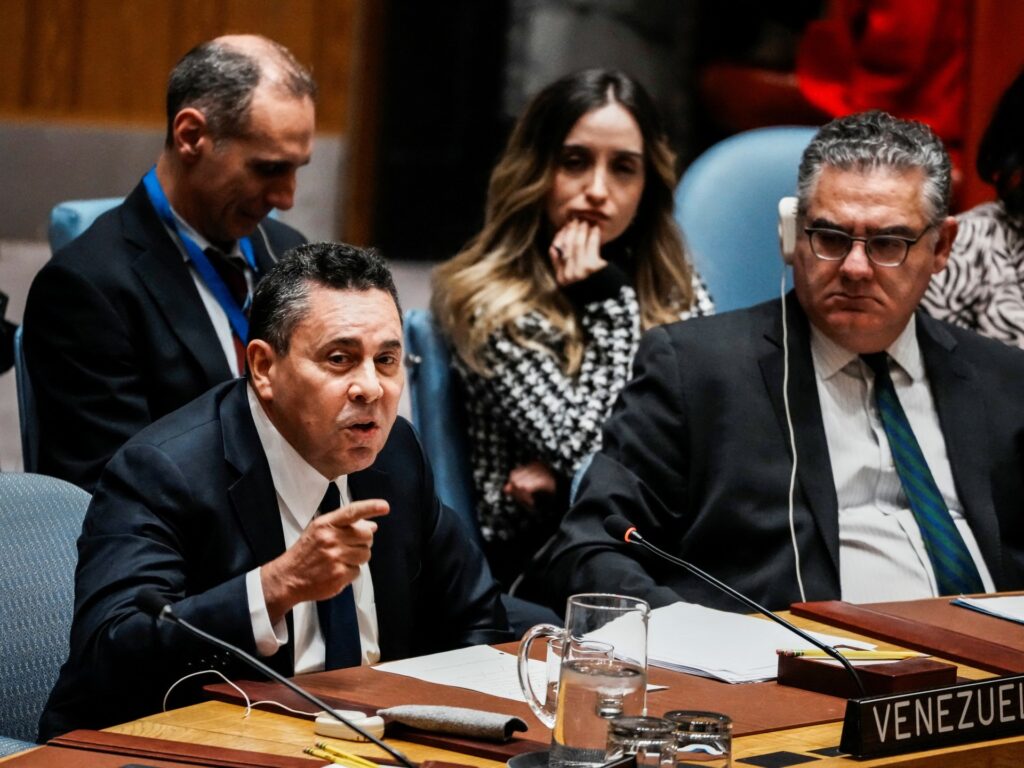
In a significant development at the United Nations Security Council, Venezuela’s ambassador to the UN has issued a stern warning against what he described as US ‘aggression.’ The ambassador highlighted recent US military actions, including strikes and a naval blockade, positioning these measures as only the first phase of a broader strategy driven by ‘continental ambitions.’
Addressing the Security Council, the Venezuelan diplomat condemned the US military interventions, emphasizing their damaging impact on regional stability and sovereignty. He accused the United States of engaging in practices reminiscent of historical interventions aimed at asserting dominance over Latin America.
The ambassador argued that the US military strikes and the naval blockade were not isolated incidents but part of a calculated effort to undermine Venezuela’s independence and control over its natural resources. This, he posited, was a clear indication of the United States’ desire to extend its influence across South America.
He further urged the international community to recognize these actions as aggressive violations of international law and to uphold Venezuela’s right to self-determination. The ambassador called for solidarity among nations to prevent the escalation of tensions and to safeguard peace and security in the region.
This statement comes amid growing tensions between the United States and Venezuela, with the US government citing concerns related to political stability and human rights in Venezuela. However, Venezuela’s government consistently portrays US actions as illegitimate interference in its domestic affairs.
Analysts note that the use of military strikes and blockades marks a significant intensification of US policy toward Venezuela, which until now had largely relied on sanctions and diplomatic pressure. The Venezuelan diplomat’s remarks underscore Caracas’s perception of these measures as stepping stones toward broader geopolitical ambitions.
The ‘continental ambitions’ referenced imply a perceived US strategy to reassert influence over Latin America and counter the growing presence of other global powers in the region.
The UN Security Council meeting saw varied reactions from member states, with some expressing concern over the escalating rhetoric and potential for conflict. Many called for dialogue and diplomacy as the preferred solution to the ongoing tensions.
Venezuela’s warnings highlight the fragile state of international relations in the Americas, signaling potential challenges ahead for regional security and cooperation. The situation underscores the need for sustained diplomatic engagement to prevent further deterioration.
As the Security Council continues to monitor developments, global attention remains fixed on how the US and Venezuela will navigate their fraught relationship and what this means for the broader geopolitical landscape in the Western Hemisphere.