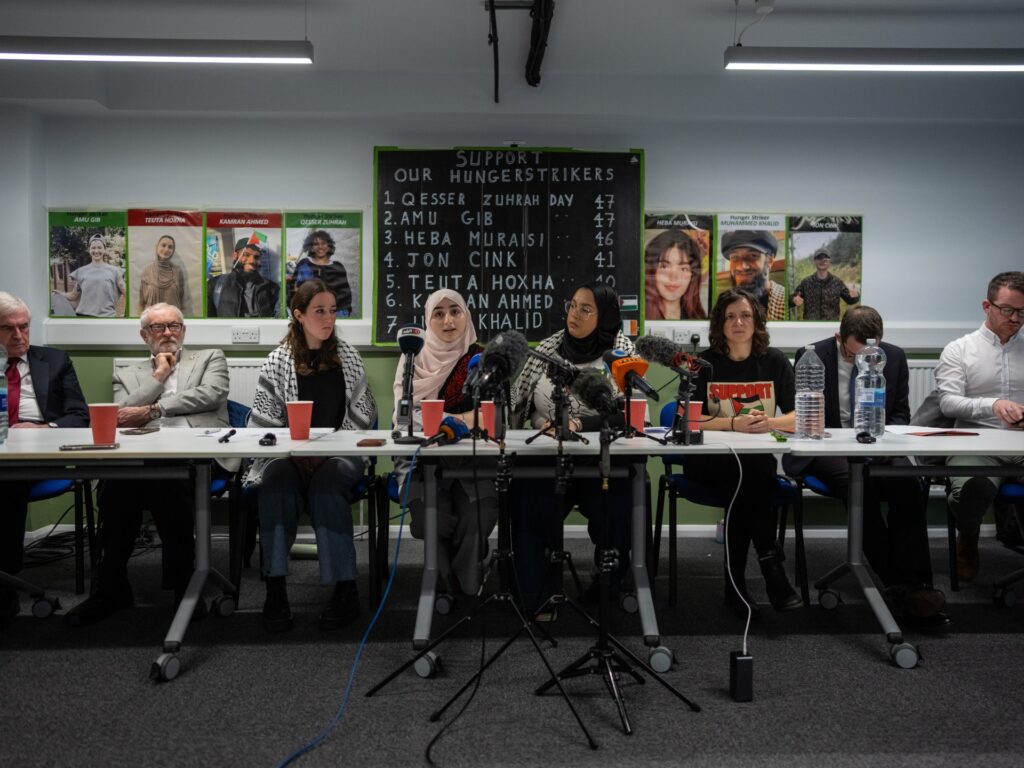
Four jailed activists affiliated with the banned UK group Palestine Action have vowed to continue their hunger strike despite serious health warnings. These individuals have been protesting conditions related to their detention and the broader issues their organization highlights. On the other hand, two other hunger strikers from the same group have temporarily paused their protest due to health concerns.
The Palestine Action group, which has been banned in the UK, is known for its direct action tactics against Israeli arms manufacturers and other linked companies. The hunger strikes are part of ongoing protests by activists seeking to draw attention to their cause both inside and outside prison walls.
Authorities have expressed concern over the well-being of the hunger strikers, noting the significant health risks posed by prolonged fasting. Medical teams have reportedly been involved in monitoring the condition of the activists to prevent severe complications or fatalities.
The decision of four activists to continue their hunger strike reflects their determination and commitment to their cause, despite the physical toll. Meanwhile, the two who have paused their strike are understood to still support the protest’s objectives but are prioritizing their health at this time.
The situation highlights the complex dynamics between activism, legal responses, and human rights within the UK, particularly when it comes to politically motivated demonstrations and protests while in custody. The hunger strike has attracted media attention, raising awareness of Palestine Action’s message and the conditions faced by political prisoners.
Supporters of the group have rallied to call for the activists’ demands to be met and for their humane treatment inside prisons. The ongoing hunger strikes have become a focal point in discussions about freedom of expression and the limits of protest within the UK legal system.
As the hunger strike continues, advocacy groups and human rights organizations are closely monitoring the situation, urging authorities to find a resolution that respects the health and rights of the activists while addressing the underlying issues prompting the protests. The coming days are expected to be crucial in determining the health outcomes for the strikers and the potential impact on public opinion and governmental policies regarding similar cases in the future.