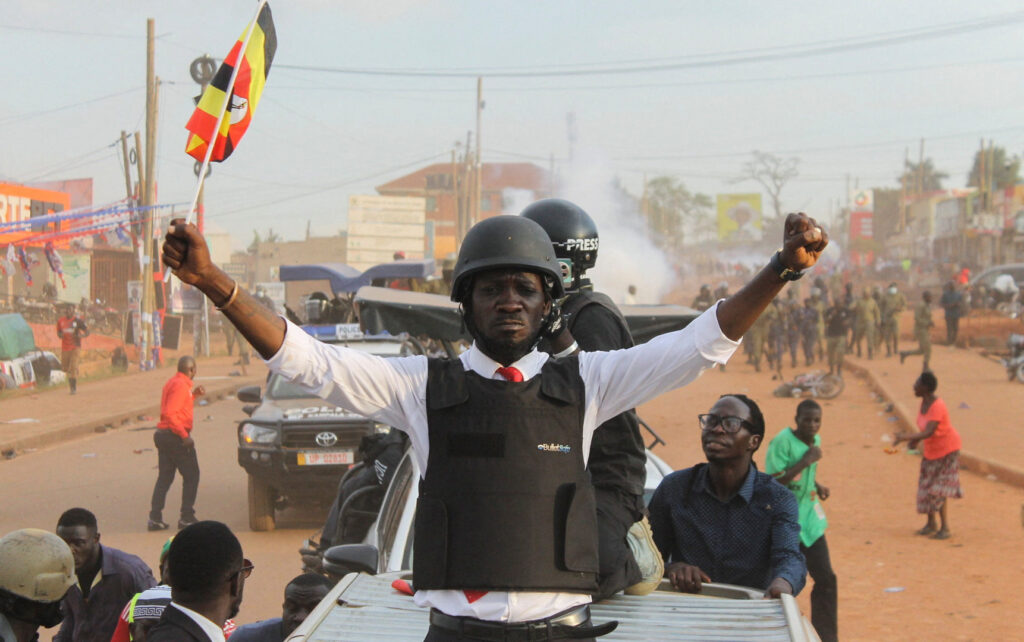
Ugandan Presidential candidate Robert Kyagulanyi, also known as Bobi Wine, of the National Unity Platform (NUP) party, gestures after riot police fired teargas to disperse him and his supporters during a campaign caravan ahead of the general elections in Kampala, Uganda December 15, 2025. REUTERS/Michael Muhati
In a tense escalation of political unrest in Uganda, police forces have deployed tear gas to disperse crowds attending campaign rallies for presidential candidate Bobi Wine in the capital city of Kampala. Video footage circulating widely shows law enforcement officers using tear gas canisters to break up large gatherings of supporters, adding to growing concerns about political freedoms and the right to peaceful assembly in the country.
Bobi Wine, a prominent figure in Ugandan politics and a popular opposition leader, has been campaigning vigorously ahead of the upcoming presidential election. His rallies have drawn significant crowds, reflecting widespread public interest and support. However, these gatherings have also been met with increased police presence and measures aimed at controlling or limiting the size and impact of the events.
The use of tear gas at Bobi Wine’s rallies highlights ongoing tensions between the government and opposition supporters. Critics argue that such tactics are attempts to intimidate voters and suppress dissent, while officials contend they are necessary to maintain public order and safety amid politically charged environments.
Observers and human rights advocates have condemned the police actions, calling for respect for democratic processes and the protection of citizens’ rights to express their political views peacefully. They warn that continued repression could escalate violence and instability in Uganda during a critical period of its democratic journey.
The Bobi Wine campaign team has condemned the police response, describing it as an unjustified attack on their supporters and a violation of fundamental freedoms. They have called for an immediate halt to such aggressive measures and urged international bodies to monitor the situation closely.
This incident is part of a broader pattern of political tension and crackdowns amid Uganda’s electoral process. It raises questions about the state of democracy, electoral fairness, and the role of law enforcement in managing political dissent within the country.
As Uganda approaches its election day, the international community is watching closely. There is a call for peaceful campaigning, protection of human rights, and ensuring that all citizens can participate freely in the electoral process without fear of violence or repression.
The events at Bobi Wine’s rallies in Kampala underscore the challenges faced by opposition movements and the ongoing struggle for political openness and reform in Uganda. The outcome of these tensions will likely have significant implications for Uganda’s political landscape and its democratic future.