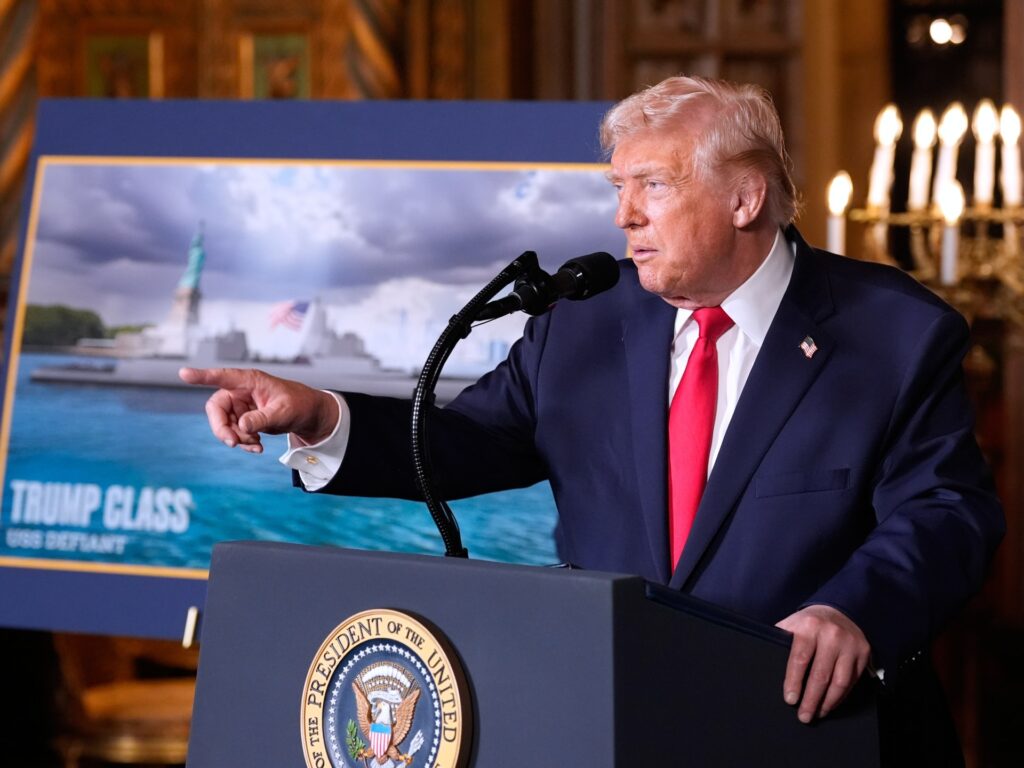
Former President Donald Trump has issued a stern warning to Venezuelan President Nicolás Maduro, cautioning him against ‘playing tough’ as international tensions around Venezuela escalate. This warning comes at a time when China and Russia have both stepped up their support for Maduro’s government, deepening the geopolitical complexity of the situation in the region.
The latest developments follow the U.S. Coast Guard’s ongoing pursuit of a third Venezuelan oil tanker off the nation’s coast. The U.S. has maintained a hardline stance against Venezuelan oil exports, particularly those entangled with Maduro’s regime, which it views as illegitimate and driven by authoritarian rule.
China and Russia, on the other hand, have solidified their backing of Maduro, signaling their intent to counter U.S. influence in Latin America. Both nations have expanded economic and diplomatic ties with Venezuela, including investments in energy sectors and political support in international forums.
Trump’s direct message to Maduro highlights the heightened U.S. concern over Venezuela’s strategic alliances. The prospect of China and Russia bolstering Maduro’s government challenges the U.S. efforts to isolate his regime through sanctions and diplomatic pressure.
This confrontation underscores the broader geopolitical struggle between the United States and other global powers in the Western Hemisphere. Venezuela, rich in oil reserves, remains a focal point of this power contest, with energy resources playing a crucial role.
The U.S. Coast Guard’s interception of Venezuelan oil tankers, including the latest third tanker, aims to curtail shipments that bypass sanctions, which have targeted Maduro’s officials and their financial networks. These actions are part of broader U.S. efforts to prevent Maduro from financing his government through illicit oil sales.
Beyond the immediate wake of oil tanker pursuits, the U.S. continues diplomatic and intelligence efforts to pressure Maduro to step down and to restore democratic governance in Venezuela. However, with Moscow and Beijing offering their support, the challenge for the U.S. becomes more complicated.
The Trump administration’s warnings serve to reinforce ongoing U.S. policy but also reflect the former president’s characteristic direct communication style. His statements arguably also seek to influence Maduro’s calculations by highlighting the risks of defying U.S. interests.
International observers note that the China-Russia backing provides Maduro with a critical lifeline but also places Venezuela squarely at the center of a wider global rivalry. How the situation unfolds could impact the political and economic stability of Venezuela and the broader region.
As the U.S. Coast Guard continues to monitor and intercept oil shipments, the risk of further confrontations at sea remains a palpable threat. This situation remains fluid, with potential for rapid developments.
The United States insists on a peaceful resolution that respects democratic norms but signals readiness to act decisively against any efforts to undermine regional security or violate sanctions.
Ultimately, the Trump warning, the U.S. maritime operations, and the China-Russia arms of support represent different facets of a multifaceted conflict centered on Venezuela’s future and the broader strategic competition involving superpowers in the Americas.