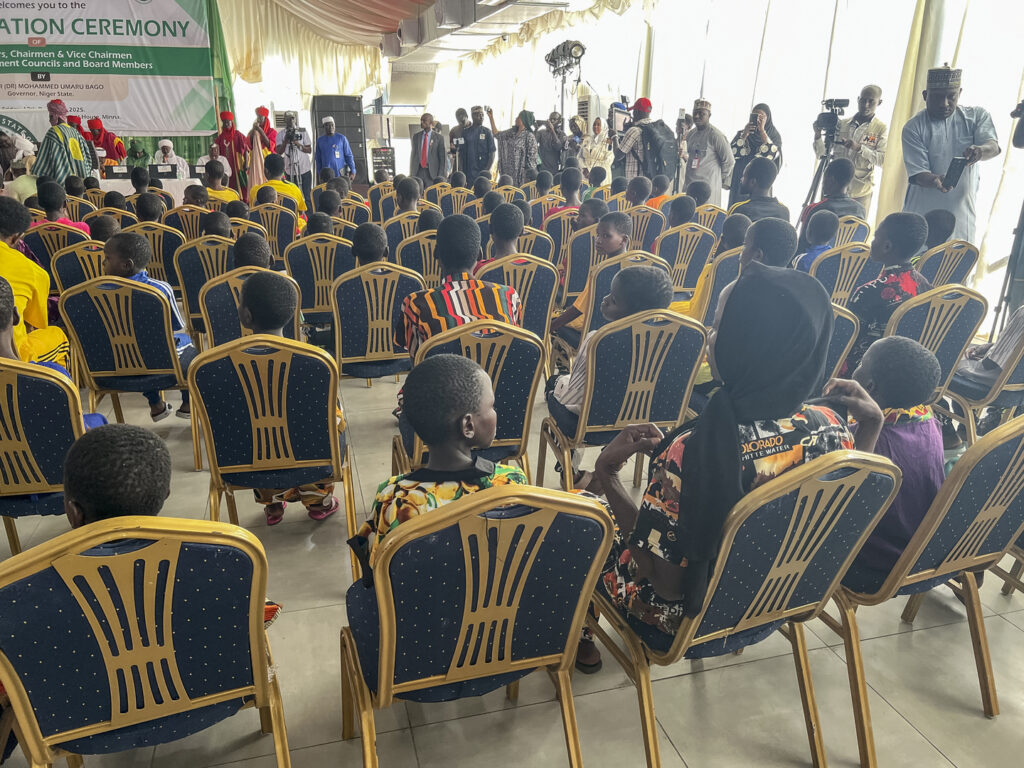
Children, who were released after being kidnapped last month, sit in a hall upon their arrival at the Niger State Government House in Minna on December 22, 2025. Some 130 Nigerian Catholic school pupils were handed over to state authorities on December 22, 2025, a day after the government said it had secured their release a month after one of the country's worst mass abductions. Kidnappings for ransom are a common way for armed groups to make quick cash in the conflict-hit west African nation of some 230 million, but a spate of attacks in November put an uncomfortable international spotlight on Nigeria's grim security situation. (Photo by Chenemi Bamaiyi / AFP)
In a significant development, 130 Nigerian schoolchildren who were abducted last month have been freed, bringing an end to a mass abduction that had drawn widespread international concern. The children, who were taken from their school, had been missing for weeks, prompting urgent calls from governments, human rights organizations, and concerned citizens across the globe for their safe release.
The incident occurred in Nigeria, where school abductions have unfortunately been a recurring problem, often linked to banditry, insurgency, and criminal gangs seeking ransom or political leverage. This latest abduction sparked immediate outrage and humanitarian appeals, highlighting the ongoing security challenges faced by educational institutions in the region.
Following intense negotiations and security operations by Nigerian authorities, the children were safely reunited with their families. The government expressed relief and gratitude for the successful rescue, affirming its commitment to protecting schools and ensuring the safety of students nationwide.
Local communities and international partners applauded the efforts, emphasizing the importance of continued vigilance and cooperation to prevent such incidents in the future. The abduction and subsequent rescue underscored the resilience and solidarity of the Nigerian people, who have repeatedly shown determination in the face of adversity.
While the release of the 130 children is a cause for celebration, officials noted that the broader issues of security and stability in affected regions require sustained attention and solutions. Efforts are underway to enhance intelligence, improve local security infrastructure, and support victims of abductions and violence.
This incident has also served as a call to the global community to support Nigeria’s fight against insecurity, including through aid, training, and diplomatic engagement. Protecting the right to education and the safety of children remains a top priority for Nigeria and its allies.
The safe return of the schoolchildren is a hopeful sign that progress is possible, even amidst complex challenges. The Nigerian government continues to work tirelessly to secure a safer future for all its citizens, particularly the vulnerable youth whose education and well-being are essential for the nation’s growth and development.