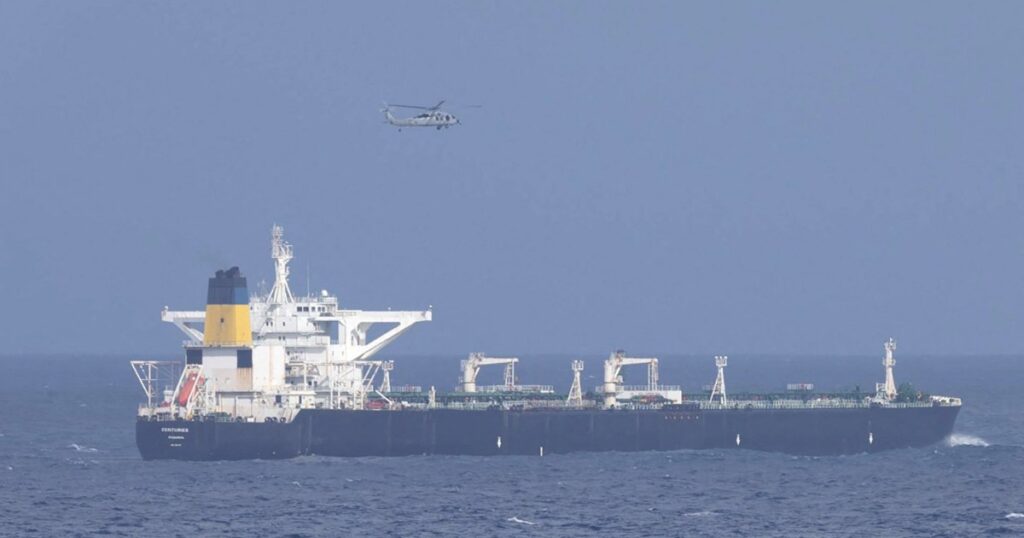
The United States Coast Guard is currently engaged in an active pursuit of an oil tanker off the coast of Venezuela. This action is part of ongoing efforts to enforce sanctions aimed at curbing illicit oil shipments linked to Venezuela’s regime. An official familiar with the situation confirmed that the vessel, described as part of the so-called ‘dark fleet,’ is attempting to evade detection and sanctions.
The ‘dark fleet’ refers to a group of tankers that operate under the radar by disabling transponders or using other tactics to hide their identity and movements. These ships have been identified as key players in facilitating sanctioned countries like Venezuela to continue selling oil illegally on the global market.
This latest pursuit underscores the persistent challenges faced by US authorities in enforcing sanctions designed to pressure Venezuelan leadership over human rights abuses and political corruption. Venezuela, rich in oil reserves, has been under various US sanctions since 2017, aiming to curtail revenue streams that sustain the government of Nicolás Maduro.
The US Coast Guard, working in cooperation with other federal agencies, has increased its maritime patrols and surveillance in the Caribbean Sea to intercept such vessels. The tactics include monitoring ship transponder signals, using reconnaissance drones, and collaborating with international partners.
Sanctions enforcement has also led to apprehensions and seizures of vessels flagged or linked to Venezuelan oil transport in the past. These efforts are part of a broader US policy to target industries and individuals who undermine democratic processes or participate in corrupt activities.
Experts note that while these enforcement actions disrupt illicit shipments, they also reveal the complexity of maritime sanction evasion. Many of the dark fleet vessels are registered under flags of convenience, complicating jurisdiction and enforcement.
The pursuit of this tanker is expected to continue until the vessel either complies with US Coast Guard orders or is intercepted. Officials have not disclosed the tanker’s name or flag but have indicated that the Coast Guard is prepared to take necessary action.
This incident highlights the ongoing geopolitical tensions surrounding Venezuela and the international community’s efforts to maintain pressure on its government. It also reflects the broader strategy of using economic sanctions to promote human rights and democratic governance in sanctioned countries.
As the situation develops, further updates are anticipated from US authorities regarding the outcome of the pursuit and any subsequent enforcement measures taken. The case serves as a reminder of the complexities of modern maritime security and the challenges of enforcing international law on the high seas.