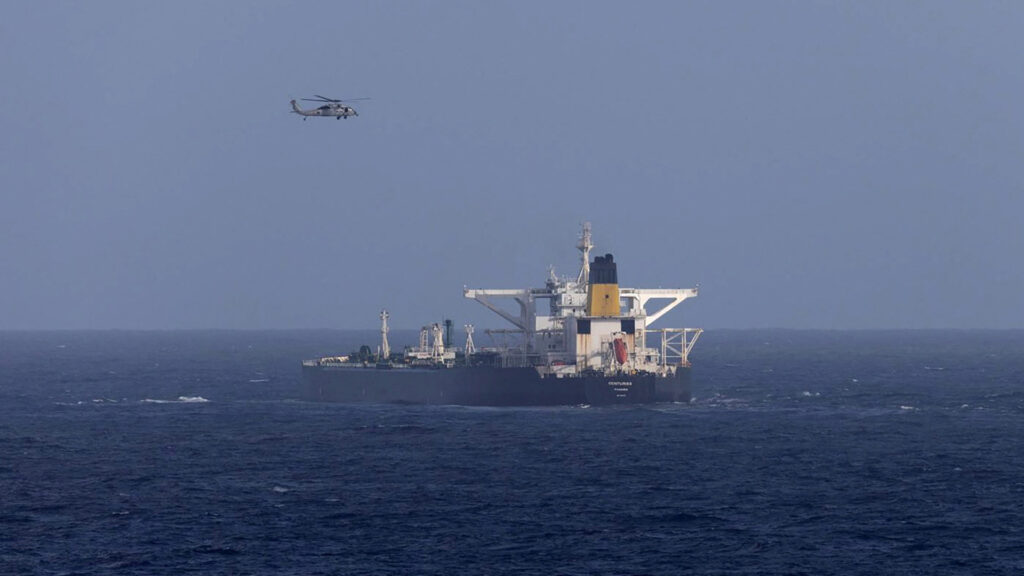
The United States has recently been accused of confiscating oil illegally after intercepting a third Venezuelan oil tanker in international waters near Venezuela. This incident marks a continuing escalation in tensions concerning Venezuela’s oil exports, which have been a contentious issue internationally.
According to sources, the US Coast Guard, operating in international waters, intercepted the tanker, alleging it was involved in transporting oil in violation of US sanctions against Venezuela. These measures were implemented to pressure the Venezuelan government amid ongoing political and economic turmoil.
The interception of this third tanker has drawn sharp criticism from Venezuelan officials, who accuse the US of theft and piracy. Venezuelan authorities argue that their oil exports are lawful and that such actions infringe on their national sovereignty and breach international maritime laws.
On the other hand, the US government maintains that these actions are part of its legal enforcement measures aimed at preventing the Venezuelan regime from profiting from oil sales that could fund activities contrary to US foreign policy interests.
International observers express concern about the implications of these actions on global oil markets. Venezuela holds one of the world’s largest proven oil reserves, and disruptions in its supply can potentially affect oil prices and availability globally.
The opposition in Venezuela has also reacted to the incident, with some factions supporting the US stance as a way to undermine the current Venezuelan government, while others call for diplomatic negotiations to resolve the crisis peacefully.
This latest development follows previous incidents where the US intercepted tankers suspected of transporting Venezuelan oil to sanctioned countries, leading to diplomatic protests and heightened tensions between Caracas and Washington.
Maritime law experts emphasize the complexity of enforcing sanctions on vessels operating in international waters, where jurisdictional claims often overlap or are disputed.
Energy market analysts are closely monitoring the situation, as ongoing tensions could influence decisions by major oil-producing countries and affect global energy security.
The international community is watching the situation closely, with calls for dialogue to prevent further escalation and ensure the stability of maritime trade routes.
As the US continues to enforce sanctions, Venezuela remains adamant in its position, and the potential for further interceptions or confrontations at sea remains high.
This situation underscores broader geopolitical struggles involving resource control, sovereignty, and the implications of economic sanctions in international relations.
It remains to be seen how this scenario will unfold, but the interception of the third tanker signals a significant point of contention between the United States and Venezuela, with ramifications extending beyond their bilateral relations.