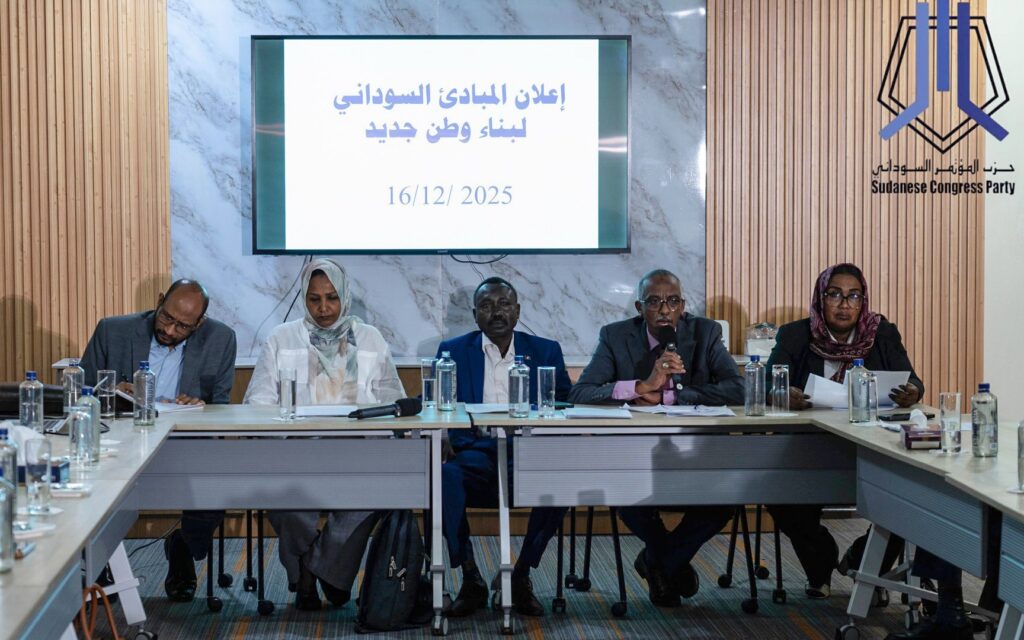
Sudan’s political landscape is once again witnessing a significant development with the declaration of the Nairobi Roadmap by a newly formed Sudanese bloc. This bloc, representing a coalition of civilian forces, has unveiled a comprehensive plan aimed at resolving the ongoing political crisis in Sudan. The roadmap, while heralded by some as a potential breakthrough for civilian governance, has sparked debates and concerns among observers and political analysts about its true impact.
The Nairobi Roadmap closely mirrors the earlier Four-Quadrant (Quad) plan, a framework designed to facilitate dialogue and transition in Sudan after years of conflict and instability. Both initiatives focus on key aspects such as establishing a transitional government, rebuilding trust among factions, and setting the stage for democratic elections. However, the emergence of this new bloc and its roadmap appears to have introduced further complexities rather than consolidating civilian efforts.
Critics argue that the formation of yet another civilian bloc with a roadmap resembling the Quad’s only deepens the fragmentation within Sudan’s already divided civilian political forces. Instead of presenting a unified front against military influence, the splintering of these groups could weaken their negotiating power and prolong the country’s political stalemate.
The Nairobi Roadmap emphasizes inclusive dialogue and commitments from all stakeholders to prioritize Sudan’s stability and democratic progress. It outlines steps such as immediate cessation of hostilities, cessation of economic blockades, and the establishment of mechanisms for transitional justice. Despite these noble objectives, the practical implementation of these measures faces significant hurdles, given the lack of consensus among various civilian factions.
Observers note that the civilian political domain in Sudan has historically struggled with unity and coherence, often resulting in fragmented leadership competing for legitimacy. This new bloc’s roadmap, while well-intentioned, risks becoming another parallel initiative that fails to garner widespread support, risking marginalization in the broader Sudanese political context.
Furthermore, military authorities in Sudan have responded cautiously to the new roadmap, indicating skepticism about the civilian bloc’s capacity to effect meaningful change without broad-based national agreement. The military’s continued stronghold in Sudanese politics remains a significant barrier to any civilian-driven roadmap’s success.
International stakeholders have welcomed the announcement of the Nairobi Roadmap as a positive step towards reviving peace talks but have simultaneously urged caution. They highlight the importance of fostering inclusive processes that bring together all factions under a single cohesive agreement, warning that divided civilian voices could prolong the crisis.
In summary, while the Nairobi Roadmap represents a determined effort by a segment of Sudan’s civilian forces to lay down a path towards peace and democratic transition, its declaration raises as many questions as it offers solutions. The overlapping agendas with the Quad plan, ongoing factionalism, and a hardened military stance suggest that this development may signal further civilian fragmentation rather than a definitive breakthrough.
For Sudan, the path to stability remains fraught with challenges. A genuine civilian breakthrough will likely require greater unity among the diverse political actors and a collaborative approach engaging both civilian and military stakeholders to forge a sustainable peace.
As the situation develops, all eyes will be on Sudan’s various factions to see if they can overcome internal divisions and align behind a unified roadmap that can end years of turmoil and usher in a new era of democratic governance.