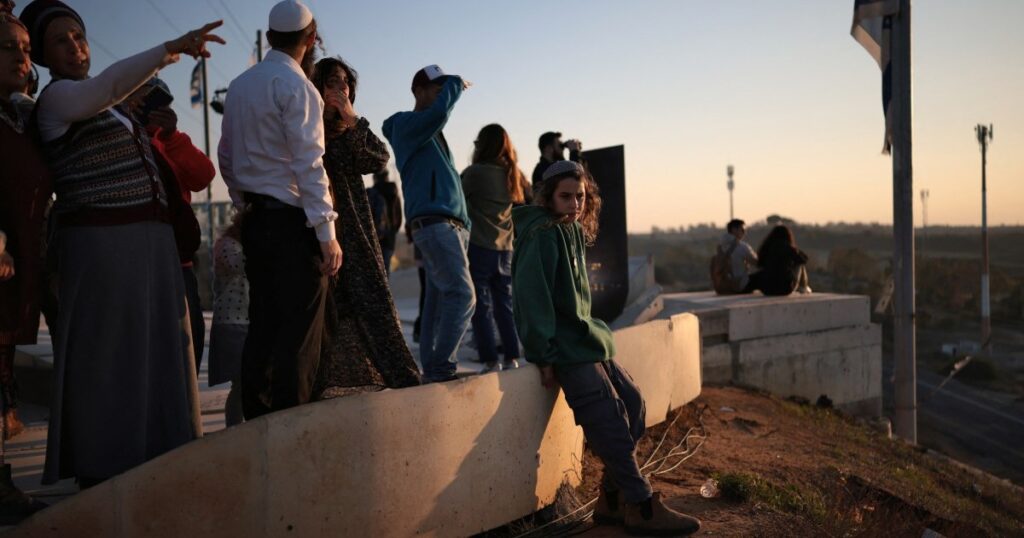
Israel’s recent approval of 19 new settlements in the occupied West Bank marks a significant escalation in its settlement expansion policy, forewarning a profound impact on the contours of the region. This move is widely seen as a deliberate attempt to solidify control over contested territories and reshape the geography of the West Bank, challenging the viability of a future two-state solution.
Settlement expansion in the West Bank has been a contentious and polarizing issue for decades. The West Bank, captured by Israel during the 1967 Six-Day War, is home to a substantial Palestinian population and has been the focus of numerous peace negotiations. International law widely considers Israeli settlements in these territories illegal, although Israel disputes this claim.
The newly approved settlements involve state-backed initiatives to build residential units and infrastructure, effectively entrenching Israeli presence deeper into the West Bank. This expansion risks fragmenting Palestinian communities, disrupting their social and economic life and further complicating the already intricate political landscape.
Critics argue that this latest approval undermines efforts to maintain peace and negotiations between Israelis and Palestinians. By redrawing boundaries through settlement construction, Israel is creating facts on the ground that may be irreversible and prejudicial to the establishment of a contiguous and viable Palestinian state.
Palestinians view this development as an encroachment on their land rights and sovereignty. The expansion threatens not only their daily existence but also their aspirations for independence and self-determination. It exacerbates tensions, fueling conflict and diminishing hope for a peaceful resolution.
Internationally, the move has attracted widespread condemnation. The United Nations, European Union, and numerous countries have reiterated their stance that settlement activity is illegal under international law and an obstacle to peace. Calls for Israel to halt such expansions have intensified, emphasizing adherence to previously agreed frameworks and negotiations.
However, Israeli officials justify the construction by emphasizing security needs and historical claims to the land. They assert that the settlements are vital for protecting strategic areas and supporting the natural growth of Israeli communities. This stance further complicates dialogue, with both sides entrenched in opposing narratives.
The expansion also affects the humanitarian situation in the West Bank. Increased settlement activity often leads to restricted movement for Palestinians, disruption of agricultural lands, and limitations on access to resources. These challenges worsen living conditions and contribute to the already fragile socio-economic environment.
Moreover, the settlements sometimes lead to violent clashes between settlers and Palestinians, escalating hostilities and fostering an atmosphere of distrust and fear. The normalization of such tensions undermines efforts towards coexistence and reconciliation.
Analysts warn that if left unchecked, the ongoing settlement expansion could make the prospect of a two-state solution increasingly unattainable. The physical and administrative division of the West Bank might pave the way for a one-state reality, with complicated questions about governance, equality, and civil rights.
Efforts by the international community to mediate and pressure for a cessation of settlement activities remain critical. Diplomatic interventions, economic incentives, and resolving core issues through dialogue are necessary to reverse the current trajectory.
Meanwhile, grassroots organizations and peace advocates continue working tirelessly to promote understanding, coexistence, and mutual respect. Their initiatives aim to bridge divides and foster hope for a sustainable and equitable resolution to the conflict.
Israel’s approval of 19 new settlements is more than just a political statement; it represents a strategic redrawing of the West Bank’s map that challenges existing peace frameworks. The international community’s response and the commitment of both Israelis and Palestinians to dialogue will determine whether peace remains an elusive dream or becomes an achievable reality.
As this development unfolds, the lives and futures of millions hang in the balance. The path forward requires careful negotiation, renewed commitment to peace, and recognition of the rights and aspirations of all involved parties. Otherwise, the expansion may permanently alter the landscape of the West Bank and prospects for a just and comprehensive peace in the region.