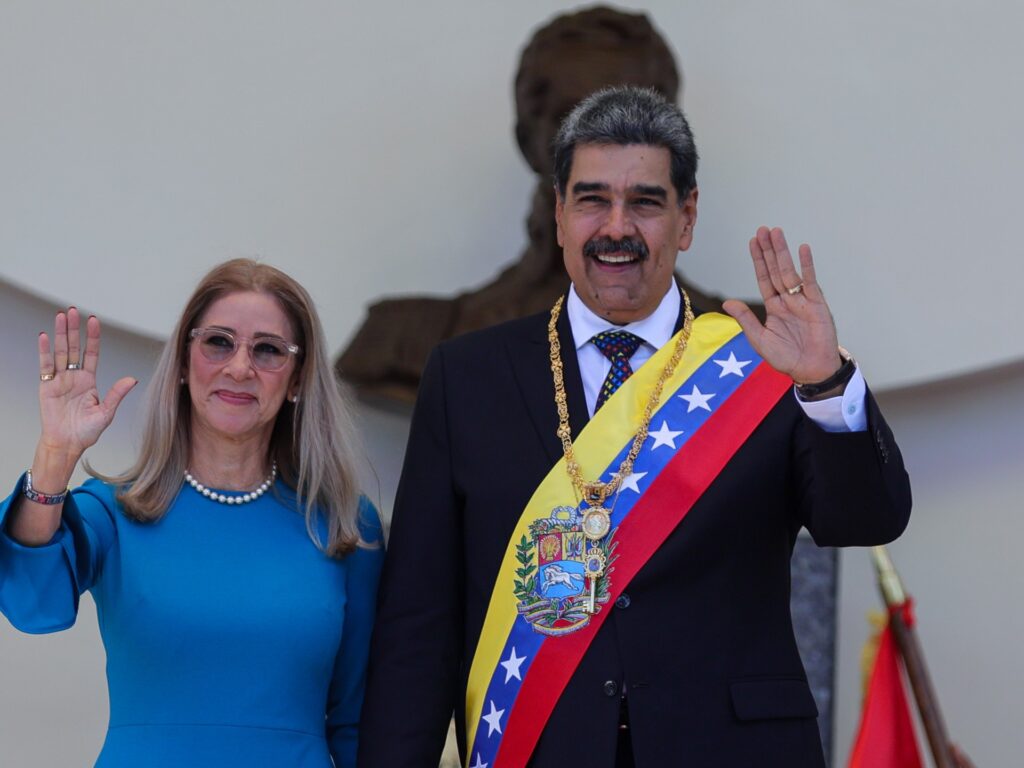
The United States government has intensified its pressure on Venezuela by imposing new sanctions targeting additional relatives and associates of President Nicolás Maduro. This move comes shortly after the Trump administration enacted a blockade on Venezuelan oil tankers, aiming to curb the country’s oil exports and further isolate Maduro’s regime internationally.
The expanded sanctions list includes key members of Maduro’s inner circle, who are accused of facilitating corruption and undermining democratic processes in Venezuela. By targeting these individuals, the U.S. hopes to disrupt the financial networks that sustain Maduro’s government and increase leverage for political change.
According to officials, the sanction measures involve freezing assets under U.S. jurisdiction and prohibiting American entities and citizens from engaging in financial transactions with the designated persons. This creates significant obstacles for those associated with the regime to access international markets and conduct business.
The blockade on Venezuelan oil tankers, announced weeks earlier, seeks to block shipments of crude oil from Venezuela, the country’s major source of revenue. The U.S. administration has accused Maduro’s government of widespread corruption and human rights abuses, asserting that cutting off oil revenue will weaken his hold on power.
This latest sanction wave signals a continued and escalated effort by the U.S. to apply economic pressure on Venezuela amidst ongoing political and humanitarian crises. The country faces severe economic challenges, hyperinflation, and shortages of basic essentials, exacerbated by both internal mismanagement and external pressures.
Critics of the U.S. sanctions argue that these actions may worsen the plight of ordinary Venezuelans, although supporters maintain that the sanctions specifically target those responsible for the country’s turmoil.
The international community remains divided on the approach to Venezuela, with some countries supporting Maduro and others condemning his government’s actions. The U.S. administration has called for free and fair elections and a peaceful transition of power.
These measures highlight the complex geopolitical dynamics surrounding Venezuela, its strategic importance due to vast oil reserves, and the contentious relationship between the U.S. and the Maduro government. Observers will be closely watching the impact of these sanctions on Venezuela’s political landscape and on prospects for resolving its ongoing crisis.
In summary, the U.S. has expanded sanctions against relatives and associates of Venezuelan President Nicolás Maduro, following recent restrictions on Venezuelan oil shipments. These actions are part of a broader campaign to isolate Maduro’s regime, promote democratic reforms, and address allegations of corruption and authoritarianism. The unfolding situation continues to pose significant challenges for Venezuela and the international community.