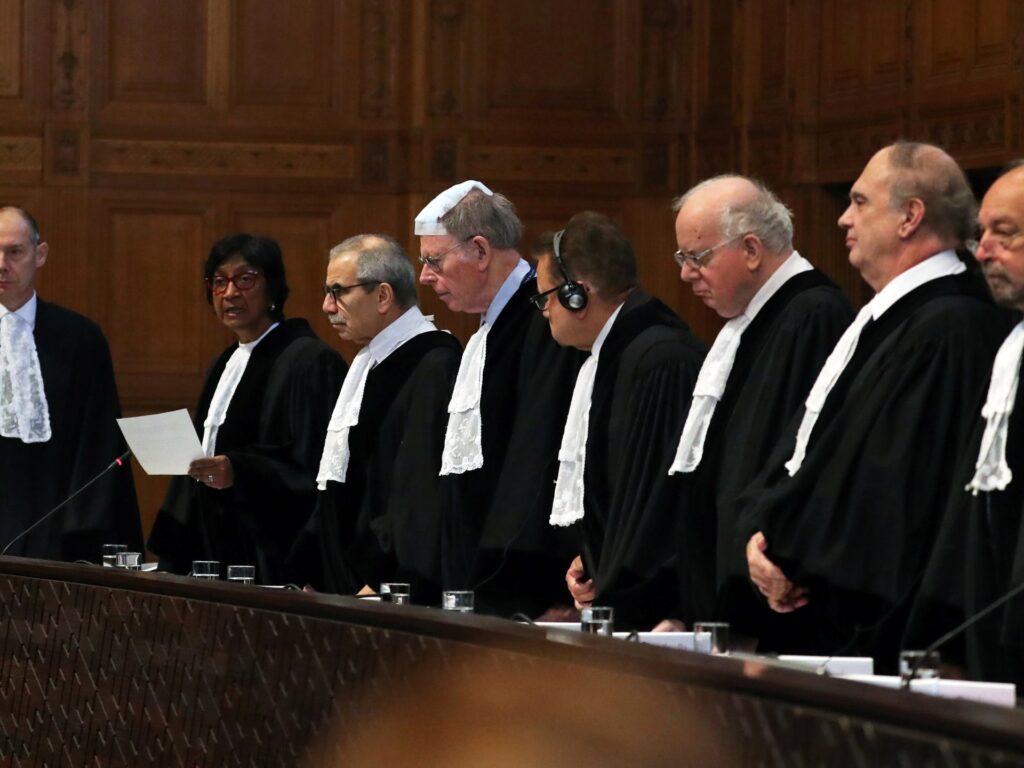
The International Court of Justice (ICJ), the United Nations’ highest judicial body, has scheduled hearings in January concerning allegations of genocide committed against the Rohingya community in Myanmar. This marks a significant step in international legal proceedings addressing the humanitarian crisis that has unfolded in Myanmar’s Rakhine State.
The case was brought before the ICJ by The Gambia on behalf of the Organisation of Islamic Cooperation (OIC) in late 2019. The allegations accuse Myanmar’s military forces of systematically targeting the Rohingya – an ethnic Muslim minority – through acts including mass killings, sexual violence, and forced displacement which have been widely condemned worldwide.
The upcoming hearings will include a series of open sessions where legal teams from both Myanmar and The Gambia will present their arguments. In addition, witnesses from the Rohingya community are set to provide testimonies during closed-door sessions. These testimonies are expected to offer critical firsthand accounts that may shed light on the scale and nature of the atrocities committed.
The Rohingya crisis began in earnest in 2017 when a military crackdown led to a mass exodus of over 700,000 Rohingya to neighboring Bangladesh. The United Nations and various human rights organizations have described the campaign as ethnic cleansing and possible genocide.
Myanmar has consistently denied accusations of genocide, stating that its military operations were aimed at rooting out insurgents and that any civilian casualties were unintentional.
The ICJ’s involvement underscores the importance of international law and justice in addressing grave human rights violations and protecting minority communities from atrocities. The hearings will assess whether Myanmar violated the 1948 Genocide Convention, to which it is a party, and will determine the legal consequences.
Legal experts highlight the significance of this case as potentially setting a precedent for how international courts handle allegations of genocide and hold nations accountable for ethnic violence.
The ICJ’s decision, which is expected to follow after the hearings, could lead to measures aimed at preventing further violations and ensuring reparations for victims.
This global judicial scrutiny comes amid ongoing calls for increased humanitarian aid and political solutions to resolve the Rohingya crisis, which remains one of the most urgent human rights issues in the world today.
The hearings represent a beacon of hope for justice for the Rohingya people and reaffirm the commitment of the international community to uphold human dignity and combat impunity for egregious crimes.