{"prompt":"An intimate close-up captures a baby's tiny, warm dark-brown fist gently cradled by an adult's slender, henna-tinted fingers against flowing red fabric with golden patterns, softly lit and blurred to emphasize their tender bond.","originalPrompt":"An intimate close-up captures a baby's tiny, warm dark-brown fist gently cradled by an adult's slender, henna-tinted fingers against flowing red fabric with golden patterns, softly lit and blurred to emphasize their tender bond.","width":768,"height":768,"seed":42,"model":"flux","enhance":false,"nologo":false,"negative_prompt":"undefined","nofeed":false,"safe":false,"quality":"medium","image":[],"transparent":false,"has_nsfw_concept":false,"concept":{"special_scores":{"0":0.46799999475479126,"1":-0.010999999940395355,"2":-0.04899999871850014},"special_care":[[0,0.46799999475479126]],"concept_scores":{"0":-0.07800000160932541,"1":-0.057999998331069946,"2":-0.06400000303983688,"3":-0.04500000178813934,"4":-0.05900000035762787,"5":-0.05700000002980232,"6":-0.05999999865889549,"7":-0.0820000022649765,"8":-0.04699999839067459,"9":-0.0560000017285347,"10":-0.07000000029802322,"11":-0.07199999690055847,"12":-0.08299999684095383,"13":-0.08399999886751175,"14":-0.09799999743700027,"15":-0.07800000160932541,"16":-0.06700000166893005},"bad_concepts":[]},"trackingData":{"actualModel":"flux","usage":{"completionImageTokens":1,"totalTokenCount":1}}}
Thousands of Malian civilians are recounting harrowing tales of violence and abuse, including rapes and summary executions, at the hands of the Russian-backed Africa Corps, a new military unit reportedly working with Mali’s armed forces to combat extremist groups. These accounts emerge from refugee camps in Mauritania, where families have fled in recent months, detailing a campaign of terror mirroring the tactics of the Wagner mercenary group it replaced.
Eyewitnesses describe a “scorched-earth policy,” with soldiers firing indiscriminately at anyone they encounter. Refugees speak of entire villages set ablaze and discovering the mutilated bodies of loved ones, some reportedly missing organs—a grim echo of previously documented atrocities. This systematic brutality has driven a mass exodus, with many seeking safety across the border in Mauritania.
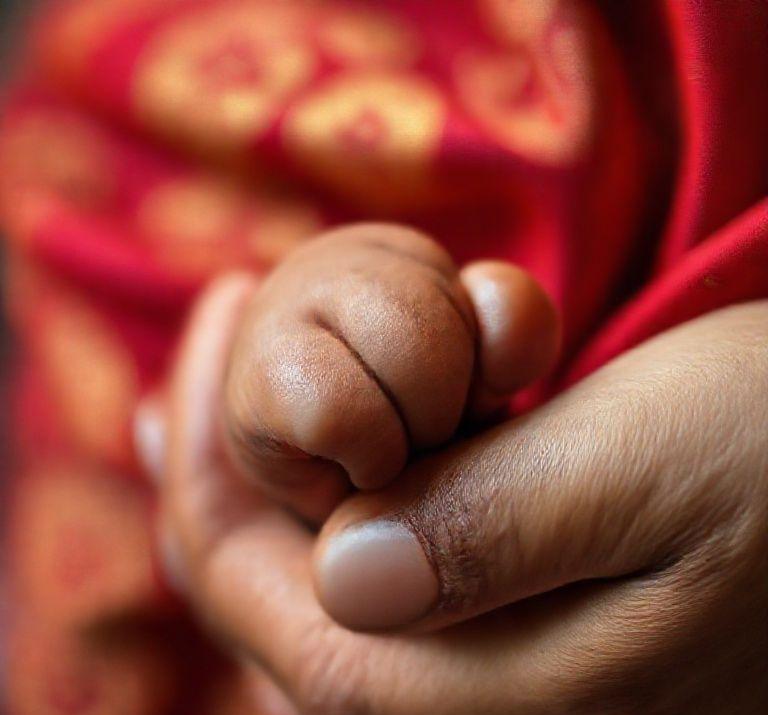
Among the countless displaced is Mougaloa, a herder from northern Mali, who endured unimaginable loss. She recounts masked, armed men, speaking a foreign language and accompanied by Malian soldiers, seizing her 20-year-old son, Koubadi. Despite his denials of militant ties, he was beaten until he fainted, and his throat was slit before her eyes. The same group later returned, looting her family’s possessions and abducting her elder daughter, Fatma, leaving Mougaloa to flee with her younger daughter, Akhadya, clutching her hand, uncertain of Fatma’s fate.
Another survivor, also named Fatma (a different individual), shares her own traumatic ordeal. When armed men descended upon her village of Kurmare, she stayed to protect her daughter, who suffered a seizure. The men systematically plundered homes, killed men, and committed unspeakable acts, which Fatma silently endures, stating it “stays between God and me.” She later found her son deceased and her brother wounded, with her daughter succumbing to her seizures during their escape to Mauritania. Her family, part of the Fulani community, often finds itself caught in the crossfire, accused by the Malian government of militant affiliations despite their civilian status.
The Africa Corps emerged approximately six months ago as the successor to the notorious Wagner mercenary group, which ceased operations in Mali following the death of its leader. While Malian authorities have not publicly acknowledged the presence of either entity, official statements from Moscow have confirmed the Africa Corps’ activity in Mali, citing requests for security assistance against “terrorists.” Legal analysts highlight that unlike Wagner, the Africa Corps is directly integrated into Russia’s Ministry of Defense, potentially making the Russian government directly responsible under international law for any war crimes committed by its personnel.
The transition to Africa Corps brought little relief, as refugees attest that the methods and even some personnel remain unchanged. Observers note a severe lack of transparency, making it nearly impossible to ascertain the full extent of casualties and abuses, particularly in remote regions. The withdrawal of a United Nations peacekeeping mission and Mali’s exit from the International Criminal Court have further hampered independent oversight, exacerbating a climate of impunity. Civilians, caught between extremist factions demanding allegiance and government forces accusing them of complicity, face a perilous existence.
For those like Mougaloa and Fatma, who have witnessed unspeakable horrors and lost so much, life in refuge is marked by trauma and uncertainty. Their testimonies paint a grim picture of a conflict where the lines between combatants and victims are blurred, and where hope for justice remains a distant dream amidst the escalating violence.