a-serene-nightscape-shows-a-vast-deep-blue-sky-dense-with-stars-and-a-diagonal-band-of-the-milky-way.jpg
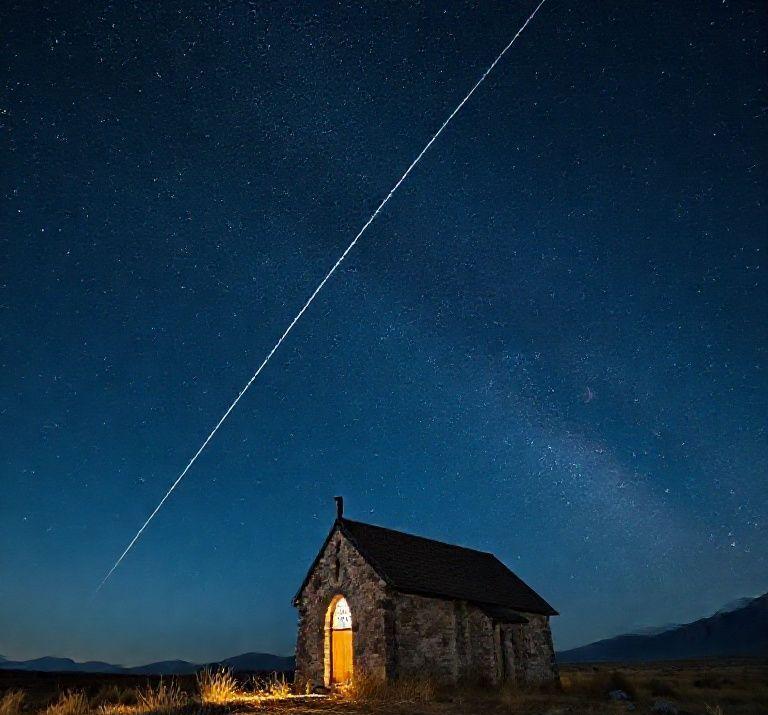
Stargazers across the globe are set for an astronomical treat this December, with a flurry of celestial events gracing the night skies. From spectacular meteor showers to a rare planetary alignment and the closest approach of an ancient interstellar comet, the month promises an array of breathtaking phenomena.
The month began with stunning displays, including a third consecutive supermoon, a rare double lunar halo, and vibrant Northern Lights shows, setting a high bar for the cosmic spectacles to follow. Those hoping to witness these wonders should keep an eye on local weather conditions for clear viewing.
Among the highlights are three notable meteor showers. The Geminid meteor shower, active from December 4 to 20, is expected to peak on December 14. With the Moon in a waning crescent phase, light pollution will be minimal, offering prime viewing conditions for this shower, which can produce over 120 meteors per hour. These bright, multi-colored streaks, caused by debris entering Earth’s atmosphere, appear in shades of white, yellow, green, red, and blue due to elements like sodium and calcium within the celestial particles. First observed in 1862, the Geminids are believed to intensify each year.
Following the Geminids, the Ursid meteor shower will be active from December 17 to 26, peaking between December 22 and 23. While less prolific, with an average of 10 meteors per hour, these streaks appear to emanate from the Ursa Minor constellation. For those who miss these, the Quadrantids, known as one of the most consistent meteor showers, begin on December 28 and will peak between January 3 and 4, 2026.
An early Christmas celestial gift will arrive on December 7, when the Moon and Jupiter appear in close proximity. Millenium TV sources indicate that this planetary conjunction will be best viewed low on the horizon shortly after the Moon rises in the north-east, although the two celestial bodies are actually millions of miles apart.
A truly unique event this month is the closest approach of Comet 3I/ATLAS to Earth on December 19. This interstellar object, only the third ever detected, originated from outside our solar system and will not return. Discovered in July, recent observations reveal a faint bluish hue, marking its third color shift since its initial sighting. At over seven billion years old, the comet predates our solar system and offers invaluable clues about planetary formation in other star systems. While some have speculated about its alien origins, NASA has dismissed these claims. It will not be visible to the naked eye but should be viewable with an amateur telescope.
December 21 marks the winter solstice, signifying the shortest day and longest night in the Northern Hemisphere and the official start of astronomical winter. This specific moment occurs at 15:03 GMT when Earth’s axis is tilted furthest from the Sun.
Finally, the International Space Station (ISS) will be visible above the UK for approximately four minutes at 05:56 GMT on December 25. Despite the dark, its high altitude will allow it to reflect sunlight, making it appear as a single, fast-moving bright star, easily spotted with the naked eye. The ISS will be the third brightest object in the sky, after the Moon and Venus.
Looking ahead to early January, a fourth consecutive supermoon, known as the Wolf Moon, will grace our skies. This will be the last opportunity to see the Moon appear so large and close until November 2026.
© Millenium TV