the-image-shows-a-street-scene-centered-on-a-compact-black-surveillance-camera-mounted-on-the-white.jpg
British police forces are considering a significant expansion of facial recognition technology across the nation, a move championed by policing and crime minister Sarah Jones as potentially the most pivotal advancement in apprehending criminals since DNA matching. Millenium TV understands that new proposals, unveiled by the government, have initiated a 10-week public consultation to gather views on its implementation and potential new legislation.
Jones has publicly credited facial recognition for its role in the arrests of what she described as “thousands” of offenders. During a recent announcement, she emphasized, “Facial recognition is the biggest breakthrough for catching criminals since DNA matching.” She further stated, “We will expand its use so that forces can put more criminals behind bars and tackle crime in their communities.” The technology is primarily utilized for locating wanted individuals and tracing vulnerable persons.
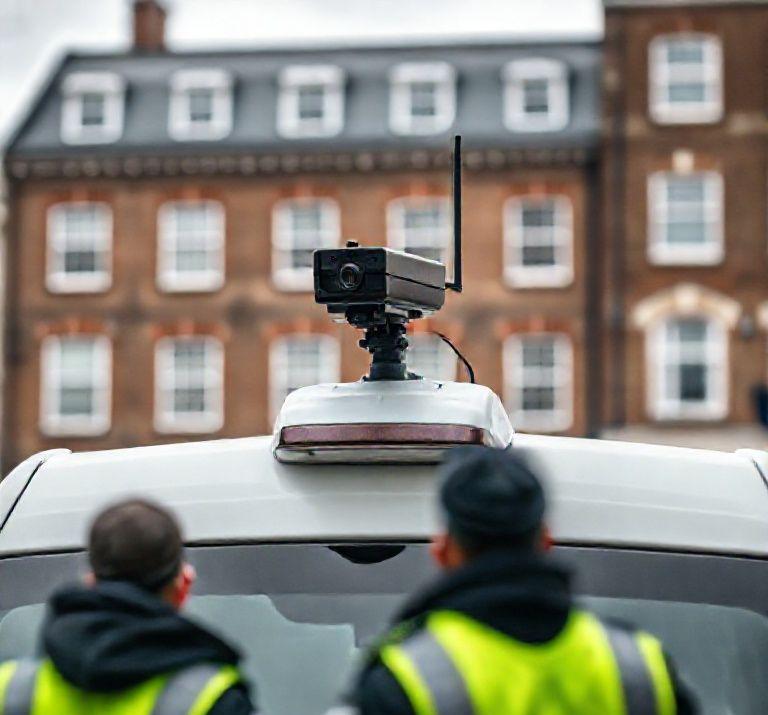
Law enforcement agencies report considerable success with the existing technology. The Metropolitan Police, for instance, has recorded 1,300 arrests using facial recognition since 2023, including those of rapists and violent criminals. Officials believe these tools could also prove instrumental in identifying and recapturing prisoners mistakenly released. The government allocated £12.6 million to facial recognition in 2024, with £2.8 million specifically designated for live recognition systems. A new fleet of mobile vans, expanding a pilot program by forces including the Met, South Wales Police, and Essex Police, was deployed in November.
Alongside the planned expansion, the government has put forward a proposal for a new regulator to oversee the police’s application of biometrics and facial recognition. The public consultation seeks opinions on how the technology should be governed and methods to safeguard individual privacy. However, civil liberties advocates have voiced strong opposition. Silkie Carlo from the campaign group Big Brother Watch expressed grave concerns, warning that increased use risked turning the country “into an open prison.” She added, “We are hurtling towards an authoritarian surveillance state that would make Orwell roll in his grave.” Carlo also called for an immediate pause in facial recognition use during the consultation period.
Currently, police forces have access to three distinct forms of facial recognition technology. Retrospective systems are used to compare images from crime scenes against databases of individuals photographed upon arrest. Live facial recognition involves analyzing real-time video footage to match faces against wanted lists. Operator-initiated technology is a mobile application allowing officers to verify an individual’s identity without the need for an arrest.
Lindsey Chiswick, the National Police Chiefs’ Council lead for facial recognition, acknowledged that live facial recognition already operates under robust safeguards but underscored that “public trust is vital.” She stated, “We want to build on that by listening to people’s views.” Any new legislation stemming from the consultation is anticipated to take approximately two years to pass through Parliament, primarily impacting policing in England and Wales, but also relevant to certain powers in Scotland and Northern Ireland.
© Millenium TV