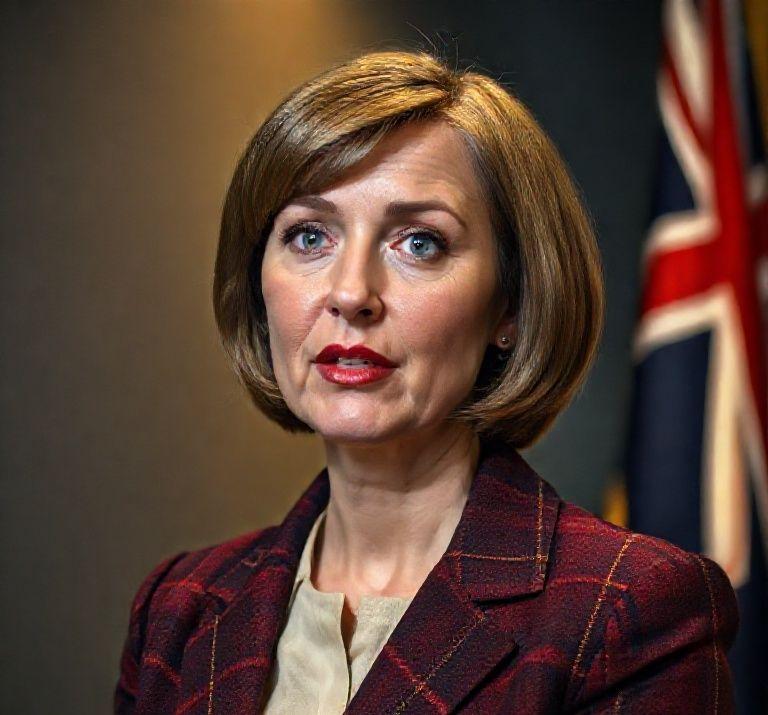
the-image-shows-a-fair-complexioned-woman-in-a-medium-close-up-indoors-as-if-for-an-interview-with.jpg
Australia’s Communications Minister Anika Wells has declared her unwavering resolve against major technology companies and potential international pressure concerning the nation’s pioneering social media ban for individuals under 16. Effective December 10, ten prominent social media platforms, including industry giants like Snapchat, Meta, TikTok, and YouTube, will be mandated to implement stringent measures to prevent children below 16 years of age from creating accounts.
“We stand firm on the side of parents and not on the platforms,” Minister Wells stated, emphasizing the government’s commitment. While some tech firms, such as Meta, acknowledge the need for enhanced online safety for young people, they have expressed skepticism about the efficacy of a complete ban. Experts have echoed these concerns.
Speaking from Brisbane, Minister Wells highlighted that technology companies have had a substantial period—spanning 15 to 20 years—to enhance their safety protocols, particularly in light of studies indicating the detrimental effects of their platforms. “I am not intimidated by big tech because I understand the moral imperative of what we’re doing,” she affirmed, adding that conversations with parents whose children have experienced harm online reinforce her determination. She noted that many countries globally are observing Australia’s policy with keen interest, with leaders reportedly contacting her government for guidance on emulating the initiative. “We’re pleased to be the first, we’re proud to be the first, and we stand ready to help any other jurisdictions who seek to do these things.”
The policy faces potential scrutiny from the United States, given past statements by former US President Donald Trump vowing to defend American tech companies. Furthermore, Australia’s e-Safety Commissioner, tasked with overseeing the ban, has been called to testify before the US Congress. Minister Wells acknowledged the right of the White House and Congress to examine Australia’s actions but asserted that she and her officials remain focused on their core responsibilities. “We are very much concerned with doing our duty to Australians and Australian taxpayers who pay us to look after good public policy.”
Minister Wells also suggested that tech companies are justifiably concerned that Australia’s legislation could set a global precedent for restricting social media access for teenagers. “If you don’t have a safe operating model and if people are losing their lives as a result of your operating model, I think you can expect public policymakers to act.”
Despite its popularity, the legislation has drawn criticism. Some experts argue that alternative approaches, such as stricter content regulations, enhanced parental controls, and more comprehensive digital education programs, might prove more effective. Concerns persist regarding enforcement, especially given that similar legislative attempts in several US states have faced judicial setbacks. In Australia, two teenagers recently launched a High Court challenge, contending that the ban infringes upon children’s rights. A significant point of contention has been the exclusion of online gaming platforms, with parents and online safety researchers pointing to their potential for harm, singling out platforms like Roblox.
Addressing the gaming exclusion, Minister Wells noted that the e-Safety Commissioner is actively monitoring Roblox, which has recently implemented measures to enhance platform safety. The government plans to review the ban within the next two years. “This isn’t a cure, it’s a treatment plan, and treatment plans will always evolve as we can adapt and address harm and see what works and what doesn’t,” she explained.
Minister Wells has consistently managed expectations, acknowledging that the policy’s rollout might encounter challenges but emphasizing that the resulting social change will ultimately be beneficial. She drew a parallel to Australia’s laws preventing those under 18 from consuming alcohol. “In the same way that people under 18 aren’t allowed to drink alcohol in Australia, there will be people today under 18 that drink alcohol… they may even be supported in doing that by their parents. That still doesn’t mean that we shouldn’t have a law that prevents under 18s from drinking alcohol in Australia because the public health evidence tells us that is a good and proper thing to do.”
As a mother of three, Minister Wells shared her personal experience, noting the challenges of managing screen time and social media use within her own household, a task often handled by her husband due to her demanding work schedule. “So in a funny way, me being the lawmaker for this social media ban is my own contribution to helping those kinds of fights,” she expressed, adding that many parents have conveyed their gratitude for her work on the policy. “You can’t parent an algorithm and this is giving parents another weapon in their arsenal.”
© Millenium TV