under-a-clear-blue-sky-a-person-wearing-a-vest-labeled-police-holds-up-a-smartphone-to-photograph.jpg
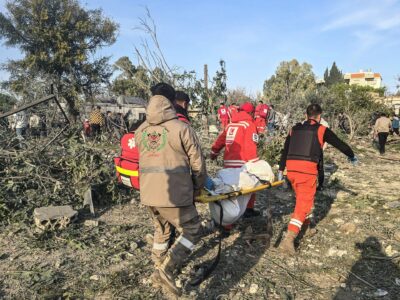
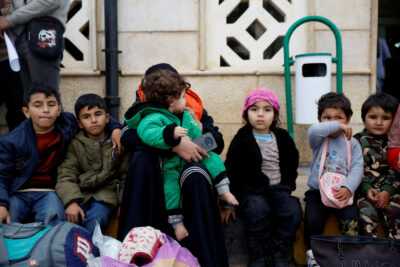
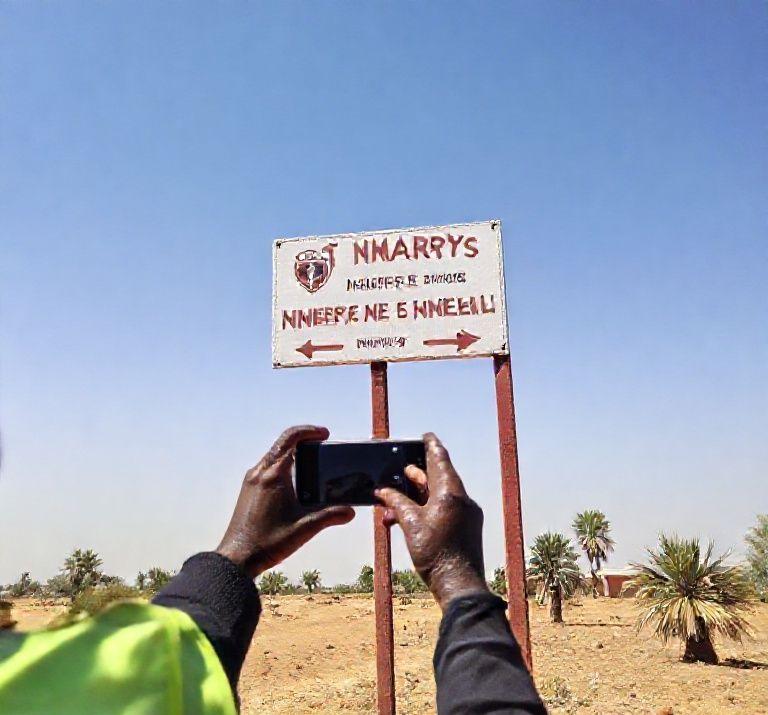
Parents in Papiri, Nigeria, are living in terror, unwilling to speak out or cooperate with authorities and journalists, fearing retribution from kidnappers who abducted their children ten days ago. Over 300 students were seized from St. Mary’s Catholic School in Papiri village in Niger state, with approximately 250 still missing, though state officials suggest this number is exaggerated.
“If they hear you say anything about them, before you know it they’ll come for you. They’ll come to your house and take you into the bush,” one parent, identified as Aliyu for his safety, explained. His young son is among the missing, some as young as five years old. Aliyu highlighted the village’s remote location, making it vulnerable to criminal gangs, locally known as “bandits,” who operate just a three-hour drive away. “We know where they are, but we can’t go there ourselves, it’s too dangerous,” he added, expressing deep anguish over the fate of the vulnerable captives.
This incident is part of a disturbing surge in mass abductions across north and central Nigeria. Just two days after the Papiri kidnapping, 12 teenage girls were seized in Borno state’s Mussa District. Security forces later rescued these girls, attributing the abduction to the Islamic State of West Africa (ISWAP) group. A few days prior to the Papiri incident, 25 girls were taken from a school in Maga, Kebbi state, with security forces successfully rescuing them from what authorities described as a “farm settlement.”
Millenium TV understands that while some abductions are blamed on criminal gangs seeking ransom, the government has recently indicated that jihadist groups might be responsible for some of the recent school kidnappings. Paying ransoms is illegal in Nigeria, yet the desperate reality for families often involves crowdfunding for their loved ones’ release, as refusal to pay can lead to tragic consequences.
Yusuf, a legal guardian to some of the girls abducted from Maga, believes such large-scale kidnappings necessitate insider help. “These kidnappings can only happen with the connivance of someone from the community, because no stranger can come to a place and pull something like this off without the help of locals,” he stated.
Amid the escalating crisis, some rural communities in Nigeria’s north-west, long neglected by security forces, have resorted to forging their own solutions. Security analyst David Nwaugwe notes that communities severely impacted by these abductions have struck “peace deals” with bandit groups, often exchanging access to rich mineral deposits, particularly gold, for a decline in attacks. These agreements, according to Nwaugwe, have shown effectiveness in certain areas.
Katsina state provides a compelling example, where peace deals have significantly reduced insecurity. Community and bandit leaders convene, sometimes with armed bandits present, to negotiate terms. In Jibia, a deal struck in March of this year saw schools reopen and a guarantee against attacks, while bandits secured access to clean water, safe cattle passage, and market access for their women. Both sides prioritized the release of kidnapped individuals, with 37 villagers freed in Kurfi, another area of Katsina, following a similar deal.
Audu Abdullahi Ofisa, a bandit leader involved in the Jibia talks, welcomed the peace, stating, “Life is full of ups and downs, we are happy to go into another phase.” Bandit leaders themselves, like Nasiru Bosho from Kurfi, have expressed weariness with violence, driven by the high costs of their nomadic life without market access or clean water. However, analysts caution that these local successes may simply displace insecurity further south, where communities are perceived to be more affluent and capable of paying ransoms.
The recent uptick in attacks has prompted speculation, particularly regarding former U.S. President Donald Trump’s recent threats of military intervention in Nigeria, where he criticized the government’s protection of Christians. However, security analysts, including Christian Ani from the Institute for Security Studies, and David Nwaugwe, dismiss a direct causal link. They contend that these groups are primarily motivated by profit, targeting “soft targets like schools because they’re easy to get money from.”
Nwaugwe advocates a two-pronged approach to combat the violence: a combination of overwhelming military force and amnesty negotiations. “I don’t think purely using military power is going to work here, you need to complement that with other measures,” he explained. For the anxious parents of Papiri, however, the concept of peace with their tormentors remains a distant hope as they desperately await the safe return of their children.
© Millenium TV