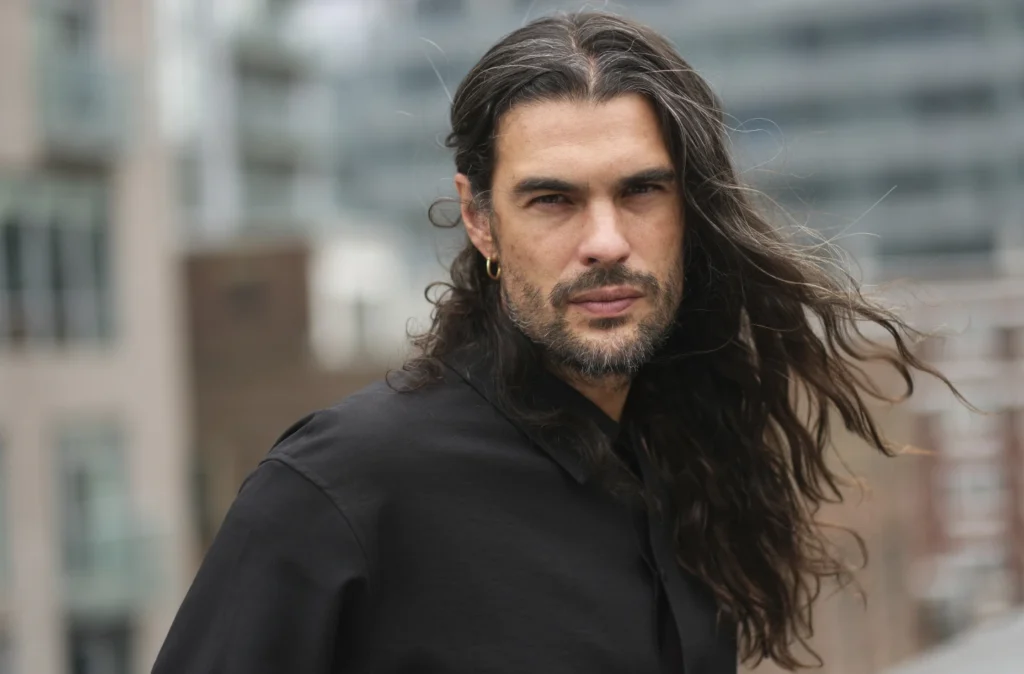
TORONTO — Oliver Laxe, the spiritually minded, 6-foot-6-inch French-born Galician director, knows that his new film, “Sirāt,” has given him a reputation to live up to.
“When I’m on a plane and things are going bad, I say, “Come on, you’re the director of ‘Sirāt.’ You cannot be scared,” Laxe, 41, says, laughing.
Since its prize-winning debut at the Cannes Film Festival, “Sirāt” has been one the year’s most talked about films. It’s about a father (Sergi López) who, with his 12-year-old son (Bruno Núñez Arjona), is searching for his teenage daughter. After arriving at a remote rave in southern Morocco, where they have no luck, they flee with a small caravan of ravers who ride across a desert expanse.
A primal beat sounds through “Sirāt,” which morphs into an existential journey through approaching apocalypse. World War III is referenced on the radio, and the arid landscape where water is in short supply reverberates with the effects of climate change. “Sirāt,” which means “path” or “way” in Arabic, is uncommonly blunt about what the future holds for the film’s characters, and for us.
“Sirāt” on Friday begins playing a one-week run in select theaters to qualify for the Oscars, where it is Spain’s submission. The Neon release, which will hit wider theaters in early 2026, has already been a box-office hit in Spain and in France, drawing comparisons to both “The Wages of Fear” and “Mad Max.” Not everyone has gone along with the intense odyssey of “Sirāt,” but it has, undeniably, struck a nerve.
“For me, cinema isn’t about ‘I like it’ or ‘I don’t like it,’” says Laxe. “My purpose is: Did it move something?”
During a stop earlier this fall at the Toronto International Film Festival, Laxe — a lanky and soulful presence who might have been a romance cover model if he weren’t so philosophical — met up with The Associated Press to talk about the spiritual underpinnings of “Sirāt” and why filmmaking can’t be the same, anymore.