WASHINGTON — President Donald Trump unveiled a deal Thursday with drugmakers Eli Lilly and Novo Nordisk to expand coverage and reduce prices for their popular obesity treatments Zepbound and Wegovy.
The drugs are part of a new generation of obesity medications known as GLP-1 receptor agonists that have soared in popularity in recent years.
But access to the drugs has been a consistent problem for patients because of their cost — around $500 a month for higher doses — and insurance coverage has been spotty.
Coverage of the drugs for obesity will expand to Medicare patients starting next year, according to the administration, which said some lower prices also will be phased in for patients without coverage. Starting doses of new, pill versions of the treatments also will cost $149 a month if they are approved.
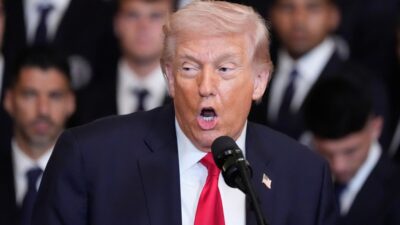
“(It) will save lives, improve the health of millions and millions of Americans,” said Trump, in an Oval Office announcement in which he referred to GLP-1s as a “fat drug.”
Thursday’s announcement is the latest attempt by the Trump administration to rein in soaring drug prices in its efforts to address cost-of-living concerns among voters. Drugmakers Pfizer and AstraZeneca recently agreed to lower the cost of prescription drugs for Medicaid after an executive order in May set a deadline for drugmakers to electively lower prices or face new limits on what the government will pay.
As with the other deals, it’s not clear how much the price drop will be felt by consumers. Drug prices can vary based on the competition for treatments and insurance coverage.
Obesity drugs have become increasingly popular, but are costly
The obesity drugs work by targeting hormones in the gut and brain that affect appetite and feelings of fullness. In clinical trials, they helped people shed between 15% and 22% of their body weight — up to 50 pounds or more in many cases.
Patients taking these drugs usually start on smaller doses and then work up to larger amounts, depending on their needs. Because of obesity being considered a chronic disease, they need to take the treatment indefinitely or risk regaining weight, experts say.
The fast-growing treatments have proven especially lucrative for drugmakers Eli Lilly and Co. and Novo Nordisk. Lilly said recently that sales of Zepbound have tripled so far this year to more than $9 billion.
But for many Americans, their cost has made them out of reach.
Medicare, the federally funded coverage program mainly for people ages 65 and over, hasn’t covered the treatments for obesity. President Donald Trump’s predecessor, Joe Biden, proposed a rule last November that would have changed that. But the Trump administration nixed it last spring.
Few state and federally funded Medicaid programs, for people with low incomes, offer coverage. And employers and insurers that provide commercial coverage are wary of paying for these drugs in part because of the large number of patients that might use them.
The $500 monthly price for higher doses of the treatments also makes them unaffordable for those without insurance, doctors say.
Medicare now covers the cost of the drugs for conditions such as type 2 diabetes and cardiovascular disease, but not for weight loss alone.
Trump showing he is in touch with cost-of-living concerns
The effort to lower costs barriers to popular GLP-1 drugs comes as the White House is looking to demonstrate that Trump is in touch with Americans’ frustrations with rising costs for food, housing, health care and other necessities.
“Trump is the friend of the forgotten American,” said Health and Human Services Secretary Robert F. Kennedy, Jr. at Thursday’s announcement. “Obesity is a disease of poverty. And overwhelmingly these drugs have only been available for people who have wealth.”
Kennedy had previously expressed skepticism to GLP-1s in fighting obesity and diseases related to the condition. But he was full of praise for Trump for pushing to help a broader segment of Americans have access to the drug.
The announcement came after Republican gubernatorial candidates in New Jersey and Virginia faced a drubbing in Tuesday’s election in which dour voter outlook about the economy appeared to an animating factor in the races.