Skip to content
March 6, 2026
  • Facebook
  • Twitter
  • Instagram
  • Youtube
  • tiktok
MILLENNIUM NEWS 24/7

MILLENNIUM NEWS 24/7

Bridging The Community’s World Wide

  • Home
  • IP TV LIVE
  • U.S.News
  • LOCAL ELECTION
  • State News
    • Alabama
    • Alaska
    • Arizona
    • Arkansas
    • California
    • Colorado
    • Connecticut
    • Delaware
    • Florida
    • Georgia
    • Hawaii
    • Idaho
    • Illinois
    • Indiana
    • Iowa
    • Kansas
    • Kentucky
    • Louisiana
    • Maryland
    • Massachusetts
    • Michigan
    • Maine
    • Minnesota
    • Mississippi
    • Missouri
    • Montana
    • Nebraska
    • Nevada
    • New Hampshire
    • New Jersey
    • New Mexico
    • New York
    • North Carolina
    • North Dakota
    • Oregon
    • Pennsylvania
    • Rhode Island
    • South Carolina
    • South Dakota
    • Tennessee
    • Texas
    • Virginia
    • Washington
    • West Virginia
    • U.S. Virgin Islands
  • Politics
  • World News
  • Sports
  • Entertainment
  • Weather
  • Business
  • Health News
  • ADVERTISEMENT
  • About Us
  • Contact us
Live TV

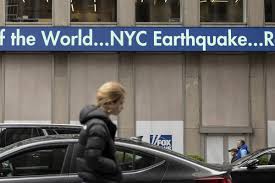
East Coast earthquakes aren’t common, but they are felt by millions. Here’s what to know

DALLAS— East Coast residents were jolted Friday by a 4.8-magnitude earthquake centered near Lebanon, New Jersey, with weak rumblings felt as far away as Baltimore and the Massachusetts-New Hampshire border. No life-threatening injuries or major damage have been reported.

Here’s what to know about earthquakes on the East Coast.

How are earthquakes measured?

The Richter scale, developed by Charles F. Richter in the 1930s, is no longer widely used. According to the U.S. Geological Survey, as more seismograph stations were installed worldwide to calculate the size of an earthquake, Richter’s method was valid only for certain distance and frequency ranges.

Seismometers are instruments used to record the ground’s motion. Magnitudes are measures of an earthquake’s size. They range from 2.5 or less, which are usually not felt, to 8.0 or higher, which can cause great damage.

How often do New York City and the East Coast get earthquakes?

Earthquakes large enough to be felt by a lot of people are relatively uncommon on the East Coast. Since 1950 there have been about 20 quakes with a magnitude above 4.5, according to the United States Geological Survey. That’s compared with over 1,000 on the West Coast.

That said, East Coast quakes like the one experienced Friday do happen.

“There’s a history of similar-sized earthquakes in the New York region over the last few hundred years,” said Jessica Thompson Jobe from the USGS’ Earthquake Hazards Program.

When was the last big East Coast quake?

In 2011, a 5.8 magnitude earthquake near Mineral, Virginia, shook East Coast residents over a wide swath from Georgia to Maine and even southeastern Canada. The USGS called it one of the most widely felt quakes in North American history.

The quake cost $200 to $300 million in property damages, including to the Washington Monument in Washington, D.C.

What’s the difference between East and West Coast quakes?

The West Coast lies on a boundary where sections of Earth’s crust rub together, causing stress and slippage along fault lines that generate earthquakes relatively often.

East Coast quakes like Friday’s are caused by compression over time of hard, brittle rock deep underground, according to Robert Thorson, an earth sciences professor at the University of Connecticut. “It’s like having a big block of ice in a vise and you are just slowly cranking up the vise,” he said. “Eventually, you’re going to get some crackling on it.”

These East Coast quakes can be harder to pinpoint. And they tend to affect a broader area. That’s because colder, harder East Coast rocks are better at spreading the rattling energy from an earthquake.

The distribution of cities across the East Coast also means that more people are around to experience the effects of a quake.

“We also have population centers over a large part of the northeast,” said Leslie Sonder, a geophysicist at Dartmouth College, “So a lot of people around here feel the earthquake.”

How do you stay safe during a quake?

USGS experts say there is a risk of aftershocks for weeks to months, which are expected after any earthquake. They recommend paying attention to emergency messaging from local officials.

To keep safe from shakes while sleeping, remove any furniture or objects that could fall and injure you or others.

If you feel shaking, drop where you are. Cover your head and neck with one arm, crawl under a table for shelter and hold on. If there’s no shelter nearby, grasp your head and neck with both hands until the shaking stops.


About Author

Habib Habib

See author's posts

Post navigation

Previous Lawsuit naming Sean ‘Diddy’ Combs as co-defendant alleges his son sexually assaulted woman on yacht
Next Democrats lean into border security as it shapes contest for control of Congress

Related Stories

US Issues Limited Licence for Venezuelan Gold after High-Level Visit

US Issues Limited Licence for Venezuelan Gold after High-Level Visit

US Customs Agency Delays Reimbursement of Tariff Costs Amid Process Development

US Customs Agency Delays Reimbursement of Tariff Costs Amid Process Development

White House Posts Controversial ‘American Justice’ Video Following Iran School Attack

White House Posts Controversial ‘American Justice’ Video Following Iran School Attack

Entertainment

Nomadic Art Haven Opens in Qatar’s Desert 1

Nomadic Art Haven Opens in Qatar’s Desert

BBC Initiates Swift Probe Over Unedited Racial Slur in BAFTA Broadcast 2

BBC Initiates Swift Probe Over Unedited Racial Slur in BAFTA Broadcast

UK Comic Russell Brand Pleads Not Guilty to New Rape and Sexual Assault Charges 3

UK Comic Russell Brand Pleads Not Guilty to New Rape and Sexual Assault Charges

BBC Faces Backlash for Removing ‘Free Palestine’ Tribute from BAFTA Coverage 4

BBC Faces Backlash for Removing ‘Free Palestine’ Tribute from BAFTA Coverage

BBC Faces Backlash for Removing ‘Free Palestine’ Tribute from BAFTA Coverage 5

BBC Faces Backlash for Removing ‘Free Palestine’ Tribute from BAFTA Coverage

Tourette Syndrome Campaigner Involuntarily Shouts Racial Slur at BAFTA Film Awards 6

Tourette Syndrome Campaigner Involuntarily Shouts Racial Slur at BAFTA Film Awards

Tourette Syndrome Campaigner Involuntarily Shouts Racial Slur at BAFTA Ceremony 7

Tourette Syndrome Campaigner Involuntarily Shouts Racial Slur at BAFTA Ceremony

Top News

Shepherd’s Journey Amidst Israeli Strikes in Lebanon Captures Global Attention

Shepherd’s Journey Amidst Israeli Strikes in Lebanon Captures Global Attention

Why Did the US Torpedo Iran’s ‘Prize’ Warship? An Analysis of the Sinking of the IRIS Dena

Why Did the US Torpedo Iran’s ‘Prize’ Warship? An Analysis of the Sinking of the IRIS Dena

US Issues Limited Licence for Venezuelan Gold after High-Level Visit

US Issues Limited Licence for Venezuelan Gold after High-Level Visit

US and Israel Intensify Attacks on Iran at Unprecedented Pace, War Monitor Reports

US and Israel Intensify Attacks on Iran at Unprecedented Pace, War Monitor Reports

  • Home
  • About Us
  • Facebook
  • Twitter
  • Instagram
  • Youtube
  • tiktok
Editor: Nur M Tofader, Office: 250 Park Avenue, 7th Floor, New York, NY 10177 & Tell: 718 893 0002 (Office), 7188441300, +1212 401 6266, e-mail: Info@millenniuamtv24.com, e-mail: Info@millenniuamnews24.com, Copyright © Millennium News 24/7 | DarkNews by AF themes.