Skip to content
July 23, 2026
  • Facebook
  • Twitter
  • Instagram
  • Youtube
  • tiktok
MILLENNIUM NEWS 24/7

MILLENNIUM NEWS 24/7

Bridging The Community’s World Wide

  • Home
  • IP TV LIVE
  • U.S.News
  • LOCAL ELECTION
  • State News
    • Alabama
    • Alaska
    • Arizona
    • Arkansas
    • California
    • Colorado
    • Connecticut
    • Delaware
    • Florida
    • Georgia
    • Hawaii
    • Idaho
    • Illinois
    • Indiana
    • Iowa
    • Kansas
    • Kentucky
    • Louisiana
    • Maryland
    • Massachusetts
    • Michigan
    • Maine
    • Minnesota
    • Mississippi
    • Missouri
    • Montana
    • Nebraska
    • Nevada
    • New Hampshire
    • New Jersey
    • New Mexico
    • New York
    • North Carolina
    • North Dakota
    • Oregon
    • Pennsylvania
    • Rhode Island
    • South Carolina
    • South Dakota
    • Tennessee
    • Texas
    • Virginia
    • Washington
    • West Virginia
    • U.S. Virgin Islands
  • Politics
  • World News
  • Sports
  • Entertainment
  • Weather
  • Business
  • Health News
  • Urban Cultural Programs
  • ADVERTISEMENT
  • About Us
  • Contact us
Live TV

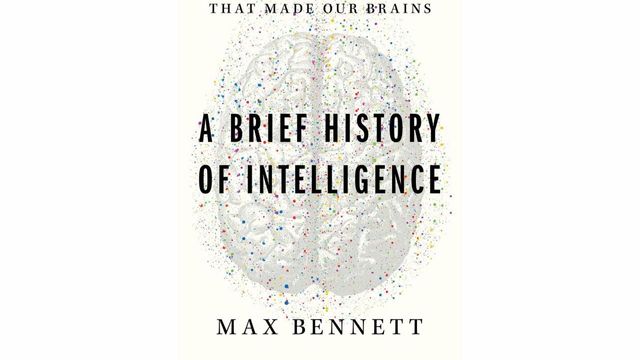
Book Review: ‘A Brief History of Intelligence’ may help humans shape the future of AI

Ever wonder how Homo sapiens got so smart? How come we developed actual language when all the other animals didn’t? How about what first made a nematode turn its body in a different direction? Or… what’s a nematode?

Answers to those questions and much, much more can be found in the pages of Max Bennett’s new book “A Brief History of Intelligence: Evolution, AI and the Five Breakthroughs that Made Our Brains.” At 365 pages plus 45 more with a glossary, chapter notes and a bibliography, readers can quibble whether it’s indeed brief, but it is certainly thorough.

Bennett’s premise — he’s a software entrepreneur who founded a company called Bluecore that “helped predict what consumers would buy before they knew what they wanted” — is that humans won’t ever create true artificial intelligence without understanding exactly what led to the real intelligence we already possess. So he begins with those nematodes — worms, to you and me — and painstakingly details the five breakthroughs that over the course of billions of years evolved into the three-pound brain that is folded into all of our skulls.

The first half of the book is a touch dry, detailing not only what caused worms to turn (food!), but how fish learn via trial and error and the pivotal role the basal ganglia plays in dictating behavior, among many, many other evolutionary developments. Bennett cites the work of psychologists and neuroscientists every step of the way and includes plenty of charts and graphs to make his points. It can feel like you’re reading a textbook at times. But to his credit, he begins each new chapter with actual prose, as in this description of the Cambrian explosion more than 500 million years ago: “The gooey microbial mats of the Ediacaran that turned the ocean floor green would have long since faded and given way to a more familiar sandy underbelly. The sensible, slow, and small creatures of the Ediacaran would have been replaced by a bustling zoo of large mobile animals as varied in form as in size.”

When Bennett begins to connect the evolution of the human brain to where we are in the development of artificial intelligence is when the book, for this reader, gets more interesting. Why can’t machines truly learn? Even ChatGPT, which every industry seems to be embracing these days, can’t “learn things sequentially,” writes Bennett. “They learn things all at once and then stop learning.” We’ve trained ChatGPT using the entire contents of the Internet, but the software can’t learn new things because of the risk that it will forget old things, or learn the wrong things.

Bennett is intelligent enough not to draw any conclusions about AI in a field that is changing daily, but he does end his book with a challenge. Evolution gave us our magnificent human brain, he writes, and now that we are in a position to play god and create a new form of intelligence, we must first decide on our goal — are we destined to spread out across the cosmos? Or will we fail, victims of pride or climate change or something yet unseen, just another branch on the evolutionary tree, which will grow on without humans and perhaps never add a limb called “Artificial Intelligence?” No reader alive today will live long enough for that answer, but Bennett makes a solid case for why reverse engineering the human brain may lead to future breakthroughs in the science of AI.


About Author

dreamboy

See author's posts

Post navigation

Previous Oprah Winfrey selects Jesmyn Ward’s ‘Let Us Descend’ for her book club
Next Music Review: Celebrate the spooky season with a Duran Duran album, ‘Danse Macabre’

Related Stories

Kaylee Hottle, deaf ‘Godzilla’ actor, killed in car crash at 18

Kaylee Hottle, deaf ‘Godzilla’ actor, killed in car crash at 18

Spain’s World Cup champions return home for royal welcome and parade in front of almost 2 million

Spain’s World Cup champions return home for royal welcome and parade in front of almost 2 million

Brenda Fricker, the first Irish actress to win an Oscar, for ‘My Left Foot,’ dies at 81

Brenda Fricker, the first Irish actress to win an Oscar, for ‘My Left Foot,’ dies at 81

Entertainment

Kaylee Hottle, deaf ‘Godzilla’ actor, killed in car crash at 18 1

Kaylee Hottle, deaf ‘Godzilla’ actor, killed in car crash at 18

Spain’s World Cup champions return home for royal welcome and parade in front of almost 2 million 2

Spain’s World Cup champions return home for royal welcome and parade in front of almost 2 million

Brenda Fricker, the first Irish actress to win an Oscar, for ‘My Left Foot,’ dies at 81 3

Brenda Fricker, the first Irish actress to win an Oscar, for ‘My Left Foot,’ dies at 81

Meta Withdraws AI-Generated Image Feature on Instagram Amid Privacy Concerns 4

Meta Withdraws AI-Generated Image Feature on Instagram Amid Privacy Concerns

Paramount-Warner Merger: A Potential Game-Changer for Media Landscape 5

Paramount-Warner Merger: A Potential Game-Changer for Media Landscape

US Court Rules That Trump’s Name Must Stay Off Kennedy Center During Appeal 6

US Court Rules That Trump’s Name Must Stay Off Kennedy Center During Appeal

Prince Harry Loses Privacy Lawsuit Against Daily Mail Publishers 7

Prince Harry Loses Privacy Lawsuit Against Daily Mail Publishers

Top News

Trump approves nuclear agreement that may allow Saudi Arabia to enrich uranium, 2 AP sources say

Trump approves nuclear agreement that may allow Saudi Arabia to enrich uranium, 2 AP sources say

From the Mexican border to Washington: A tiny Texas town fights Trump’s wall plan

From the Mexican border to Washington: A tiny Texas town fights Trump’s wall plan

As the president touts Trump Accounts, some families are still waiting for baby’s $1,000

As the president touts Trump Accounts, some families are still waiting for baby’s $1,000

Kaylee Hottle, deaf ‘Godzilla’ actor, killed in car crash at 18

Kaylee Hottle, deaf ‘Godzilla’ actor, killed in car crash at 18

  • Home
  • About Us
  • Facebook
  • Twitter
  • Instagram
  • Youtube
  • tiktok
Editor: Nur M Tofader, Office: 250 Park Avenue, 7th Floor, New York, NY 10177 & Tell: 718 893 0002 (Office), 7188441300, +1212 401 6266, e-mail: Info@millenniuamtv24.com, e-mail: Info@millenniuamnews24.com, Copyright © Millennium News 24/7 | DarkNews by AF themes.