Skip to content
March 7, 2026
  • Facebook
  • Twitter
  • Instagram
  • Youtube
  • tiktok
MILLENNIUM NEWS 24/7

MILLENNIUM NEWS 24/7

Bridging The Community’s World Wide

  • Home
  • IP TV LIVE
  • U.S.News
  • LOCAL ELECTION
  • State News
    • Alabama
    • Alaska
    • Arizona
    • Arkansas
    • California
    • Colorado
    • Connecticut
    • Delaware
    • Florida
    • Georgia
    • Hawaii
    • Idaho
    • Illinois
    • Indiana
    • Iowa
    • Kansas
    • Kentucky
    • Louisiana
    • Maryland
    • Massachusetts
    • Michigan
    • Maine
    • Minnesota
    • Mississippi
    • Missouri
    • Montana
    • Nebraska
    • Nevada
    • New Hampshire
    • New Jersey
    • New Mexico
    • New York
    • North Carolina
    • North Dakota
    • Oregon
    • Pennsylvania
    • Rhode Island
    • South Carolina
    • South Dakota
    • Tennessee
    • Texas
    • Virginia
    • Washington
    • West Virginia
    • U.S. Virgin Islands
  • Politics
  • World News
  • Sports
  • Entertainment
  • Weather
  • Business
  • Health News
  • ADVERTISEMENT
  • About Us
  • Contact us
Live TV

Birds nesting in agricultural lands more vulnerable to extreme heat, study finds

As climate change intensifies extreme heat, farms are becoming less hospitable to nesting birds, a new study found. That could be another barrier to maintaining rapidly eroding biodiversity that also provides benefits to humans, including farmers who get free pest control when birds eat agricultural pests.

Researchers who examined data on over 150,000 nesting attempts found that birds in agricultural lands were 46% less likely to successfully raise at least one chick when it got really hot than birds in other areas.

“I don’t think we expected it to be as extreme as it was,” said Katherine Lauck, a PhD candidate at University of California, Davis and lead author of the study published Thursday in the journal Science.

Bird scientists have been tracking the decline of avian wildlife for years. In 2019, a comprehensive study showed that there were three billion fewer wild birds than in 1970. The new study represents a closer look at what might be behind the dramatic decline.

Intense commercial farming is known to harm birds — fields completely clear of trees and other natural barriers lack shelter for wildlife, and pesticides and other agricultural chemicals can hurt birds.

The study concluded that species of higher conservation concern in the U.S. — those closer to being listed as federally threatened or endangered — were more vulnerable to extreme heat events in agricultural settings. But across the board, birds in forests were 14% more likely to achieve reproductive success in times of extreme heat.

The study’s findings were not surprising to Ken Rosenberg, a biologist with the Road to Recovery initiative who formerly worked as a conservation biologist at the Cornell Lab of Ornithology and was lead author on what he calls the “three billion birds study.” The idea that forest birds could benefit slightly from warmer temperatures makes sense, he said, since shade from trees provides a buffer from extreme heat that agricultural areas don’t have.

Rosenberg, who was not affiliated with this study, said he was pleased to see a paper in a prestigious journal using large datasets built from citizen science data. In this case, the observations came from NestWatch, a nationwide nest-monitoring program that anyone can participate in.

However, Rosenberg cautioned that more data might be needed to confirm that species of higher conservation concern were more vulnerable, since the overwhelming majority of the data involved species of low conservation concern.

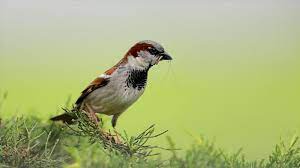
The researchers predicted how different bird species might fare in each landscape during extreme heat events. They concluded that in agricultural areas, species of greater conservation concern, like the oak titmouse, would see worse outcomes than species of lower concern, like the house sparrow.

Rosenberg and David Bird, a professor emeritus of wildlife biology at McGill University, said the study contributes to the understanding of the negative effects of intensive single crop farming. Bird said the study “sings the praises of the need for preserving our forests,” which not only protect birds from hot weather but also help protect ecosystems from global warming by absorbing carbon.

The study suggests that if farmers purposefully left just a little more natural space around farms with a few trees or native plants — not necessarily changing everything about their operations — birds could better coexist with humans, Rosenberg said.

“Some of these open country birds don’t really need a lot of habitat or a lot of space,” he said. “They just need some.”

Lead author Lauck is now working to better understand exactly why birds experience such large differences in nesting success between farmed and forested areas, hoping that would point toward useful interventions.

“New solutions that are neutral for farmers but helpful for biodiversity in the long term will create a more resilient biosphere for all of us,” they said.


About Author

dreamboy

See author's posts

Post navigation

Previous Forecast predict an El Nino winter. What does that mean?
Next No. 23 Tulane hosts ‘explosive’ North Texas as Fritz makes Green Wave history

Related Stories

Brazil Flooding Death Toll Rises to 64 Amid Ongoing Search Efforts

Brazil Flooding Death Toll Rises to 64 Amid Ongoing Search Efforts

Massive Sinkhole Swallows Two Cars at Omaha Intersection

Massive Sinkhole Swallows Two Cars at Omaha Intersection

At least 23 Dead as Heavy Rains Unleash Devastating Floods in Southeastern Brazil

At least 23 Dead as Heavy Rains Unleash Devastating Floods in Southeastern Brazil

Entertainment

Nomadic Art Haven Opens in Qatar’s Desert 1

Nomadic Art Haven Opens in Qatar’s Desert

BBC Initiates Swift Probe Over Unedited Racial Slur in BAFTA Broadcast 2

BBC Initiates Swift Probe Over Unedited Racial Slur in BAFTA Broadcast

UK Comic Russell Brand Pleads Not Guilty to New Rape and Sexual Assault Charges 3

UK Comic Russell Brand Pleads Not Guilty to New Rape and Sexual Assault Charges

BBC Faces Backlash for Removing ‘Free Palestine’ Tribute from BAFTA Coverage 4

BBC Faces Backlash for Removing ‘Free Palestine’ Tribute from BAFTA Coverage

BBC Faces Backlash for Removing ‘Free Palestine’ Tribute from BAFTA Coverage 5

BBC Faces Backlash for Removing ‘Free Palestine’ Tribute from BAFTA Coverage

Tourette Syndrome Campaigner Involuntarily Shouts Racial Slur at BAFTA Film Awards 6

Tourette Syndrome Campaigner Involuntarily Shouts Racial Slur at BAFTA Film Awards

Tourette Syndrome Campaigner Involuntarily Shouts Racial Slur at BAFTA Ceremony 7

Tourette Syndrome Campaigner Involuntarily Shouts Racial Slur at BAFTA Ceremony

Top News

Ongoing US-Israeli Conflict with Iran Enters Second Week with No Resolution in Sight

Ongoing US-Israeli Conflict with Iran Enters Second Week with No Resolution in Sight

Caught Between Iran and Saudi Arabia: Can Pakistan Maintain Neutrality?

Caught Between Iran and Saudi Arabia: Can Pakistan Maintain Neutrality?

Pro-Palestinian Activist Faces Questioning by German Border Police at Berlin Airport

Pro-Palestinian Activist Faces Questioning by German Border Police at Berlin Airport

Why Yemen’s Houthis are Staying Out of the Israel-US Fight with Iran – For Now

Why Yemen’s Houthis are Staying Out of the Israel-US Fight with Iran – For Now

  • Home
  • About Us
  • Facebook
  • Twitter
  • Instagram
  • Youtube
  • tiktok
Editor: Nur M Tofader, Office: 250 Park Avenue, 7th Floor, New York, NY 10177 & Tell: 718 893 0002 (Office), 7188441300, +1212 401 6266, e-mail: Info@millenniuamtv24.com, e-mail: Info@millenniuamnews24.com, Copyright © Millennium News 24/7 | DarkNews by AF themes.