As Russia has intensified its war on Ukraine, killing civilians and triggering a mass refugee crisis, President Joe Biden is expected to announce a ban on importing Russian fuel, according to a person familiar with the matter. Critics of Russia have said this would be the best — perhaps only — way to force Moscow to pull back.
A full embargo would be most effective if it included European allies, which are also desperate to stop the violence in Ukraine and the danger Moscow poses to the continent. Yet it’s far from clear that Europe would take part in a total embargo.
Unlike the United States, Europe is deeply reliant on energy it imports from Russia. While the U.S. could replace the relatively small amount of fuel it receives from Moscow, Europe could not, at least not anytime soon.
What’s more, any curbs on Russian oil exports would send already skyrocketing oil and gasoline prices ever higher on both continents and further squeeze consumers, businesses, financial markets and the global economy.
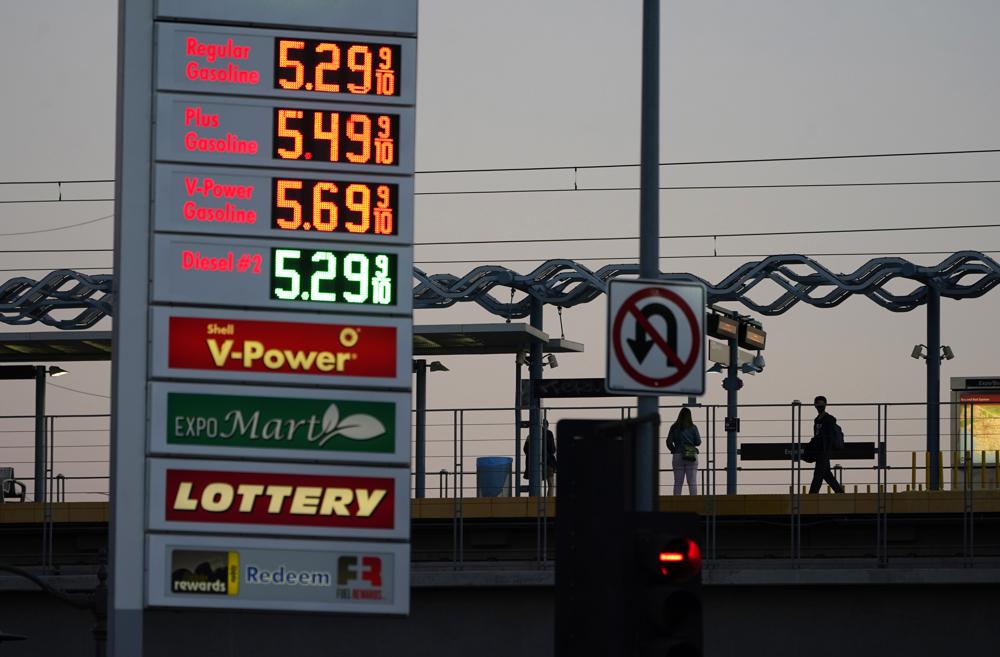
Amid rising gasoline prices in the U.S. — the average price has topped $4 a gallon for the first time since 2008 — the Biden administration faces growing pressure to impose further sanctions on Russia, including a ban on oil imports. No decision has yet been made.
For now, a broad U.S.-European ban appears elusive. On Monday, German Chancellor Olaf Scholz made clear that his country, Europe’s single-largest consumer of Russian energy, has no plans to join in any ban. In response, U.S. Deputy Secretary of State Wendy Sherman hinted that the U.S. could act alone or with a smaller group of allies.
“We have not been completely identical on all of the sanctions,” Sherman said. “Not every country has done exactly the same thing, but we have all reached a threshold that is necessary to impose the severe costs that we have all agreed to.”
Even if a ban is enacted, the Biden administration and Congress “remain laser-focused on bringing down the higher energy costs for American families and our partners stemming from Putin’s invasion,” House Speaker Nancy Pelosi said.
Pelosi, who has expressed support for a U.S. ban on Russian oil, nevertheless also cited Biden’s action in leading U.S. allies to release 60 million barrels of oil from strategic reserves, including 30 million barrels from U.S. reserves, to try to stabilize global markets.
If the U.S. acts alone in banning imports of Russian oil and refined products, the impact on Moscow would likely be minimal. The United States imports a small share of Russia’s oil exports and doesn’t buy any of Moscow’s natural gas.
The United States imports about 100,000 barrels a day from Russia, only about 5% of Russia’s crude oil exports, according to Rystad Energy. Last year, roughly 8% of U.S. imports of oil and petroleum products came from Russia.
The U.S. could replace Russian crude with imports from Saudi Arabia and the United Arab Emirates. For its part, Russia might find alternative buyers for that fuel, perhaps in China or India. Such a step “would introduce massive inefficiency in the market,” which escalates prices, said Claudio Galimberti, senior vice president of analysis at Rystad Energy.
Yet if Russia were shut off from the global market, Galimberti said, rogue countries such as Iran and Venezuela might be “welcomed back” as sources of oil. Such additional sources could, in turn, potentially stabilize prices.
A team of Biden administration officials were in Venezuela over the weekend to discuss energy and other issues, White House press secretary Jen Psaki said. Officials discussed “a range of issues, including certainly energy security,″ Psaki said.
HOW COULD A RUSSIAN OIL BAN AFFECT PRICES?
A month ago, oil was selling for about $90 a barrel. Now, prices are surging past $120 a barrel as buyers shun Russian crude, with many refiners fearing that sanctions could be imposed in the future. They worry about being left with oil they couldn’t resell as gasoline if sanctions were imposed in the near future.
Shell said Tuesday that it would stop buying Russian oil and natural gas and shut down its service stations, aviation fuels and other operations there, days after Ukraine’s foreign minister criticized the energy giant for continuing to buy Russian oil.
Energy analysts warn that prices could go as high to $160 or even $200 a barrel for crude oil if oil sanctions are imposed by the West or if buyers continue shunning Russian crude.
Oil prices that high could send an average gallon of U.S. gasoline past $5 a gallon, a scenario that Biden and other political figures are desperate to avoid.
The U.S. oil industry has said it shares the goal of reducing reliance on foreign energy sources and is committed to working with the Biden administration and Congress. Even without sanctions, some U.S. refiners have severed contracts with Russian companies. Imports of Russian crude oil and products have tumbled.
“Our industry has taken significant and meaningful steps to unwind relationships” with Russia and voluntarily limit Russian imports, said Frank Macchiarola, senior vice president of the American Petroleum Institute, the oil and gas industry’s largest lobbying group.
Preliminary data from the U.S. Energy Department shows imports of Russian crude dropped to zero in the last week in February.
The petroleum institute hasn’t taken a formal stance on legislation to ban Russian oil imports. But it says it would comply with any restrictions imposed.
A ban on Russian oil and natural gas would be painful for Europe. Russia provides about 40% of Europe’s natural gas for home heating, electricity and industry uses and about a quarter of Europe’s oil. European officials are looking for ways to reduce their dependence, but it’s going to take time.
Russian Deputy Prime Minister Alexander Novak underlined that urgency, saying Russia would have “every right” to halt natural gas shipments to Europe through the Nord Stream 1 pipeline in retaliation for Germany halting the parallel Nord Stream 2 pipeline, which was not yet operating. He added that “we have not taken this decision” and that “no one would benefit from this.” It was a change from earlier Russian assurances that they had no intention of cutting off gas to Europe.
Oil is easier to replace than natural gas. Other countries could increase production of oil and ship it to Europe. But much oil would have to be replaced, and this would drive up prices even more because the oil would likely have to travel farther.
Replacing the natural gas that Russia provides to Europe is likely impossible in the short term. Most of the natural gas Russia provides to Europe travels through pipelines. To replace it, Europe would mostly import liquefied natural gas, known as LNG. The continent doesn’t have enough pipelines to distribute gas from coastal import facilities to farther reaches of the continent.
In January, two-thirds of American LNG exports went to Europe. Some ships filled with LNG had been heading to Asia but turned around to go to Europe because buyers there offered to pay higher prices, according to S&P Global Platts.
While U.S. oil and gas producers could drill for more natural gas, its export facilities are already operating at capacity. Expanding those facilities would take years and billions of dollars.